
Rural Housing and Economic Development: Why Housing Comes First
Life, Liberty, and the Pursuit of a Roof Over Your Head
If your town can’t house the people it says it wants, it doesn’t matter how many jobs you help create—your economic development strategy has a gaping void. In 2026, “cheap rural housing” is mostly a myth. The real competitive edge for small towns and rural regions is a different mix: homes regular people can afford, paired with a quality of life that makes them want to stay.
This post connects our February focus on rural housing to March’s theme of economic development, across the foundation we keep coming back to on JCShepard.com: quality of life. We look at who can still afford to live in small towns, how zoning and state and federal tools shape rural housing supply, and why trails, sidewalks, main streets, and social capital matter as much or more than tax incentives when you’re trying to grow a resilient local economy.
My goal isn’t to sell you One Big Fix, but to offer a practical playbook a small town can use to align housing, quality of life, and economic development—so the people you say you want in your community can actually find a place to live there.

What Makes a Small Town Thrive
Every so often I ask, “What makes a small town thrive?” and the answers don’t start with tax incentives or a new industrial park. They start with people. They start with why somebody would choose your town—on purpose—when they could live anywhere else.
One hint: Sociologist Ben Winchester at the University of Minnesota highlights “brain gain.” In many rural regions, especially across the Upper Midwest, people in their 30s and 40s move in for a different pace of life: a safer place to raise kids, a little more elbow room, a chance to plug into a community where their time and talent matter. They aren’t just shopping for jobs. They’re shopping for quality of life. I’ve argued that if we want to thrive, we have to start by getting honest about the story our town tells: what we offer, who we welcome, and why we still exist in the first place.
That’s also where being intentionally welcoming comes in as an economic development strategy. Winchester’s data is clear: newcomers tend to be well‑educated, civically engaged, and ready to participate—if somebody opens the door. A thriving town doesn’t just have a church potluck and a Friday night ball game; it has on‑ramps for new folks to join the PTA, the fire department, the planning commission. Reinventing a town’s purpose is less about a rebranding campaign and more about making room at the table, so people who choose your place can actually help shape its future.
Quality of life isn’t only about social fabric; it’s also literally about how it feels to move through town on a Tuesday afternoon. In “Wins for Active Living,” I wrote about how small, smart investments—sidewalks to the park, a safe crossing to school, a shared‑use gym in a school or church—can quietly unlock better rural health. None of those projects are flashy, but together they make it easier to walk instead of drive, bump into your neighbors, and feel like your town is designed for everyday life, not just traffic counts.
Those “little” changes add up. A mile of trail behind the ballfields, a crosswalk that lets kids bike downtown, a bench in front of the library—these are the kinds of things people mean when they say a town “feels like home.” They build pride and connection, which is what most folks are really after when they trade a metro commute for a small‑town zip code.
But here’s the catch: none of this quality‑of‑life work matters if people can’t find, afford, and keep a place to live in the first place. The trails, the slower pace, the social capital—those are only real options if there’s a home close enough to walk from, at a price that fits a family budget. That’s why, for me, the conversation about what makes a small town thrive keeps coming back to housing.
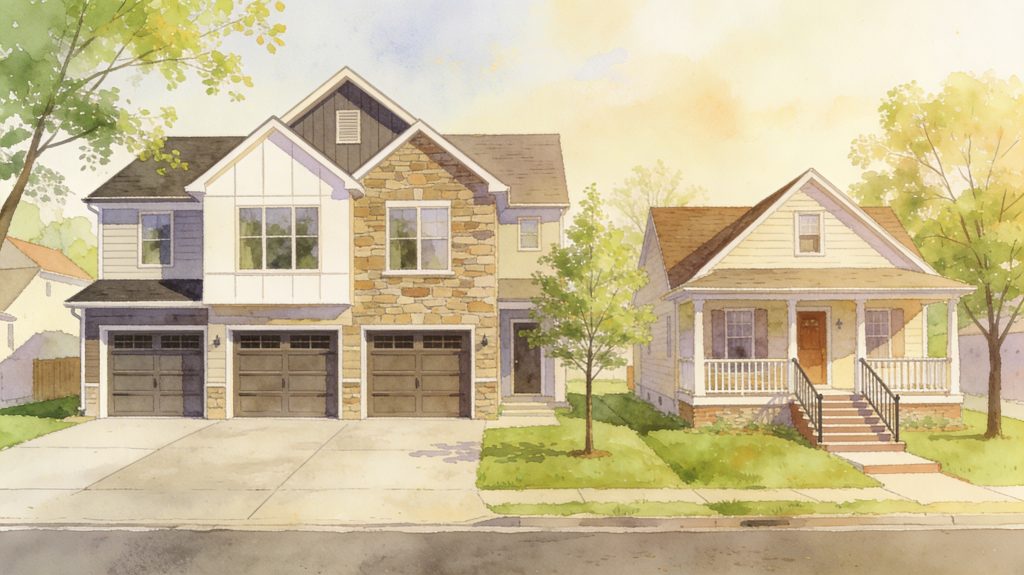
Rural Housing Futures
Who Can Still Afford Our Quality of Life?
Last month we asked, “Who can still afford to live rural?” and the answer was a lot messier than the old story about cheap houses and wide‑open spaces. Between global capital flows, short‑term rentals, and basic supply and demand, “cheap rural housing” has become a myth in a lot of markets. High‑amenity places—the mountain towns, lake shores, and ski country—are now priced as luxury goods, and no realistic amount of new construction is going to turn them into affordable workforce markets. At the same time, even perfectly ordinary small towns in the Midwest are underbuilt enough that teachers, nurses, police officers, and, yes, zoning administrators can’t find a place to live in the community they’re supposed to serve.
That’s the nub of the “Rural Housing Supply Crisis.” It isn’t just that we don’t have enough units; it’s that the units we do have don’t line up with the people and jobs our communities actually have. We’ve spent decades zoning for large‑lot single‑family homes, while many of our real households are single adults, older couples, young workers, and modest‑income families who could happily live in a small house, a duplex, or an upper‑story apartment—if we let them. In a lot of places, the only “new” product getting built is at price points or in formats that don’t match the local wage structure, so the people we say we want—the workforce we claim we’re chasing—end up couch‑surfing, commuting from far away, or never coming at all.
HUD’s recent Evidence Matters newsletter on rural housing puts some numbers to what many of us see on the ground. Nationwide, about 44% of rural renter households and 18.7% of rural homeowners are cost‑burdened—spending more than 30% of their income on housing. More than 1.4 million rural homes are classified as physically inadequate, with 368,000 having severe issues like failing plumbing, heating, or wiring. That’s before you get to the “hidden homelessness” that doesn’t show up on a downtown sidewalk: people doubling up, living in campers, or rotating between relatives’ spare rooms because there’s no stable, decent option they can afford.
Layer on top of that the geography of persistent rural poverty and aging in place. HUD and the Housing Assistance Council note that roughly 83 percent of the nation’s persistent‑poverty counties are rural, and many of those places also have older populations trying to hang on in homes that weren’t built for walkers, wheelchairs, or no‑longer‑driving elders. I’ve talked about rural resilience and the quiet heroism of neighbors looking out for each other, but there’s a limit to what informal networks can carry when the underlying housing stock is old, inadequate, and far from services. If your only “affordable” options are substandard trailers in the floodplain or farmhouses miles from the nearest clinic, you don’t really have a quality‑of‑life strategy—you have a survival strategy.
All of this leads to a hard but simple conclusion: if only certain households can afford to live in town, you are, whether you admit it or not, making a decision about who your future workforce, volunteers, and neighbors will be. That’s economic development by omission. When we ignore the teachers who can’t buy in, the CNAs who can’t find a rental, or the line workers who give up after losing out on the one decent duplex in town, we’re deciding whose kids will be in our schools, who will staff the fire department, and who will show up to coach Little League. Rural Housing Futures isn’t an abstract planning exercise; it’s the front door to the quality of life—and the local economy—we say we want.
(By the way, if you are interested in the various definitions of rural, this edition of the HUD newsletter has a great discussion on that perennial topic.)
Housing as the Platform for Quality of Life (and Work) — Including Zoning Reform
We have seen plenty of examples of how “cheap rural housing” isn’t so much of a thing any more. The next question is what we can do about it that fits the way small towns, rural counties, and non-metro regions actually work. Here’s where I’ve found the Strong Towns approach particularly helpful—not as a silver bullet, but as a frame. In my review of the book Escaping the Housing Trap, I wrote that we don’t get “solutions,” we get approaches: lots of small bets that make it easier for people to house themselves in ways that strengthen the town instead of hollowing it out.
One of those bets is being more pragmatic about the kinds of homes we’re willing to accept. HUD’s rural housing work points out that manufactured homes already make up roughly 13% of occupied units in rural areas, and more than half of all manufactured homes nationwide are in rural places. Modern HUD Code manufactured housing and modular, factory‑built homes (IBC code compliant) can deliver decent, energy‑efficient units at lower cost and with more predictable construction timelines, which is no small thing in a small labor market. The problem is less the house itself and more our rules and financing systems: manufactured and modular homes are often zoned out of the places people most want to live, and when they’re allowed, they may be hard to finance on decent terms. If we’re serious about Rural Housing Futures, we have to treat those tools as part of the toolbox, not as second‑class options.
At the same time, a lot of our best “new” housing is already built. In older small towns, the most valuable units for workers and elders are often the ones over the storefront, the little house on a 40‑foot lot, the backyard cottage, or the big old home that could easily be rehabilitated if the retired couple there could find a ground-level, maintenance-free patio home. Rehab and small infill keep that well‑located stock in circulation: fixing up a century‑old house near school and church, putting an accessory dwelling unit over a garage, or turning a vacant lot into a modest duplex adds options without blowing up the block. That’s not as exciting as a ribbon cutting on a new subdivision, but it’s often a better economic deal for the town and the family both.
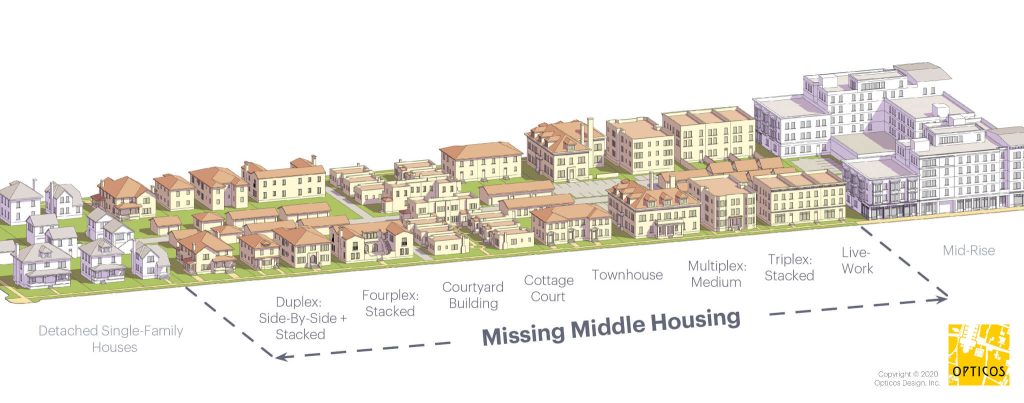
Expanding supply also means lining up more financing and partners for the kinds of projects small towns actually need. USDA’s Section 502, 504, 515, and 538 programs, along with HUD HOME and CDBG, can help build or preserve small rental projects, fix up owner‑occupied homes, and support farmworker and senior housing when private markets won’t pencil out. States are stepping in as well: Nebraska’s Rural Workforce Housing Fund, for example, provides matching grants that local nonprofits and communities use to create revolving loan funds for workforce housing—new homes and substantial rehabs at attainable price points, including upper‑story units and downtown conversions. On the ownership side, models like community land trusts and shared‑equity co‑ops are starting to show up in smaller markets as a way to keep housing permanently affordable while giving residents more control and stability. And because large developers usually ignore “missing middle” projects, there’s a growing push to train and support small‑scale, local developers who can take on duplexes, four‑plexes, and small apartment houses that fit a small‑town fabric.
Zoning Reform Comes to Town
This is where zoning comes crashing into the story. A growing body of research has documented how restrictive zoning—single‑family‑only districts, large minimum lots, strict height and density caps, and heavy parking mandates—constrains housing supply, drives up costs, and weakens job–worker matching and regional growth. Donald Elliott’s new book, An Even Better Way to Zone, makes the case that our postwar zoning systems were built on outdated assumptions and have produced patterns that are neither affordable nor sustainable. I’m fully on-board with that. We didn’t set out to make it hard to build a small rental over the hardware store or a duplex down the block from school, but that’s the practical effect in many ordinances today.
There’s also a broad consensus, from Strong Towns to more traditional housing economists, that loosening some of those constraints can help. They call it Zoning Reform. National and international analyses find that legalizing gentle density of duplexes and triplexes in “single‑family” neighborhoods, allowing accessory dwelling units by right, modestly increasing height and lot coverage in walkable areas, and trimming parking requirements can expand housing choices and improve affordability, especially near jobs and services. Charles Marohn’s Strong Towns work argues that “no neighborhood can be exempt from change,” and that the next increment of development intensity—ADUs, gentle Missing Middle housing—should be allowed as a matter of course, not as a political exception. Where Strong Towns often diverges from YIMBY activists, and where I wholeheartedly agree, is in insisting that these changes land best when they’re driven locally: when neighbors and local leaders sort out how those tools fit their blocks, rather than having a one‑size‑fits‑everywhere program dropped from a distant capitol.
For a small town in particular, I believe the right way to frame zoning reform isn’t as an abstract “upzone,” but as giving your neighbors more choices to meet different housing needs and preferences. Young workers may be happy in an upper‑story walk‑up. A single parent might prize a small, efficient rental close to daycare. A retired couple might want to downsize into a one‑story cottage while their kids use the old house. A remote worker might be fine in a backyard ADU if it comes with decent broadband and a short walk to coffee. Local employers need all of those people within realistic commuting distance, not scattered an hour away because that’s where the last available unit was. Updating your zoning so those options are legal, intelligible, and easy to finance is one of the most concrete workforce‑development strategies a town can adopt.
In the end, the economic development link is pretty straightforward: productive workers, healthy elders, and engaged volunteers all depend on an underlying mix of adequate, well‑located, and allowed housing. If your code only permits one kind of house on one kind of lot in most of town, you’re not just locking in a physical pattern—you’re locking in an economic future that excludes a lot of the people you say you want to keep or attract. If we want small towns that really thrive, the question isn’t just “What makes a good quality of life?” but “Who can actually find a place to live inside that story?”
Quality of Life as a Deliberate Economic Strategy
Over the last year, I framed much of our discussion around the idea of “Rural Resilience and Growth,” and a lot of that work boiled down to a simple idea: quality of life is not a byproduct of economic development; it is the strategy. In our active living series, I wrote about sidewalks, loops, and shared spaces as “simple infrastructure to unlock rural health”—the kind of humble projects that quietly change how a town feels day to day. Add in a good park, a library that actually gets used, some public art, a Main Street that still looks like somewhere special, and you start to create the feel of a place people choose, not just a dot on the map they tolerate. That’s as true on the prairie as it is in the Alps.
You can see similar patterns in Europe’s smaller regions and second‑tier cities. Analyses of “emerging Europe” highlight how mid‑sized places like Plzeň in Czechia or Cluj‑Napoca in Romania have turned lower costs, strong local schools, cultural life, and walkable neighborhoods into real growth engines—not by trying to be the next London, but by being good at being themselves. (Brookings has some good analysis on growth regions in Europe.) The lesson for small towns here is encouraging: you don’t have to out‑bid the metro next door if you can offer a coherent package of livability—safe streets, culture and history, easy access to the outdoors, and a sense that your town has a future worth buying into.
I’ve also talked about the “Geography of Choice”: the idea that more households can now pick where they live based on lifestyle and values, then sort out work from there. In that world, talent attraction is less about one big employer and more about placemaking and the outdoor recreation economy. When a town invests in trails, river access, bikeable streets, or a regional park, it’s not just building amenities for visitors; it’s signaling to remote workers, entrepreneurs, and young families that this is a place where you can build a life, not just a resume. That’s been the thread running through my posts on building a strong outdoor economy without becoming a caricatured tourist town: use your natural assets to support residents first, and visitors and newcomers will follow.
At the end of last year, in “What Makes a Small Town Thrive?” I re-visited research out of Iowa that found the strongest drivers of small‑town quality of life weren’t income or job counts, but social capital and civic life. People in those towns reported higher quality of life where neighbors pitched in, community groups were active, and folks felt safe and supported—even when the economic stats looked pretty average. That’s why thriving places obsess as much over the health of their churches, service clubs, youth leagues, and informal networks as they do over their industrial park. And it’s why I keep coming back to the need to nurture the next generation of local leaders: if we don’t have 20‑ and 30‑somethings learning how to run the fire board, the arts council, or the planning commission, all that social capital starts to leak away just when we need it most.
The academic literature is catching up to what a lot of small‑town folks have known intuitively. Studies of quality‑of‑life‑driven prosperity show that small towns and micropolitan regions can grow by doubling down on amenities, culture, and civic life, not just chasing smokestacks. The outdoor recreation work from Headwaters Economics, for example, finds that rural counties with strong recreation assets tend to attract new residents with higher incomes and see faster wage growth, precisely because those assets make them the kind of places people want to live and invest in. Iowa’s Sigma Study came to a similar conclusion: investing in social supports and civic engagement can raise perceived quality of life without massive new payrolls, and higher quality of life in turn makes towns more attractive to residents and small firms.
Put all of this together and the pattern is pretty clear. In this framework, quality of life is the product: the lived experience of safety, belonging, culture, and a good Saturday afternoon. Housing—shaped by zoning, finance, and local politics—is the delivery system that determines who actually gets to consume that product. Economic development, then, is the work of getting those two in sync: aligning the homes we allow and build with the kind of community we say we want to be, so the people we hope to attract and retain can really live inside the story we’re trying to tell.
Active Living and Quality of Life
Housing and zoning shape who can live in town; quality of life is about how it feels to live there day to day. Last year in “Wins for Active Living,” I framed this in simple terms: rural health and quality of life are shaped less by individual willpower and more by whether you have safe, obvious places to move—sidewalks, trails, shared gyms, church basements with walking clubs. Rural folks carry higher rates of obesity and chronic disease than urban residents, and the research is clear that lack of basic infrastructure—sidewalks, lighting, safe shoulders, nearby destinations—is a big part of why. The good news is that small, focused changes can make a dent without blowing the budget.
In that series I laid out a simple framework: Preparation, Promotion, Programs, Policy, and Physical Projects. Preparation is walking your own town with a critical eye: where does the sidewalk stop, where is the crossing missing, which park feels unsafe after dark. Promotion and Programs are the walk‑and‑talk clubs, the school fitness challenges, the informal “meet at the trailhead at 7” routines that give people an excuse to use what’s there. Policy is where this starts to hook back into planning: Safe Routes to School, shared‑use agreements with schools and churches, subdivision standards that actually require a sidewalk or path. And Physical Projects are the visible bits—half‑mile walking loops with benches, simple wayfinding signs, a paved trail along the edge of town—that make activity safer and more attractive.
If that sounds like public health work more than economic development, you’re not wrong—but the lines blur quickly. Studies of rural built environments find that when you add accessible places for exercise and recreation, you get measurable increases in leisure‑time physical activity, especially among lower‑income residents who are at the highest risk. Work on “rural health and prosperity” argues that healthier communities are more economically resilient communities: fewer missed workdays, lower healthcare costs, and, just as important, a stronger sense of place that makes people more likely to stay, volunteer, and invest over time. CDC guidance on activity‑friendly community design puts it plainly: communities that are welcoming, safe, and convenient for walking and biking are better for health and for local economies.
From an economic development standpoint, the payoff is twofold.
First, you get a healthier, more reliable workforce: fewer chronic‑disease complications, fewer car‑dependent commutes, more kids arriving at school awake and ready because they walked or biked.
Second, you strengthen the “product” we’ve been talking about—your town’s quality of life. For a teacher choosing between two districts, or a nurse picking a rural clinic, or a remote worker weighing a move, the difference between “you have to drive everywhere” and “you can walk your kid to school and hit the trail after supper” is not trivial.
Active‑living investments are one of the most concrete ways to connect the dots between public health, housing choice, and economic development: they make the homes you already have more livable, and the future homes you’re planning more attractive, for the neighbors you hope will still be around ten years from now.
Case Snapshots
Where Housing + Quality of Life + Zoning Meet Econ Dev
It’s one thing to talk about housing and quality of life in the abstract, and another to watch a town actually put the pieces together. Ord, Nebraska, (I was just there last week) is a good example I keep coming back to—not because it’s perfect, but because local leaders treat housing, downtown, and economic development as one conversation instead of three separate meetings.
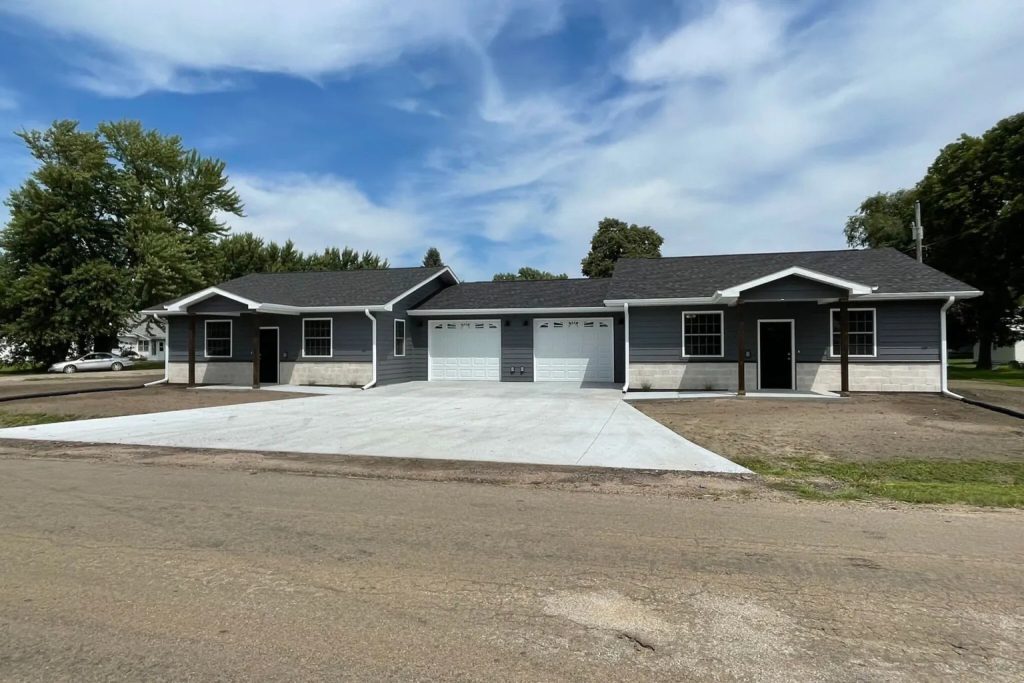
Over the last few years, Ord, Nebraska, has used Nebraska’s Rural Workforce Housing Fund and a local infill rebate program to help build new duplexes, fix up tired houses, and replace dilapidated structures on underused lots. They’re not just adding units; they’re putting them where people actually want to live—close to jobs, schools, and Main Street—while also putting real money into downtown storefronts. The City of Burwell, Nebraska, just up the road has done similar work on housing and quality of life, which we supported in our award-winning comprehensive planning process.
Last month, I wrote about how local regional development organizations like Southeast Nebraska Development District (SENDD) also provide practical examples of approaching housing as an economic development strategy. Thayer County Economic Development Alliance, based in the small town of Hebron, Nebraska, has partnered with SENDD to put new homes in rural communities. It’s one step at a time, but they are doing something tangible to benefit their home towns.
Practical examples abound across the US and abroad. In Wamego, Kansas (population 4,800), a local developer partnered with the Kansas Housing Resources Corp. to rehab their 1921 hospital building into a 10-unit multiplex. Historic preservation, housing, and economic development triple-threat. Four western NC counties (Cleveland, McDowell, Polk, Rutherford) convened a regional housing summit, explicitly framing housing affordability as critical to economic competitiveness and workforce stability.
In rural Cass County, Iowa, a local nonprofit received State tax credits towards adding 10 duplex-style homes in a new subdivision. Located near school facilities, a planned child care center and other services, the properties are expected to appeal to workers at large employers like Cass Health, where nearly half of employees currently commute into town.
That’s housing as economic development in practice: more options for workers, more rooftops for families, and a stronger tax base built largely from the inside out.
If you zoom out from housing into the outdoor economy, you see a similar pattern. In “How Small Towns Can Build a Strong Outdoor Economy Without Selling Out,” I argued that trails, river access, and public lands are only an economic win if they work for locals first. Bozeman’s story—and a lot of mountain towns in both the Rockies and Europe—shows what happens when you chase recreation dollars without pairing it with housing and land‑use planning: popularity without preparation prices out the very people who make the community work. Yes, I know Bozeman is a Metro county now, but there are reasons the community grew while much of the rest of Montana hasn’t so much.
The up side is places can start small and work smart—mapping their creeks and trail corridors, building modest loops, aligning conservation with access, and making sure residents can still afford to live near the very amenities that make the town special. That’s as true in a Nebraska gateway town on the edge of a wildlife refuge as it is in a German market town that’s stitched bike routes into daily life.
The same “start small, work smart” pattern shows up in active living projects I worked on a few years ago in southwest Minnesota. I’ve related my experience with cities and counties using hazard‑mitigation planning and public health grants to add crosswalks, connect missing sidewalk links, and open up school gyms for evening use. Little of that makes headlines (although our Walk Audit did get a picture in the paper) but those short walks to school and safe shoulders to bike on make the active choice the easy choice—and they make nearby housing more valuable and attractive without adding a single lane‑mile. When you pair that kind of infrastructure with neighborhood‑scale infill and rehab, you’re essentially building 15‑minute towns on a small‑town scale: a few blocks where work, school, worship, and play are close enough that your quality of life doesn’t depend on owning the newest pickup.
To bring that full circle, I come back to my old friends at the Southwest Minnesota Housing Partnership (SWMHP), focused primarily on the rural areas between Minneapolis-St. Paul and Sioux Falls. (I wrote about them last month as well.) Their work is as much or more economic development as community development, in both technical assistance to local communities as well as helping local leaders build new rooftops in small towns.
If there’s a common thread in these examples—from Ord’s infill to outdoor‑economy work in gateway communities to active‑living projects in farm country—it’s that the most successful places treat housing, quality of life, and local rules as one ecosystem.
They ask: Who are we building for? How do people really move through this town? Which blocks can quietly absorb more homes, more life, without losing the character we care about? Then they adjust the tools—rebates, rehab funds, trail plans, zoning codes—so the answers line up.
Let’s try to boil that ecosystem down into a practical “praxis” playbook: a short list of concrete steps local leaders can take so their housing market and their quality‑of‑life story start telling the same tale. I do try to be useful on the old JCShepard(dot)com when I can.
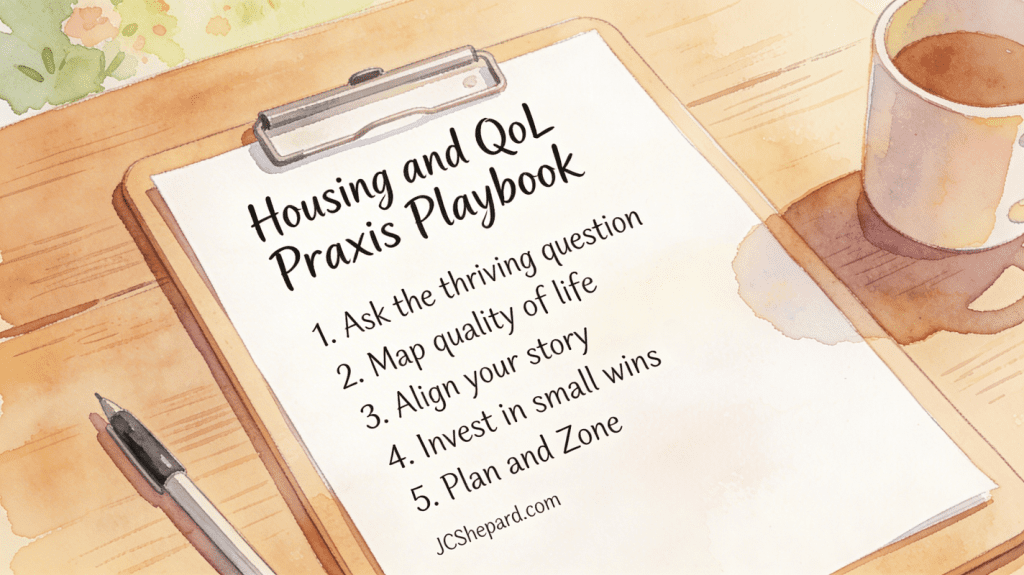
A JCShepard(dot)com “Praxis Playbook”
Turning Housing and Quality of Life into Local Action
Here’s where all the theory has to turn into Tuesday‑night agenda items. Think of this as a rough “praxis” playbook—five loops you can run in your own town, over and over, as capacity allows.
1. Ask the thriving question first
Before you chase grants or argue over units per acre, take one meeting and write this down, in plain language: “Why does our town exist? What makes it thrive when it’s at its best?” Is it being a county‑seat service center, a farm hub, a recreation gateway, a regional health cluster, a bedroom community? Your housing and quality‑of‑life work should flow from that answer, not the other way around. Keep that one‑paragraph statement handy; you’ll need it when the next shiny project shows up.
2. Map who your quality of life is for—and who’s locked out
Next, get specific about who is actually enjoying your town’s quality of life now, and who can’t. Make a simple, living list of the people you say you need—teachers, CNAs, sheriff’s deputies, welders, daycare providers, remote workers, elders on fixed incomes. Then compare that list to what you see at the park, the farmers market, the school board meeting, the trailhead. Talk to employers and service providers about who’s turning down jobs or leaving because they can’t find a place to live, or are stuck in substandard housing. That gap between “who we say we are for” and “who can actually live here” is your real housing and economic development problem statement.
3. Align housing and zoning with your quality‑of‑life story
Once you know who you’re trying to serve, start lining up tools. On the funding side, inventory every rural‑friendly program you can plausibly touch: USDA 502/504/515/538, HUD vouchers and HOME/CDBG, state rural workforce housing funds, disaster repair grants, rehab programs. Note which ones can help you:
- Fix up owner‑occupied homes (504, rehab funds)
- Preserve or build small rentals (515, 538, LIHTC, state funds)
- Support elders and people with disabilities (504, HUD aging‑in‑place programs)
Then put your code on the table. Literally. Print the zoning map, grab some markers, and ask: where do we outright ban the very gentle density housing types we say we need—duplexes, four‑plexes, upper‑story apartments, ADUs, manufactured and modular homes? Where do parking, lot‑size, or height rules quietly make those things impossible even if the map is the “right color”? Make yourself a short list of 3–5 specific barriers you can actually change within a year.
4. Invest in small, visible, quality‑of‑life wins
While you’re wrestling with policy, don’t wait to show progress. Pick one or two low‑cost, high‑visibility quality‑of‑life moves and do them well: a marked crosswalk and speed table by the school; a half‑mile signed walking loop; a couple of benches and trees on Main Street; a shared‑use agreement to open the school gym on an evening during the week. These are the “small, smart steps” I wrote about in the active living series—the kind of projects that make town feel worth the rent or mortgage even before a single new house is built. They also build credibility: people are more willing to talk about zoning and housing when they’ve seen you deliver something tangible in the public realm.
5. Plan and zone for the town you say you want
Finally, bring it back to the long game. Update your comprehensive plan and zoning code so they actually reflect that thriving statement from Step 1. That usually means:
- Legalizing gentle Missing Middle housing—duplexes, triplexes, quad dwellings—in logical places.
- Making upper‑story residential a practical use in the core, tied to basic life‑safety standards rather than uncertain public hearings.
- Allowing accessory dwelling units on most lots with simple, predictable rules.
- Treating modern manufactured and modular homes as legitimate housing types wherever a small single‑family home would make sense.
You don’t have to fix everything in one rewrite. Pick a few clear moves, implement them, and then come back in a couple of years for the next round. The point is to make sure your plans and codes are slowly but surely aligning the housing you allow and support with the kind of quality‑of‑life story you’re trying to tell. In a small town, that’s what economic development really looks like over time: not one big moment, but a long series of deliberate, local decisions that make it possible for the right people to live good lives in the right places.
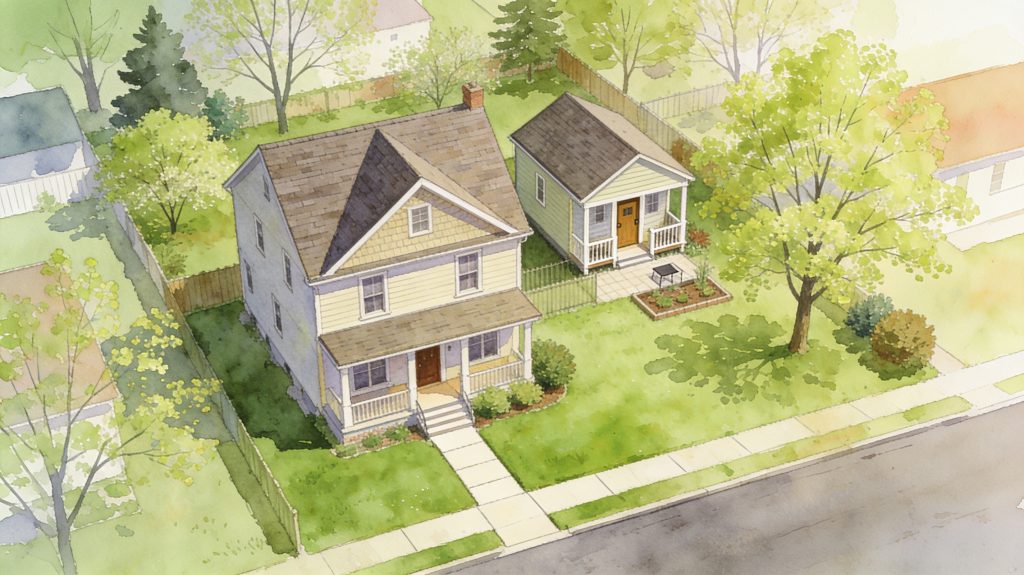
Bringing Housing and Quality of Life to the Economic Development Playbook
When you cut to the chase, the formula is simple to say and hard to practice: housing and quality of life are the work of economic development, not side projects you get to “someday.”
The homes you allow and support decide who can live near your jobs; the streets, parks, schools, churches, and trails you invest in decide whether they’ll want to stay once they arrive. If we only build one kind of house for one kind of household, or only fund splashy projects while we ignore the everyday fabric of town, we’re writing an economic future that quietly leaves a lot of our neighbors out.
The good news is that none of this requires waiting on a savior from the state capitol or Washington, DC (or pick your legislature of choice). It starts with questions you can ask at your next council meeting or coffee club: Who is our town for? Who can’t find a foothold here? What would it take to legalize and finance the missing homes and improve the everyday places that make life good?
If we can keep asking and answering those questions honestly—county by county, town by town—then “Rural Housing Futures” stops being a slogan and becomes something more like a promise: that the front porches, paychecks, and quality of life we say we value will actually be within reach for the people who choose to call our places home.
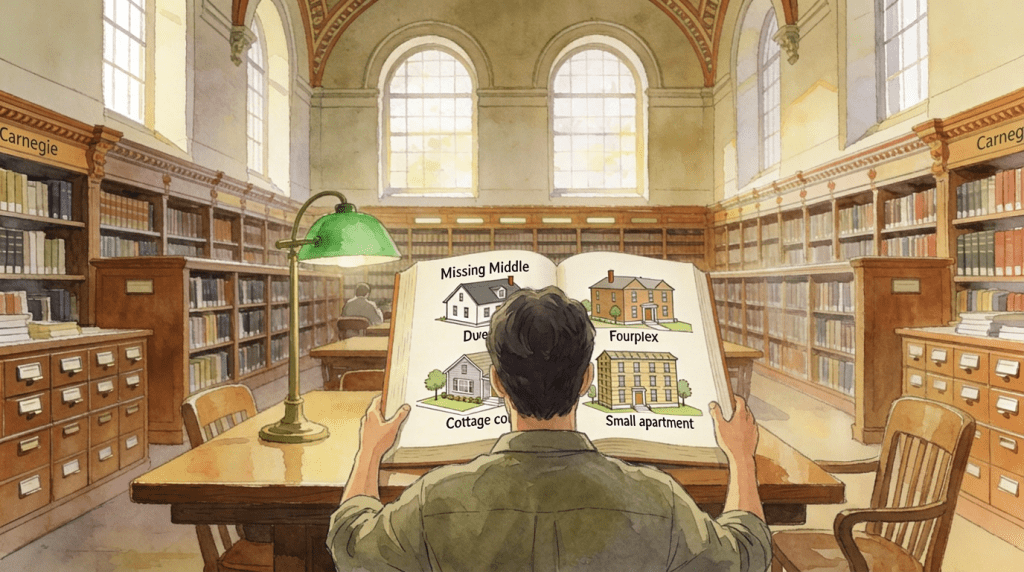
Resources
Books
- An Even Better Way to Zone: Achieving More Affordable, Equitable, and Sustainable Communities by Donald L. Elliott, FAICP (Island Press, 2025)
- Proudly Made: A Memoir by Tataboline Enos (Catamount Press, 2025). YES, an endorsement, even though this is not strictly an economic development book, Ta offers some profound insights on life and the economy of rural America.
- Escaping the Housing Trap: The Strong Towns Response to the Housing Crisis by Charles L. Marohn, Jr, and Daniel Herriges (Wiley, 2024)
- Fragile Neighborhoods: Repairing American Society One Zip Code at a Time by Seth D. Kaplan (Little, Spark Brown, 2023)
- Missing Middle Housing: Thinking Big and Building Small to Respond to Today’s Housing Crisis by Daniel Parolek with Arthur C. Nelson (Island Press, 2020)
- The New Localism: How Cities Can Thrive in the Age of Populism by Bruce Katz and Jeremy Nowak (Brookings Institution Press, 2018)
- Small Town Economic Development: Reports on Growth Strategies in Rural America – Gonzalez, Kemp, & Rosenthal ed. (McFarland & Company, 2017)
- The Nature of Economies by Jane Jacobs (Random House Canada, 2000)
- Cities and the Wealth of Nations: Principles of Economic Life by Jane Jacobs (Random House, 1984)
- The Economy of Cities by Jane Jacobs (Vintage / Ebury, 1970)
- The New Geography Of Jobs by Enrico Moretti (Houghton Mifflin Harcourt, 2012)
Links
- USDA Rural Development (USDA-RD)
- US Small Business Administration (US SBA)
- US Economic Development Administration (US EDA)
- National Association of Development Organizations (NADO)
- Southwest Regional Development Commission (SRDC), Minnesota
- Southeast Nebraska Development District (SENDD)
- The Center on Rural Innovation (CORI) Rural Innovation Network
- CORI Rural Economic Development Toolkit
- Headwaters Economics Economic Profile System
- Business Retention & Expansion International (professional association)
- IEDC – Why A Business Retention and Expansion Program Matters (PDF)
- Met Council (Minnesota) – Business Retention & Expansion – Local Planning Handbook (PDF)
- National Center for Economic Gardening
- Edward Lowe Foundation
- Ewing Marion Kauffman Economic Gardening Resources
- Rural opportunity, national prosperity: An Economic Development Strategy for rural Canada (website or PDF)
- Rural on Purpose (website)
More from JCShepard(dot)com
Our February 2026 series on Demographics and Rural Housing:
- Demography is Destiny… Except When It Isn’t (1 February 2026)
- Who Can Afford to Live Rural? Global Pressures on Small-Town Housing Markets (8 Feb 2026)
- Rural Housing Supply Crisis: Why Small Towns Are Running Out of Homes (15 Feb 2026)
- Rural Housing Futures: Policy Tools for Livable Small Towns (22 Feb 2026)
Our August 2025 series on Rural Development:
- Rethinking the Rural Economy: New Paths, New Possibilities for Growth
- Business Retention in Small Towns: The Quiet Powerhouse of Rural Job Growth
- From Main Street to the World: Rural Entrepreneurship in Action
- The Rural Comeback: How Small Town Innovation Sparks Growth
- The Canadian Perspective on Rural Resilience
2026: Bring Your Plans to Life – Monthly Themes Preview
RuralStrong Podcast (Season 1 Episode 36)
Now playing on Youtube (audio), Spotify, and Apple Podcasts (February 2026). Transcription on the blog here.
Rural-Ready Engagement: Practical Tools for Small Town Planners
 Watch the full replay: youtube.com/@Engaging-Communities (February 2026)
Community engagement can look very different in small towns and rural communities. This webcast was co-sponsored by the APA Community Engagement Interest Group and the Small Town & Rural Planning Division.
Popular posts on JCShepard.com
- Reviving Rural America: Why Heritage Tourism Is a Game-Changer Now (September 2025)
- How Small Towns Succeed: A Proven Playbook for Rural Action (November 2025)
- The Rural Comeback: How Small Town Innovation Sparks Growth (August 2025)
- How Small Towns Can Build a Strong Outdoor Economy Without Selling Out (June 2025)
Check out The 12 Planning & Sustainability Books You Need in 2026 and browse through the Small Town & Rural Community guides on our Resources page.
(As an Amazon Associate, we may earn commissions from qualifying purchases. Check your local library or bookshop, too.)
.
.