
Rural Housing Futures: Policy Tools for Livable Small Towns
Rural housing isn’t just one problem, it’s three braided together. Demography is tugging at our small towns with aging neighbors, fewer kids, and new folks drifting in and out on search of jobs and housing. The cost of living rural no longer pencils out for everyone who’d like to be here, especially when wages, materials, and outside money don’t track local history. And in a lot of places, we simply don’t have enough of the right kinds of homes left—starter houses, decent rentals, accessible units—even if you can afford them.
This week, I want to shift from “what’s going on” to “here’s what we might actually do about it.” We’ll talk about some policy tools—federal, state, and local—which might help us steer our small towns toward a more livable future, or at least keep us off the rocks. And look at what a few pioneers are doing to put people into houses of their own.
I am not a housing expert. I just want to ask some better questions so we can try something and learn together. So gather your “army of the willing” and let’s get to work.
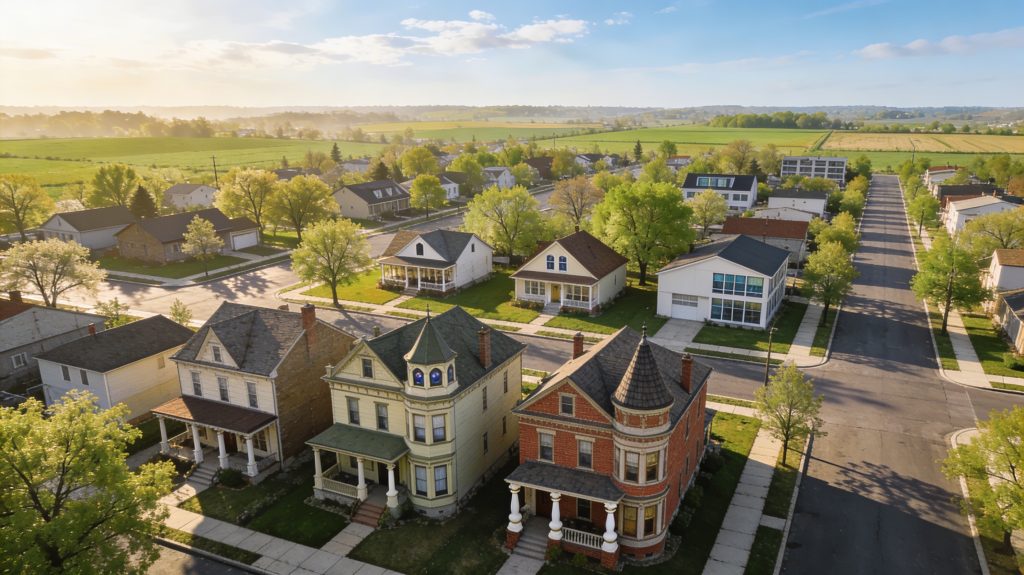
Rural Housing Is Both an Affordability and a Supply Issue
Rural housing is having a double crisis right now: it’s both too hard to afford and too hard to find. In this February series, we’ve looked at how demographic trends shape the future of small towns, who can still afford to live rural, and why so many communities are running out of homes in the first place. Demography is still destiny—older populations, fewer kids, new migrants—but only if we let it be. If demography is the current, local housing policy is the rudder. This post is about the tools we can use to steer.
In Week 1, we explored how aging baby boomers, shrinking household sizes, and shifting migration patterns are changing the math for rural communities across the globe. It’s not just how many people you have, but who they are, what kinds of households they form, and what kinds of homes they need over a lifetime.
In Week 2, we asked who can still afford to live rural when wages lag, construction costs climb, and global capital treats scenic small towns like an asset class.
And in Week 3, we dug into the rural housing supply crisis and why so many small towns are simply running out of the right kinds of homes—starter homes, rentals, accessible units—not just “cheap” ones.
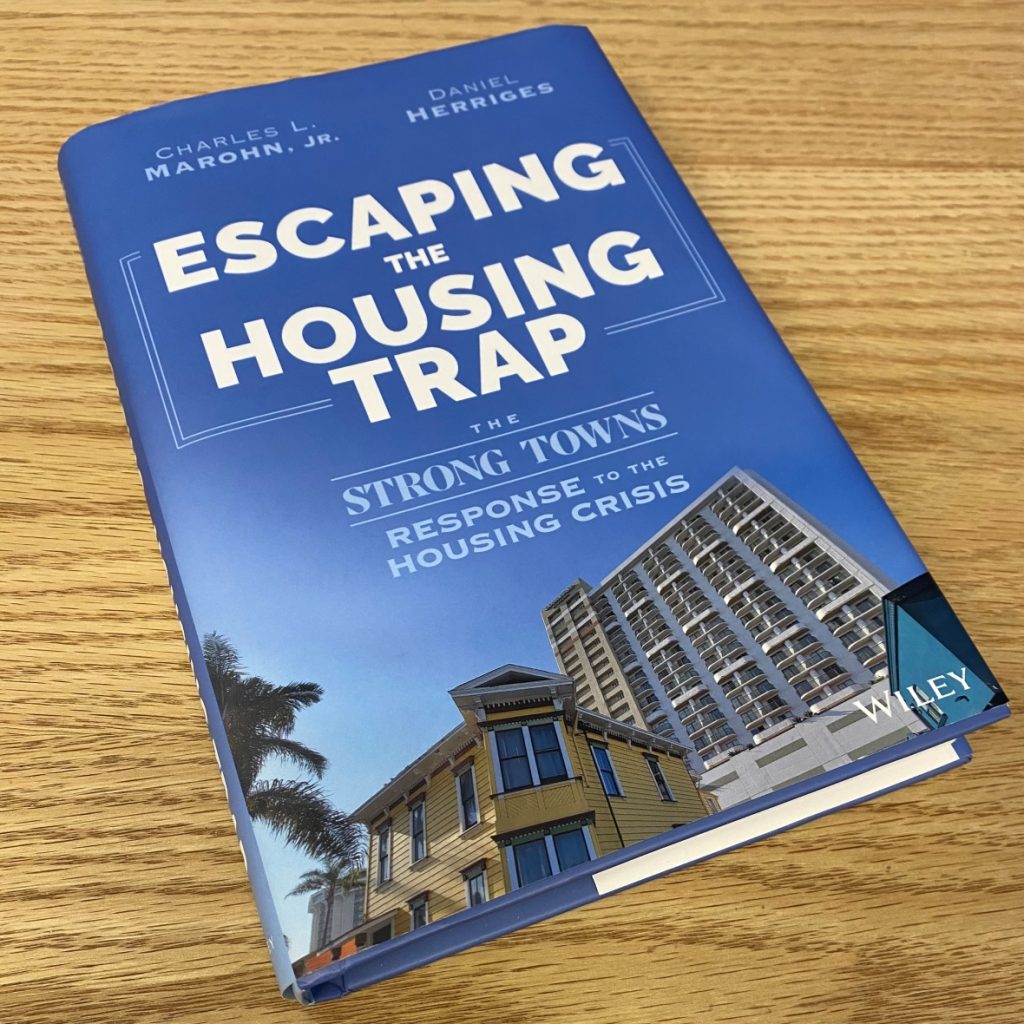
Escaping the Housing Trap
One big thread running through that story is rules: how we regulate land and buildings. Charles Marohn and Daniel Herriges of the Strong Towns organization set out to deconstruct the current American housing situtation in their book, Escaping the Housing Trap: The Strong Towns Response to the Housing Crisis (Wiley, 2024). If you haven’t read Chuck’s first book on Strong Towns, you should read that, then this one.
I reviewed this book when it came out back in the summer of 2024: An Approach Not A Solution: Escaping the Housing Trap—A Strong Towns Response. My take: We need to let our cities fail faster so they can heal faster.
Marohn and Herriges describe how the US has built an entire operating system—zoning codes, subdivision standards, parking rules—that locks in yesterday’s pattern of development and makes tomorrow’s adaptation painfully difficult. In many ways, the same toolbox that froze historic urban neighborhoods in place also shaped small-town land use, lot sizes, and housing types. In practice, that means rural property owners often can’t add a duplex on an existing lot, a small fourplex near Main Street, or a backyard cottage for an aging parent, even when the need is obvious. I myself grew up in a single family neighborhood without a duplex in sight, but since leaving home, I’ve lived in duplexes and basement apartments and apartment complexes (ugh) when I had to. I get it.
From Real Harms to Aesthetics
Our zoning rules didn’t fall from the sky. Early land-use regulation in the industrial age focused on real harms: overcrowded tenements, unsafe construction, and toxic pollution. Reformers used building and health codes to require light, air, and basic safety in housing, especially in rapidly growing cities. Marohn and Herriges remind us how over time, many elites shifted their focus from genuine public health to moral and aesthetic judgments about lower-income neighborhoods and incremental, multifamily housing. Boarding houses, residential hotels, triple-deckers, and other small-scale multifamily types were targeted as “lodger evils” and “three-decker menaces,” even when they offered working families a first rung on the ladder of decent, attainable housing. Single-Room Occupancy housing has all but disappeared.
The National Housing Act of 1934 and the creation of the Federal Housing Administration (FHA) supercharged this evolution. To standardize mortgage risk, FHA adopted highly specific—but mostly arbitrary—preferences for lot size, lot coverage, setbacks, and neighborhood homogeneity. Detached single-family homes on relatively large lots in uniform districts became the gold standard for mortgage insurance, while mixed-use, older, and denser neighborhoods were flagged as risky. Layer redlining on top of that—maps that coded many urban and some rural and small-city neighborhoods as “hazardous” for investment, often explicitly based on race and class—and you have a powerful machine for starving certain places of capital while subsidizing others.
By the 1960s and 1970s, the combination of FHA standards, redlining, and urban renewal had destroyed or disinvested in many older neighborhoods, both in big cities and in regional centers that served rural communities. Demolition of older mixed-use districts often meant the loss of exactly the kinds of small, adaptable units—upper-story apartments, small multifamily buildings, modest rentals—that rural workers, elders, and low-income families relied on, not to mention places to start new small businesses. In their place, we built single-use districts and large projects that are hard to adapt as needs change.
These choices have consequences far beyond big metros. When restrictive zoning caps the amount and type of housing that can be built in high-demand cities and suburbs, that pressure has to go somewhere. Some of it spills into exurban areas: long commutes, leapfrog subdivisions, and small towns that become de facto bedroom communities. Some of it shows up as nationalized scarcity: when key “superstar” regions are locked down, their high costs ripple into interior markets that used to be insulated—think small regional hubs that suddenly see investors chasing yield and amenity migrants chasing lifestyle. The result is that housing scarcity in closed-access metros becomes an exurban problem too.
So What Do We Do About It?
Strong Towns thinking suggests we shouldn’t expect one grand reform to fix everything. “Zoning Reform” is trendy, but they also talk about “small bets” and iterative adaptation; they describes “taking bites of the apple” when it comes to complex, entrenched codes. Instead of waiting for a perfect comprehensive overhaul, communities can chip away at barriers: legalize accessory dwelling units in town; allow duplexes and fourplexes on existing lots near Main Street; reduce off-street parking requirements for small infill projects; and streamline approvals for traditional, walkable patterns of development.
Marohn and Herriges concede there are reasonable concerns about zoning reform: fears of rapid change, infrastructure strain, or speculative investment that doesn’t serve local residents. Some critics argue that simply legalizing more density will not by itself guarantee affordability or good design—I tend to agree. Others worry about losing a sense of place if reforms are too blunt or too urban-focused. Myself, I am more concerned with one-size-fits-all unfunded mandates.
Those are real debates, and rural communities should insist on reforms tailored to their context, not cut-and-paste from big cities. As Bruce Katz, author of the book The New Localism, suggested in a recent post, zoning and permitting reform is not zoning and permitting only. But the status quo has its own risks: rising costs, stagnant supply, and fragile neighborhoods that can’t adapt as demographics and economics ebb and flow.
Our series here has argued that rural housing challenges are not inevitable, but they are path-dependent. Past policies created today’s constraints; today’s choices will shape whether your town has homes for young families, workers, and elders 20 years from now. If demography is the current and local housing policy is the rudder, then zoning reform—done carefully, incrementally, and with an eye to neighborhood health—is one of the main tools we have to steer toward livable rural places.
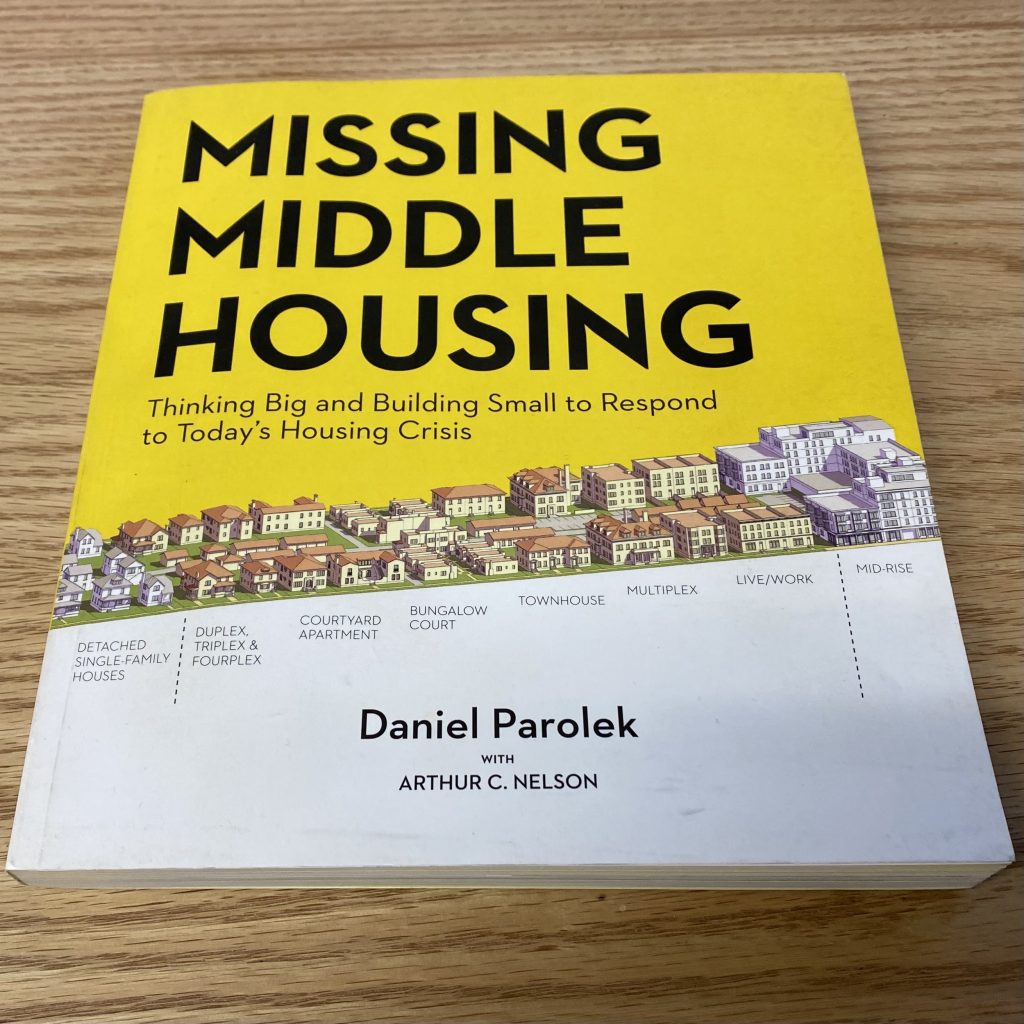
Missing Middle Housing
Missing Middle Housing is a term for something most of us already recognize: the older duplexes, fourplexes, cottage courts, and upstairs apartments that quietly knit a town together.
Daniel Parolek of Opticos Design, who grew up just down the road in Columbus, Nebraska, coined the term “Missing Middle” to describe a range of house‑scale buildings with multiple units—compatible in scale and form with detached single‑family homes—located in a walkable neighborhood. Think of it as everything between the big‑lot single‑family house and the big apartment complex: side‑by‑side and stacked duplexes, triplexes and fourplexes, bungalow and cottage courts, courtyard apartments, small townhouses, and live‑work units. These buildings can deliver meaningful new homes at low heights and familiar scales, while supporting the kind of everyday walkability that makes a Main Street feel alive.
His book, Missing Middle Housing: Thinking Big and Building Small to Respond to Today’s Housing Crisis, was published by Island Press in 2020. The illustrations alone make it a must-buy, not to mention the case studies.
Parolek’s core message is that we have to think big about outcomes but build small to get to more housing on the ground. Rather than chasing only large greenfield subdivisions or 100‑unit complexes, Missing Middle Housing focuses on incremental, house‑scale additions scattered through existing neighborhoods. That approach matches what Strong Towns calls making “small bets” on the community: a duplex here, a fourplex there, a cottage court on a deep lot, a small building bridging the edge between a neighborhood and the commercial strip. Over time, dozens of small, context‑sensitive projects can add up to a meaningful expansion of housing choice and local tax base without overwhelming local infrastructure or character.
So why is this middle “missing”?
A big reason we stopped building Missing Middle homes is the legal and regulatory toolbox we built after the Great Depression. Conventional zoning separates uses, caps density, and often reserves most residential land for detached single‑family homes only. Parking minimums assume every unit will generate two or more cars—though in most small towns I’ve lived in is the starting point when we live far from everywhere. Yet our rules and regulations also require large off‑street lots that physically crowd out small buildings on older town-sized lots.
Modern building and fire codes, including how the International Building Code is interpreted and enforced, can ratchet up construction requirements once a building crosses an arbitrary unit threshold, making a 3–8 unit building much harder and more expensive to deliver than either a single house or a big, elevator‑served project. Financing and appraisal practices then follow those categories, reinforcing the bias against middle‑scale projects that don’t fit neatly into “single‑family” or “multifamily” boxes. Don’t even get me started on fire sprinklers in house-scale projects.
Historically, none of this was exotic in small towns. Before zoning “locked down” traditional patterns, many rural communities mixed single‑family homes with small multifamily and commercial uses by default. Duplexes and modest fourplexes on corner lots, small walk‑ups near schools or mills, and upper‑story apartments over Main Street shops gave towns flexible, attainable housing for teachers, shop clerks, farmworkers, and young families. Marohn and Herriges remind us how in New England, triple‑deckers let working‑class owners live in one unit, house extended family in another, and rent out the third to make the mortgage pencil out. Boarding houses, residential hotels, and accessory units behind larger homes filled in niches for seasonal workers, single adults, and elders. Over time, as zoning and FHA preferences hardened around the ideal of the detached house in a homogenous district, many of these forms were banned, labeled “nonconforming,” or made economically infeasible by setback, lot‑size, and parking rules.
Getting Back our Missing Middle
Viewed through a rural lens, that loss matters. Many small towns today still have the bones of one or more walkable neighborhoods and a historic downtown—exactly the settings where Missing Middle Housing can work best.
- Duplexes and fourplexes can tuck comfortably along side streets within walking distance of schools and clinics, spreading the land cost over several units while keeping buildings to two or three stories.
- Cottage courts and courtyard apartments can turn deep or oddly shaped lots into clusters of small homes that share green space, particularly around churches, elevators, former school sites, or decommissioned public works yards.
- Upper‑story apartments over Main Street storefronts can once again house service workers, young adults, and downsizing elders within a short walk of groceries, cafes, and civic spaces.
- Accessory dwelling units—backyard cottages, garage apartments, “granny flats”—offer a way for older homeowners to age in place, host caregivers or family members, or generate income in a way that uses existing infrastructure efficiently.
How do we bring these Missing Middle housing types to small towns the 2020s?
- Upper-story Main Street apartments—two- or three-story downtown buildings used to be built by habit with upstairs space for offices or apartments, for the owner of first-floor retail shops or other working-class families. These spaces can be re-activated, but the city codes may need to be adjusted to cash-flow improvements while still assuring building safety.
- Side-street duplexes and fourplexes—House-scale building often fit just fine on corner lots, or even some mid-block lots, often with two or four untis front-to-back. These are great workforce and starter-homes.
- Small walk-up buildings near services—Two- to three-story walk-ups (6-12 units) should be encouraged for infill on larger lots, especially near schools, clinics, or civic spaces. Built like a big house or small lodge, a good architect will include a shared lawn or simple courtyard.
- Mixed-use Corner Stores—once upon a time, most small towns and urban neighborhoods had their general store on the corner, where we could walk to pick up a gallon of milk or a loaf of bread; they might have a barber shop, café, or offices as a convenience for nearby residents. Gentle density can fit when done right.
For rural readers who want to go deeper, there are good maps and diagrams to borrow.
- Opticos Design and MissingMiddleHousing.com present case studies and illustrations of how different types can be blended onto standard blocks, at the “end grain” of single‑family streets, or as transitions between neighborhoods and Main Streets.
- AARP’s work on ADUs and its Livability Index provide practical examples and model language for communities interested in backyard cottages and multi‑generational living as part of an aging‑in‑place strategy.
Combined with the zoning reform ideas from Escaping the Housing Trap and other sources—small code changes that legalize gentle density and reduce barriers for house‑scale projects—these resources give small towns and rural counties a concrete way to reintroduce the Missing Middle in forms that feel familiar.
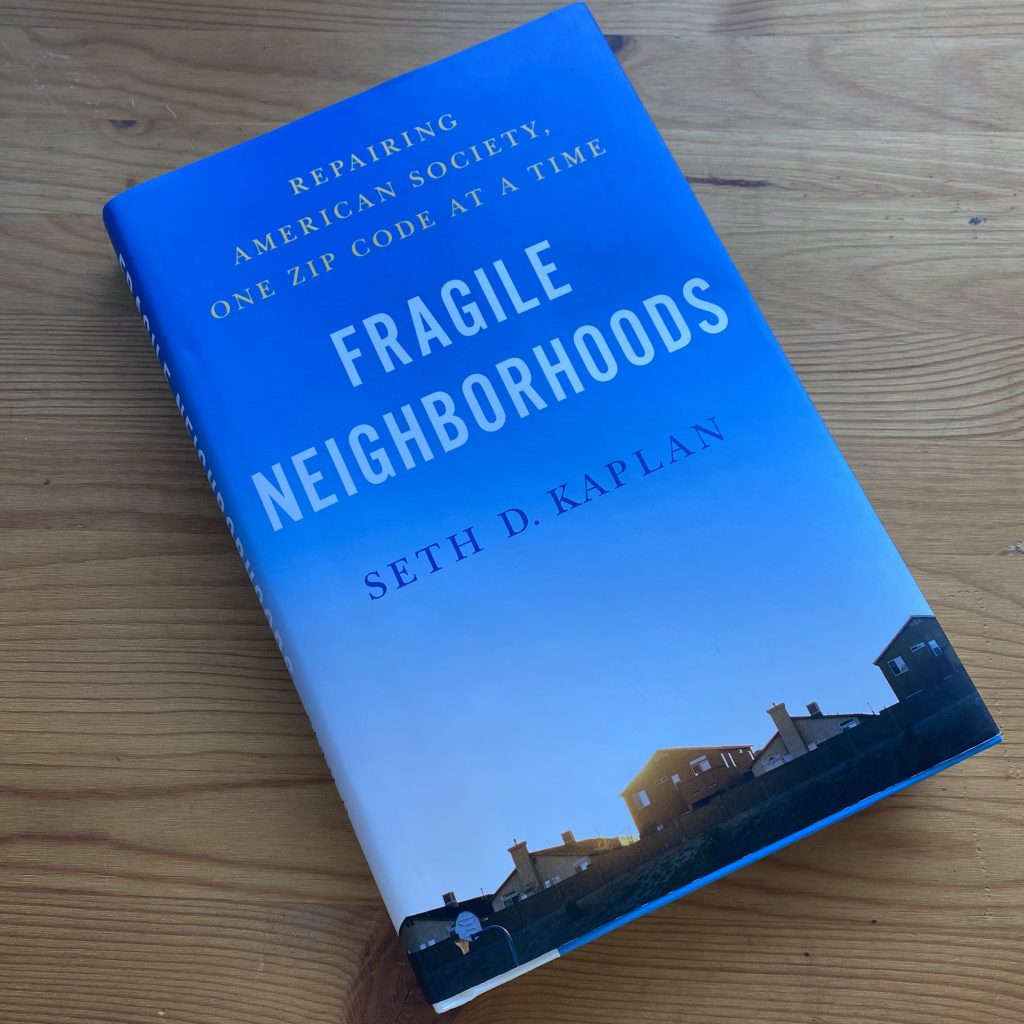
Neighborhoods as the Real Unit of Housing Policy
Neighborhoods are where rural housing policy actually lands in people’s lives. In his book Fragile Neighborhoods: Repairing American Society, One Zip Code at a Time, Seth D. Kaplan describes neighborhoods as “social habitats” that sit upstream of many social and economic outcomes: they shape who we know, what we can access, how safe we feel, and even how long we live.
Families occupy homes, homes make up neighborhoods, and neighborhoods build community. When that habitat is strong—rich in relationships, institutions, and shared spaces—housing investments tend to stick. When it’s fragile, even new housing can feel like it’s built on sand.
Jane Jacobs is one pioneer who understood this long before we had the language of “fragility.” She argued that mixed‑use, fine‑grained neighborhoods—the ones that look “messy” on a zoning map—often produce the deepest social order and resilience. Different uses and building types side‑by‑side put people in contact throughout the day, creating eyes on the street, informal guardianship, and a culture of looking out for each other. Strong Towns writing parallels this, pointing to older “illegal” neighborhoods—triple‑deckers in New England, lodgers in spare rooms, residential hotels and SROs—as places where flexible forms and modest densities supported both housing supply and social infrastructure. These weren’t planned as systems; they evolved as practical responses to how people actually lived and worked, and they made it easier for new households to plug into a community.
Kaplan’s case studies show how a neighborhood lens changes what “housing policy” means. In Atlanta’s East Lake neighborhood, for example, success wasn’t just replacing distressed public housing with something nicer (excerpt here behind soft paywall). The East Lake Foundation and partners pursued three pillars at once: high‑quality mixed‑income housing units; a cradle‑to‑career educational pipeline (anchored by Drew Charter School) that supports both college and trades; and a network of institutions, facilities, and programs for community wellness—from the YMCA to economic vitality efforts and youth programs. Purpose Built Communities distilled these into a replicable model: mixed‑income housing, great schools, and robust neighborhood institutions working together, not in silos.
Repairing Fragile Neighborhoods in Rural Places
The lessons for small towns map surprisingly well.
- First, prioritize neighborhood revitalization and job opportunities at the same time; new units alone won’t fix fragile social fabric.
- Second, build places that are walkable, mixed‑use, and mixed‑income, with shared spaces and “third places” like cafes, libraries, and parks, while addressing blight head‑on instead of letting it linger.
- Third, work on regulations which allow a traditional, walkable Main Street and neighborhood centers—legalizing upper‑story apartments, live‑work spaces, corner stores, and Missing Middle Housing so the built form can support daily life.
- Empower local leadership—public, private, and civic—who see neighborhood health as a long‑term project and are willing to coordinate across housing, education, and economic development.
In rural communities, fragile neighborhoods show up in specific, visible ways: disinvested main streets with empty storefronts, aging housing stock that no one can finance, run‑down tract homes on the edge of town, or single‑use subdivisions far from schools and services. Neighborhood‑level work—block‑by‑block rehab, clustering new homes near a strong school or library, reactivating a corner store or cafe, creating shared spaces for events and youth activities—can stabilize demand and make added housing feasible. That’s where Missing Middle Housing can plug in: duplexes, small walk‑ups, and cottage courts that reinforce an existing “social habitat” rather than scattering units at the fringe.
Oh, and by the way, how about ramping up classes for building trades at your local high school and community college? Win-win.
Demographic Headwinds in a Neighborhood Context
As we’ve seen in this February series, demographic headwinds—aging populations, smaller households, and sometimes stagnant or uneven growth—mean that rural places have less margin for error. An older age structure and constrained incomes make it harder to carry excess infrastructure or long stretches of blight, and smaller household sizes mean more units are needed even when population is flat.
In that context, neighborhood quality acts as a multiplier on both supply and affordability: strong, walkable, mixed‑income neighborhoods make it easier to keep and attract residents, support local businesses, and justify incremental housing investments; fragile ones push people away and deepen the housing trap. For rural planners and local leaders, treating neighborhoods as the real unit of housing policy is how we link individual homes to the broader community futures we want to see.
Hopefully you might start seeing how the Housing chapter in your Comprehensive Plan should be more than a dry recitation of household and housing unit counts, and woeful statements on declining publc housing funds.

Policy Tools: Levers for Rural Housing
Federal, state, and local housing policy can feel a long way from the gravel roads and grain bins of rural America, but those decisions shape what actually gets built on the ground. This section looks at three layers of tools that matter for small towns: big federal packages like the Housing for the 21st Century Act and the ROAD to Housing Act, which could tweak everything from USDA repair loans to the rules for factory‑built homes; state‑level initiatives on Missing Middle and ADUs, housing trust funds, and Section 515 preservation; and the very local zoning and subdivision choices that still determine whether your town can add a duplex on Main Street or keep an old 515 property habitable. The details are messy, and there are plenty of reasons for skepticism about anything that comes out of Washington or a distant state capitol, but if we ignore these levers we leave money and flexibility on the table.
Federal housing policy: two competing visions
In Washington these days, two large bipartisan housing packages frame the current debate: the House‑passed Housing for the 21st Century Act (H.R. 6644) and the Senate’s ROAD to Housing Act of 2025 (S. 2651). Both try to boost supply, modernize programs, and address gaps in rural and small‑market housing, but they come at the problem from different angles.
HR 6644
The Housing for the 21st Century Act is a large, bipartisan federal housing package (H.R. 6644) aimed at increasing housing supply and improving affordability, mainly by modernizing existing programs and cutting red tape rather than creating a single, brand‑new program.
The House Bill has several related features:
- The bill is intended to modernize major block grant programs (HOME and Community Development Block Grants or CDBG
- Reduces regulatory barriers while supposedly supporing local planning
- Creates planning and implementation grants for regional planning agencies and local governments to review/update codes that constrain housing production and to develop “pattern books” of pre‑approved home designs to speed permitting.
- Directs HUD to provide model zoning frameworks to encourage pro‑housing local codes, and asks GAO to study the feasibility and implications of a federal building code
- Modified Manufactured Housing Standards
- Removes the federal requirement that HUD‑certified manufactured homes include a permanent chassis, a technical rule that advocates say impedes modern factory‑built designs.
- Clarifies HUD’s role as primary federal standard‑setter for manufactured housing construction and safety.
- Requires FHA to evaluate how to expand access to small mortgages under $100,000, which matter most in rural and lower‑cost markets where some manufactured and modest site‑built homes may be priced below that level.
- Rural housing and USDA programs
- Expands access to USDA’s Section 504 Home Repair program and pushes USDA to shorten processing timelines and modernize its systems.
- Orders a review of rural housing tools to improve how they support repairs, rehab, and new construction in small towns and rural counties.
- Streamlining inspections and oversight
- Allows units already inspected under one federal housing program to count for Section 8 (Housing Choice Voucher) inspections, reducing duplicative inspections for landlords and agencies.
- Enhances oversight of HUD‑funded housing counselors and improves data/coordination across HUD, USDA, and VA to track outcomes and gaps.
- Tenant, veteran, and borrower protections
- Excludes veterans’ disability benefits from income calculations for the HUD–VA VASH program, aligning it with other HUD income rules and effectively making it easier for disabled veterans to qualify.
- Requires mortgage lenders to give veterans clearer disclosures about VA home‑loan eligibility
- Creates a pilot for assisted families to build savings via rent‑based escrow accounts and establishes a federal eviction‑assistance helpline; also pilots temperature sensors in assisted units to ensure basic habitability.
H.R. 6644 recently cleared the House with an overwhelming bipartisan vote (390‑9), and housing advocates see it as a rare moment of momentum on the supply side, including for rural communities.
The House bill was co-led by my own Representative Mike Flood (R-Nebraska), who my colleagues say has been very supportive on local housing issues. Myself, I’m skeptical it will come to any good—not much of any good comes out of Washington, DC, these days.
S. 2651
The ROAD to Housing Act (S. 2651) is a broader Senate package still working its way through the upper body. The Act has roughly 40 provisions touching housing supply, homelessness, manufactured housing, disaster recovery, rural housing, program reforms, veterans’ housing, and inter‑agency coordination. Key elements for rural places include:
- Technical assistance and model‑code work on land use and zoning, including state model codes, appeals processes, and best practices for disposing of publicly owned land for affordable housing—with explicit differentiation between rural, suburban, and urban contexts.
- Reforms and support for USDA Title V rural housing programs and self‑help/homeownership initiatives, acknowledging that rural rental and ownership programs need modernization rather than neglect.
- Grant‑making priorities that can favor communities with particular needs (for example, some competitive grants can weigh distressed or opportunity‑zone areas more heavily), which may include rural towns if they qualify.
A Need for Compromise
In broad strokes, H.R. 6644 is more prescriptive about specific tools like pattern books and rural set‑asides, while S. 2651 leans into coordination, technical assistance, and program reform. Analysts at places like the Bipartisan Policy Center note that several ROAD provisions are mirrored or partially incorporated in H.R. 6644, and vice versa, suggesting room for a conference or combined package if Congress chooses to move a compromise forward.
The House vote on H.R. 6644 increases pressure on the Senate to act, but advocates caution that election‑year dynamics, floor time, and broader fiscal negotiations will determine whether a final bill makes it to the President’s desk in 2026. For rural leaders, the practical takeaway is to pay attention to:
- Pattern‑book/style implementation grants that could help small towns pre‑approve Missing Middle and infill designs, and
- Any USDA rural housing reforms or preservation funds that keep existing Section 515‑type properties viable.
Again, I’m skeptical, but it doesn’t seem like either bill would do too much damage.
B. State policy and tools
States are increasingly stepping into housing policy, sometimes aggressively, sometimes with a lighter touch. For rural communities, three categories seem most likely to create meaningful impacts and/or unfunded mandates: Missing Middle/ADU reforms, housing trust funds with rural carve‑outs, and preservation of legacy rural rental stock like USDA Section 515.
Missing Middle and ADU reforms/mandates in several states have legalized duplexes, triplexes, fourplexes, and ADUs on single‑family lots (or near transit, which is more of a city thing). These statutes are often paired with model code language and offset by offers of technical assistance.
While many of these reforms are aimed at metros, they offer patterns rural states might adapt by:
- Providing optional “small‑town” model codes that legalize gentle density (duplexes, fourplexes, cottage courts) in or near existing town limits.
- Offering planning grants or circuit‑rider planners to help rural jurisdictions update zoning and subdivision ordinances without having to do it alone.
- Calibrating rules to avoid overburdening rural infrastructure—allowing more units on existing streets and systems instead of pushing sprawl at the edge.
On the finance side, state housing trust funds and dedicated preservation programs are starting to treat rural differently instead of as an afterthought. In full disclosure, this is not an area I have much direct experience with. The Minnesota Housing Partnership has some informative resources on the USDA Section 515 Program, developed in collaboration with UMN’s Center for Urban and Regional Affairs and others.
Some states explicitly reserve a share of housing dollars for rural projects or create scoring bonuses for developments in small towns. Others, like New York, have set up programs specifically to preserve and rehabilitate USDA Section 515 properties so they remain viable and affordable once original mortgages mature. Research on Section 515 warns that the Midwest and other regions stand to lose thousands of affordable rural rental homes as properties exit the program, making preservation and recapitalization a critical state‑level task. For rural advocates, pushing state housing agencies to create rural set‑asides, 515‑preservation programs, and flexible financing for Missing Middle‑scale projects can be as important as federal reforms.
C. Local policy and action
At the local level, the tools are more granular but just as powerful. Marohn & Herriges, for exaple, show how small code choices—about use, form, parking, and process—either lock in scarcity or allow incremental growth. For rural towns, three categories of land‑use reform line up with both Missing Middle and Strong Towns ideas:
Legalize duplexes, fourplexes, and ADUs on existing lots in or near town,
Where there are utilities available, this can mean changing single‑family districts to allow “up to four units by right” on existing lots, or at least allowing a second unit (ADU) wherever you can already build a house. It also means updating dimensional standards (lot size, setbacks, height) so that an actual duplex or fourplex can fit on a typical town lot without needing constant variances.
Reduce parking minimums for infill.
Parking ratios designed for big‑box retail or highway‑oriented apartments can kill a simple fourplex or a small main‑street rehab before it starts. First off, get rid of parking requirements downtown, and maybe set “build-to” lines so new structures are built at the front lot lines rather than wasting space on parking lots. For walkable cores, towns can set lower minimums or allow on‑street parking and shared lots to count, especially for uses within a short walk of each other.
Upper‑story apartments on Main Street and small cottage courts on under‑used land.
Pushing gentle density a bit further might mean creating or revising a downtown mixed‑use district to make residential over retail “by right”, with provisions for building and fire code safety. Or you might try writing a simple cottage‑court standard (minimum shared open space, small unit size, shared driveways) for church or school surplus land or deep lots near the core.
Implementation
Implementation is where ideas we’ve discussed throughout this series come back into play. A housing action plan should connect demographic trends and market realities to specific zoning text changes and capital investments.
In practice, this can look like:
- Using demographic analysis (aging population, household size, income) to set clear targets for how many small units, accessible units, and starter homes you need over the next 10–20 years.
- Mapping where infrastructure is already in place—water, sewer, streets, schools—and focusing Missing Middle zoning changes there first, rather than extending pipes and roads farther out.
- Tying capital improvement plans (for streetscapes, sidewalks, school and library upgrades, parks) to your neighborhood strategy so that walkable, mixed‑income areas become more attractive places to invest and live.
- Aligning local incentives—fee waivers for small infill projects, expedited review for Main Street rehabs, local match dollars for state/federal grants—with the types of housing and locations your plan calls for.
For rural communities facing tight budgets and demographic headwinds, the through‑line is simple: use federal and state tools where you can, but make sure your local rules and capital priorities are actually pointing in the same direction. That is how pattern books, Section 515 preservation, and zoning reform stop being abstract ideas and start showing up as real homes, on real blocks, in real small towns.

Who’s Doing the Work: Rural Housing Organizations and Networks
Getting better policy on the books is only half the battle; implementation is what actually puts new homes on the ground. In rural America, this work is often carried by a relatively small bench of nonprofits, CDFIs, and regional development groups who know how to braid federal, state, philanthropic, and local resources into real projects. They help small towns write grants, structure deals, preserve aging properties, and build the capacity needed to keep housing work going after the first ribbon‑cutting.
Here are some folks doing the hard work in small towns and rural counties across the country. I’m sure there are more of them, but these groups are sort of my current inspirations.
Housing Assistance Council
The Housing Assistance Council (HAC) is the closest thing we have to a national backbone organization for rural housing. Since 1971, HAC has provided below‑market financing, technical assistance, research, and policy support to improve housing conditions for the rural poor, with a special emphasis on the “poorest of the poor in the most rural places.” For a small town or regional nonprofit, HAC can be a lender, a trainer, and a policy ally. They also provide a portal for rural data, such as their Taking Stock publication.
HAC’s new Center for Rural Multifamily Housing Preservation is a special initiative focused on keeping existing rural rental properties livable and affordable, with rehabilitation at the core of its work. Rehab typically includes addressing deferred maintenance (roofs, systems, accessibility, health and safety) so that older properties can remain quality, healthy places for people to live. The Center is a cross‑disciplinary initiative, particularly in relation to USDA’s Section 515 portfolio—often the only deeply affordable apartments in many small towns—and tries to stop those units from being lost to disrepair, conversion, or expiring subsidies.
NeighborWorks
NeighborWorks America, through its Rural Initiative, supports a network of local housing and community development organizations with grants, training, and peer learning tailored to small‑town challenges. Its USDA‑funded Rural Community Development Initiative has helped groups across the country secure millions for energy‑efficient rehabs, shared‑equity homeownership, and workforce housing strategies, showing what’s possible when rural organizations get flexible, targeted support.
NeighborWorks has a network of affiliates working on community challenges at the local level. Here in Nebraska, we have two active organizations—NeighborWorks Lincoln in the state capital and NeighborWorks Northeast Nebraska based in Norfolk. If your community has a NeighborWorks affiliate—or could help incubate one—that’s a powerful way to add capacity without reinventing the wheel.
Partners for Rural Transformation
Partners for Rural Transformation is a coalition of regional CDFIs working in places like the Rio Grande Valley, Appalachia, and the Deep South, where capital is scarce and poverty is persistent. These CDFIs provide loans, technical assistance, and policy advocacy to improve housing, infrastructure, and economic opportunity, often in communities that have no other mission‑driven lender. For rural regions facing chronic underinvestment, aligning with one of these partners (or a similar regional CDFI) can open doors to financing and expertise that wouldn’t otherwise reach a small town.
Local Initiatives Support Corporation (LISC)
Rural LISC focuses specifically on small‑town and rural communities, supporting the development and preservation of affordable, high‑quality housing and the revitalization of underinvested commercial districts. It brings knowledge, technical assistance, and flexible capital to projects that repurpose or rebuild outdated buildings and infrastructure, including missing‑middle‑style infill and adaptive reuse in historic downtowns. If your community is trying to turn an old school, elevator, or underused Main Street block into housing, Rural LISC is a natural partner.
AARP
The AARP, formerly the American Association of Retired Persons, approaches housing through the lens of aging and livability. Through its Network of Age‑Friendly States and Communities and related tools, AARP helps local leaders embed age‑friendly strategies into comprehensive plans, zoning laws, and transportation policies, including expanded housing options like ADUs, home‑sharing, and intergenerational models. For rural towns with aging populations, AARP’s model codes and design guides on ADUs and age‑friendly neighborhoods provide ready‑made language to support backyard cottages, accessible rehabs, and “village”‑style support networks.
Southwest Minnesota Housing Partnership
Earlier in my career, I worked in Southwest Minnesota. We shared our offices with the Southwest Minnesota Housing Partnership (SWMHP). SWMPH offers a strong regional model which could be adopted most anyplace local leaders express some vision and at least a small appetite for risk. SWMHP develops and preserves affordable housing across south‑central and southwest Minnesota, increasingly in partnership with employers who recognize that workforce housing is essential to recruitment and retention. The Housing Partnership is a NeighborWorks affiliate, and was recognized in 2025 for their work with workforce housing in the Rural Community Development Initiative.
Southeast Nebraska Development District
The Southeast Nebraska Development District (SENDD), which covers my part of Nebraska, offers another instructive template. Most areas of the US are covered by an economic development district or regional development organization.
Through its Southeast Nebraska Affordable Housing Council (SENAHC), SENDD runs comprehensive housing programs: new construction, down‑payment assistance, purchase‑rehab‑resale, Low‑Income Housing Tax Credit management, and owner‑occupied rehabilitation. Its Rural Workforce Housing Fund (RWHF) pools $1.8 million for eligible workforce projects across a 17‑county service area, while other initiatives focus on purchase‑rehab‑resale and creative strategies like moving solid older houses onto infill lots with modern utilities to lower costs for new buyers. In Thayer County, where I’ve been working to update countywide and community plans and zoning regulations, the Thayer County Economic Development Alliance partners with SENDD to make funds awarded through the Nebraska Affordable Housing Program available to provide down payment assistance to homebuyers for the purchase of existing homes.
SENDD is currently working with member counties to facilitate new housing initiatives, such as moving older houses on to infill lots with modern utilities at a much lower cost to new homebuyers. Their combination of pooled capital, hands‑on development, and creative reuse is exactly the kind of experimentation many rural regions need.
Building A Bench for Housing
For smaller communities, rural counties, or regional development organizations, “building a bench” means not trying to do all of this alone. We all need help… and we all need to help grow the next generation of rural housing leadership. Iinvite partners, plus local employers and philanthropy, to the same table. The policy tools we’ve discussed only become real homes when there’s a capable local team ready to turn them into deals, and these organizations are the scaffolding that can help rural places build that team.
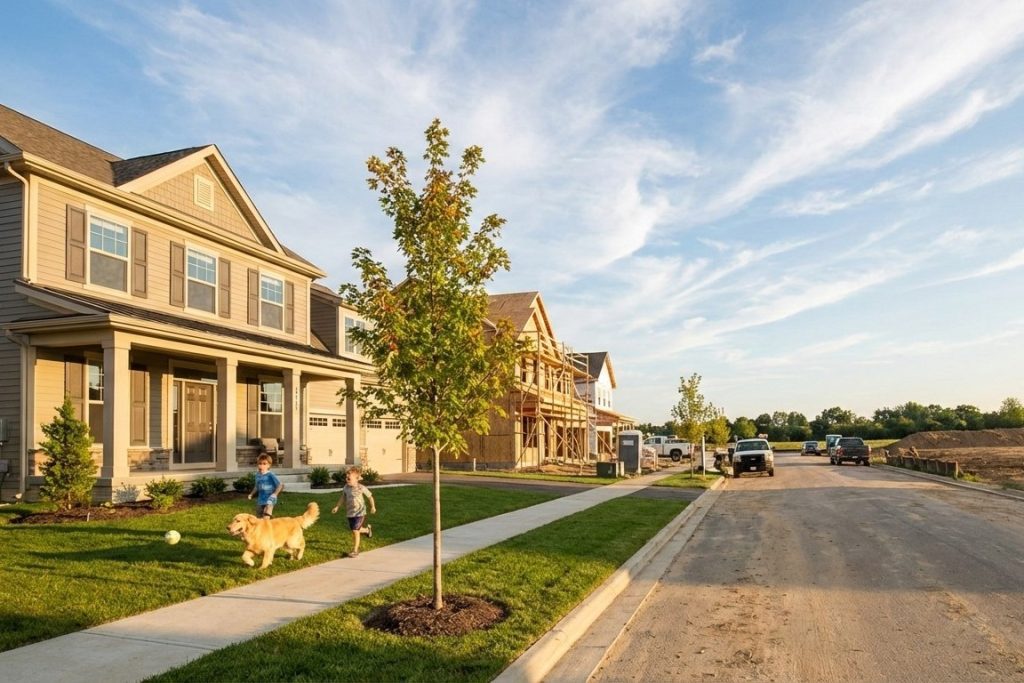
Bringing Rural Housing Together: From Demographics to Decisions
Over the course of Februay, this series has followed a simple arc: from numbers, to people, to places.
- Demography set the currents—slower growth, aging populations, rising diversity, and uneven migration—that define what’s even possible for rural communities.
- Affordability showed who is being squeezed out of rural places as costs rise faster than incomes, especially for renters, young adults, and lower‑income households in amenity or tourism regions.
- Last week’s supply analysis mapped where the pipeline is broken: older stock that doesn’t fit today’s needs, thin rental markets, and very little new construction in many small towns, even when local leaders can see demand right in front of them.
This week is about moving from diagnosis to housing action. If demography is the current, local housing policy is the rudder—and we now have a clearer sense of what we’re steering through. We need affordable housing, but we also need incentives so our housing matches the needs of residents… and those who need to be residents. Neighborhood‑scale, missing‑middle‑friendly codes are one piece: legalizing gentle density of duplexes, fourplexes, ADUs, and upper‑story apartments in and around town so we can add homes gently where infrastructure and community already exist.
Keep an eye on federal and state initiatives like H.R. 6644, S. 2651. USDA programs, and state housing trust funds are another resource: rather than treating them as distant bureaucracies, rural communities can use them to underwrite preservation, rehab, and modest infill that fits local incomes.
A key is partnership—with organizations like HAC, NeighborWorks, Rural LISC, regional CDFIs, and age‑friendly networks that know how to braid capital, technical assistance, and neighborhood‑level strategies in real rural places.
Pracitcal Steps Forward
To make that practical, here’s a short checklist you can work on over the next year:
- One action for your local city or county jurisdiction”
Start your next code update; pick a single, specific change you can actually pass: for example, allow one ADU by right on any residential lot in town, or allow duplexes and fourplexes on corner lots within a set distance of Main Street.
Alternatively, create a simple “downtown mixed‑use” district that explicitly permits upper‑story apartments over shops with reduced parking minimums.
Don’t forget housing rehabilitation and repair—the best new house may be saving an old house. - One federal or state program to explore:
Identify one program that fits your situation and commit to learning how to use it: H.R. 6644’s pattern‑book and planning grants (if enacted), USDA Section 502 or 515 tools, a state rural housing trust fund, or a Section 515 preservation initiative. Use your demographic and housing‑needs analysis from earlier in this series to frame a concrete project—a rehab program, a small missing‑middle pilot, or a preservation deal—to take into that program’s application cycle. - One potential partner to call:
Reach out to at least one external partner who can strengthen your bench: HAC for rural lending and TA, a NeighborWorks or Rural LISC affiliate, a regional CDFI in the Partners for Rural Transformation network, or a group like MHP that offers rural technical assistance. Ask them to look at your town’s data and plans, and to help you prioritize one “starter” project where their capital or expertise can make the difference between a good idea and a groundbreaking.
Demography isn’t going to stop moving under our feet, and national markets aren’t suddenly going to make rural housing easy. But by gathering your “army of the willing”, by linking the trends we’ve explored this month to concrete decisions about codes, programs, and partnerships, small towns can give themselves a fighting chance to be places where people can live, work, and age well—on purpose, not by accident.
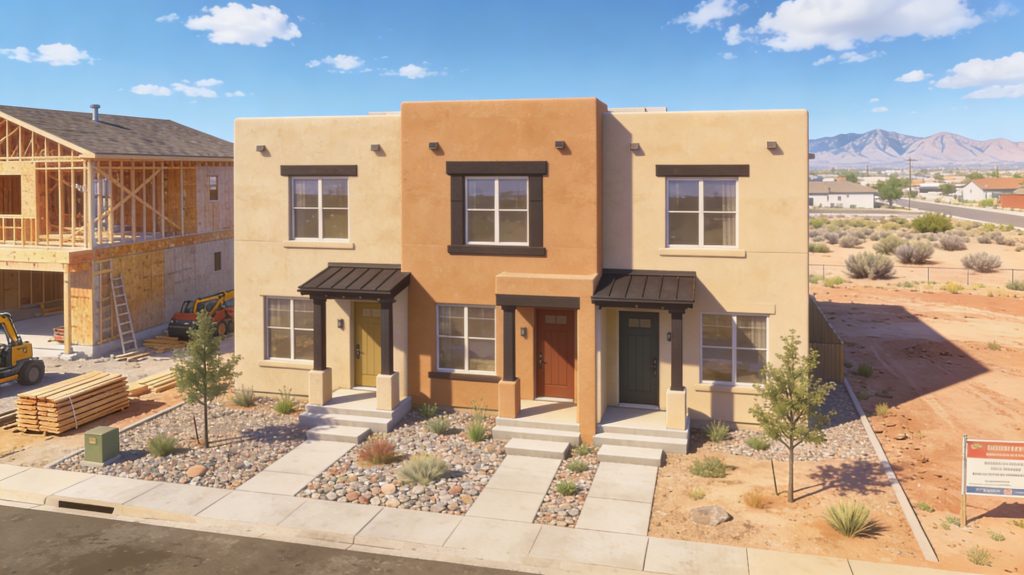
Coming Up Next
In March we’re going to work on economic development. Years and years ago, economic development meant industrial recruitment; some people haven’t got the word yet, but the days it was all about marketing are long gone. The second wave of economic development was entrepreneurship, which is still very important to grow jobs and income. The third wave looked more regionaly at economic clusters, which many of us are still working on. Housing and resident recruitment, it seems, are the fourth wave and we’re really still trying to figure this out. As Ben Winchester at the University of Minnesota says, “We need modern tools for modern economies.”
Thanks for reading.
P.S. I only touched on a small part of Chuck Marohn and Danile Herrige’s Housing Trap book here, or Seth Kaplan’s Fragile Neighborhoods. Even less of Dan Parolek’s Missing Middle Housing book (it is full of case studies and inspiring illustrtions). If you can’t buy a copy of each, check your local library.
Resources
Rural Housing Webinar: A free, no-charge webinar recording with Ben Winchester from the University of Minnesota Extension, with Becky McCray and Deb Brown of SaveYour.town. https://learnto.saveyour.town/rural-housing-webinar
Rebecca Undem’s Growing Small Towns Podcast: Rural Housing Data Discussion with Ben Winchester
Reading
Escaping the Housing Trap: The Strong Towns Response to the Housing Crisis by Charles L. Marohn, Jr, and Daniel Herriges (Wiley, 2024)
Fragile Neighborhoods: Repairing American Society One Zip Code at a Time by Seth D. Kaplan (Little, Spark Brown, 2023)
Missing Middle Housing: Thinking Big and Building Small to Respond to Today’s Housing Crisis by Daniel Parolek with Arthur C. Nelson (Island Press, 2020)
The New Localism: How Cities Can Thrive in the Age of Populism by Bruce Katz and Jeremy Nowak (Brookings Institution Press, 2018)
Resources
USDA Rural Development—Rural Housing Service: https://www.rd.usda.gov/about-rd/agencies/rural-housing-service
USDA Economic Research Service (ERS)—Rural Economy & Population: https://www.ers.usda.gov/topics/rural-economy-population
US HUD Exchange—Rural Gateway: https://www.hudexchange.info/programs/rural/
Housing Assistance Council (HAC) Research and Information: https://ruralhome.org/information-center/rural-research-guides
NeighborWorks America Rural Initiative: https://www.neighborworks.org/Community/Rural
Partners for Rural Transformation: https://www.ruraltransformation.org/
Rural Community Assistance Corporation (RCAC) Housing Resources: https://www.rcac.org/housing
Southwest Minnesota Housing Partnership (SWMHP): https://www.swmhp.org/
Southeast Nebraska Development District (SENDD): https://sendd.org/
More from JCShepard.com
2026: Bring Your Plans to Life – Monthly Themes Preview
- Reviving Rural America: Why Heritage Tourism Is a Game-Changer Now (September 2025)
- How Small Towns Succeed: A Proven Playbook for Rural Action (November 2025)
- The Rural Comeback: How Small Town Innovation Sparks Growth (August 2025)
- How Small Towns Can Build a Strong Outdoor Economy Without Selling Out (June 2025)
Check out The 12 Planning & Sustainability Books You Need in 2026 and browse through the Small Town & Rural Community guides on our Resources page.
(As an Amazon Associate, we may earn commissions from qualifying purchases. Check your local library or bookshop, too.)
.