
The Canadian Perspective on Rural Resilience
Over the past month, we’ve explored what makes rural economies resilient. From the diverse economic base beyond agriculture, to the importance of retaining and expanding local businesses, to the rise of entrepreneurship and micro-enterprises, and most recently, to the role of innovation and community-driven development—each article has shown that resilience is never the result of a single strategy. It emerges when communities combine local strengths, leadership, and creativity.
But rural resilience is a North American story. The U.S. and Canada share common heritage and geography—the world’s longest undefended border spans 5,525 miles (8,891 kilometers) across land and water from coast to coast. In both these nations of North America, small towns and rural regions are navigating many of the same challenges: shifting global markets, demographic change, and the urgent need for digital and physical infrastructure. What’s striking is how Canadian communities—often supported by coordinated federal and provincial policies—have responded with approaches that balance tradition with innovation.
From resource-based diversification in Newfoundland & Labrador, to immigration pilots revitalizing towns in Manitoba, to policy innovations like Quebec’s community forestry model, Canada offers valuable lessons in how rural places can adapt and thrive.
In this final article of our August series, we’ll explore the Canadian perspective on rural resilience—highlighting strategies, case studies, and policies that not only sustain local economies but also offer insights for rural America and beyond.

Diversification Beyond Natural Resources
Bernadette Jordan, Canada’s first Minister of Rural Economic Development, writes in the introduction to Canada’s Rural Economic Development Strategy “Almost 20 percent of our population lives in rural, remote, Indigenous, coastal, or northern communities, and these communities contribute about 30 percent of Canada’s economic output. For these communities, diverse geographies and climates present unique challenges, and there is no one-size-fits-all solution.”
For generations, many rural Canadian economies have been anchored in natural resources—mining, forestry, fisheries, and energy. These industries remain vital, but they are also vulnerable to global price swings, automation, and environmental pressures. Communities that once relied on a single resource sector now face the challenge—and the opportunity—of diversification.
Why diversification matters:
- Economic Stability – Reduces dependency on volatile global commodity cycles.
- Job Creation – Expands opportunities beyond extraction and heavy industry.
- Community Vitality – Attracts new residents and visitors by broadening local economic activity.
- Environmental Balance – Lessens the long-term ecological risks of overdependence on resource extraction.
Rural diversification in Canada often builds on place-based assets—tourism rooted in natural beauty, culture, and heritage; food processing linked to local agriculture; and emerging bio-industries that use forestry and farming byproducts for clean energy or new materials.

Case Example: Newfoundland & Labrador
For decades, Newfoundland & Labrador’s rural economy relied heavily on offshore oil and fishing. But the downturn in oil prices and the long-term decline in traditional fisheries created economic uncertainty. In response, the province made a strategic push into tourism and cultural heritage industries.
- Investments in coastal tourism—such as the East Coast Trail and whale-watching tours—have drawn international visitors.
- Support for Indigenous and cultural tourism has created new jobs while honoring local traditions.
- Initiatives in film production and the creative arts sector have expanded the economy beyond resource extraction.
The result has been a more balanced and resilient rural economy, one that still values its traditional industries but increasingly integrates new sectors to reduce risk and foster long-term sustainability.
One example is Shorefast, a Canadian registered charity, was established with the goal to build economic and cultural resilience on Fogo Island, a 400 year-old outport fishing community. As they say on their website, “Its practices are aimed at unleashing the power of place and building new models of place-based economic development.” Their initiatives include a national institute to catalyze holistic development of local economies, a 29-room inn focused on regenerative tourism (it looks like something out of a James Bond movie), arts, workshops, foodways, environmental stewardship, and much more.
It’s important to note that diversification and modernization come with tensions. Debates around oil and gas in Newfoundland, large hydro projects in Quebec, and potash mining in Saskatchewan highlight the environmental trade-offs rural regions continue to navigate. Resilience, therefore, is as much about managing conflict as it is about pursuing opportunity.
Lesson: Diversification is not about abandoning heritage industries—it’s about building on them to create a more flexible and adaptive economic base.

Technology & Economic Development
Rural Canada is experiencing a wave of modernization driven by technology. While automation and digital tools are transforming industries worldwide, their economic impact on rural communities is especially profound. On the one hand, automation can reduce the number of traditional jobs in mining, agriculture, and manufacturing. On the other, technology creates new opportunities for high-value industries, remote services, and knowledge-based entrepreneurship.
Key roles of technology in rural resilience:
- Precision Agriculture – Advanced sensors, drones, and data analytics help farmers increase yields, reduce inputs, and remain globally competitive.
- Digital Connectivity – Broadband expansion enables rural entrepreneurs to reach international markets, access online training, and support remote work, as well as providing essential wired and wireless connectivity for Precision Ag.
- Agri-Tech & Clean Tech – Rural regions are increasingly hosting clusters of innovation around value-added ag, sustainable food systems. and renewable energy.
- Workforce Transformation – New skills are needed in coding, data management, and advanced manufacturing, opening pathways for local youth.
A significant focus across Canada is on closing the gap in digital access between rural and urban areas, ensuring all communities can benefit from technological advancements.
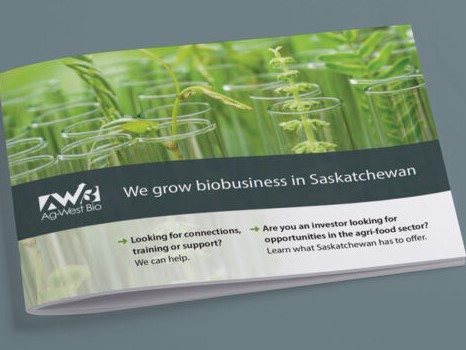
Case Example: Saskatchewan’s AgTech Cluster
Centered in Regina and Saskatoon, Saskatchewan has built a growing AgTech ecosystem that blends traditional farming expertise with cutting-edge technology.
- Research partnerships between universities and private firms support innovations in precision seeding, crop monitoring, and soil health.
- Startup incubators like Ag-West Bio provide mentorship, financing, and commercialization support for rural entrepreneurs.
- Global connections link Saskatchewan’s AgTech firms with export markets in the U.S., Europe, and Asia.
The cluster not only strengthens the province’s agricultural base but also attracts highly skilled workers, positions rural Canada as a global leader in AgTech, and creates opportunities for rural youth to stay and build careers at home.
Lesson: Modernization is not just about adopting technology—it’s about building ecosystems where research, entrepreneurship, and community needs come together. Saskatchewan shows how rural regions can use technology to remain competitive in a rapidly changing world.

Institutional Partnerships & Immigration
Rural Canada faces one of the same critical challenges as the rural U.S.: an aging population and persistent labor shortages. Many communities struggle to maintain essential services and industries as younger residents leave for urban centers. To address this, Canada has leaned on two strategies that reinforce one another: strong institutional partnerships and targeted immigration programs.
Why these strategies matter:
- Workforce Renewal – Immigration helps fill gaps in industries like food processing, healthcare, and manufacturing.
- Population Stability – Newcomers bring families, children, and cultural vibrancy, stabilizing schools and community life.
- Institutional Support – Federal, provincial, and municipal partnerships provide the infrastructure—housing, training, integration programs—needed to help both immigrants and host communities succeed.
- Economic Continuity – Ensures critical industries remain competitive even as demographics shift.
Multi-sector partnerships involving both public and private sectors ensure immigration efforts are aligned with local community needs and local labor market demand, while also building institutional capacity of rural communities.
Case Example: Brandon, Manitoba
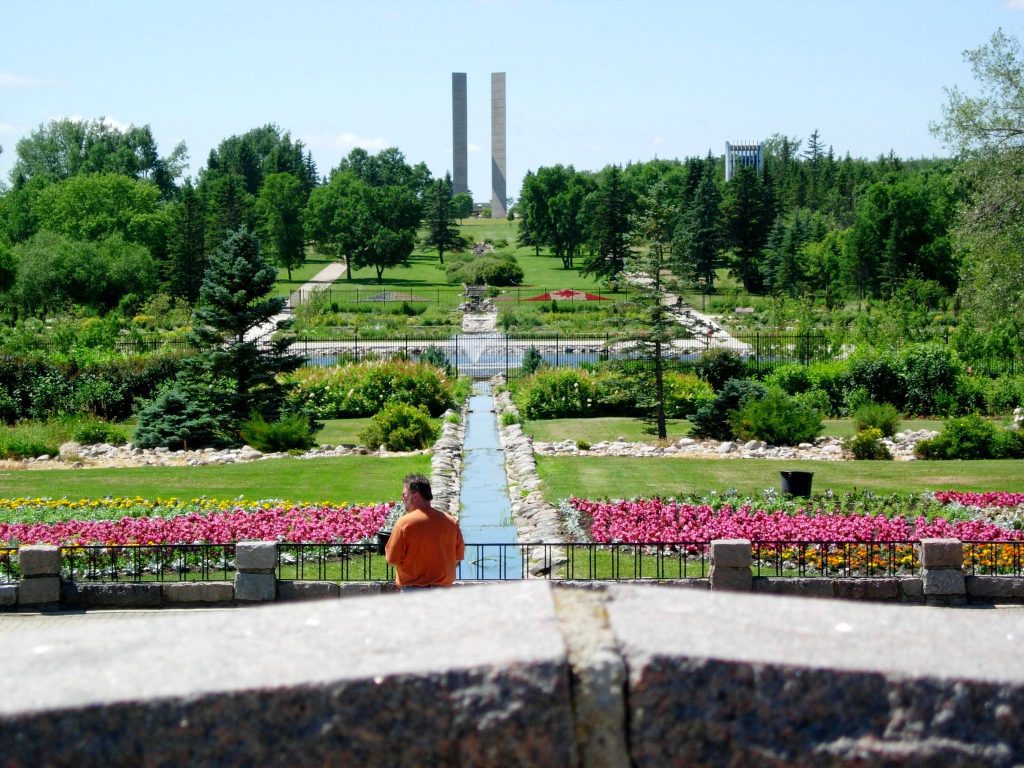
Brandon, a city of about 50,000, located 99 km north of the International Peace Garden and the US-Canadian border. This region with deep agricultural roots has become a national model for rural immigration. Through the national Rural and Northern Immigration Pilot (RNIP), Brandon actively recruits newcomers to support industries ranging from meatpacking to manufacturing.
- Collaboration across sectors: Local employers, city officials, and nonprofit organizations coordinate to provide settlement services and training.
- Housing and integration support: The city invested in affordable housing and cultural programming to help newcomers feel welcome.
- Workforce continuity: Immigrant workers helped stabilize the local meatpacking industry, which is a cornerstone of Brandon’s economy.
The result has been a more diverse, resilient, and growing community. Brandon’s population has stabilized, schools remain open, and local businesses have access to a stronger labor pool.
While immigration has stabilized towns like Brandon, not all rural communities experience the same outcomes. In 2025, the Canadian government launched the Government of Canada launched the Rural Community Immigration Pilot (RCIP), a new pathway to permanent residence aimed at addressing labor shortages in rural areas. The RCIP builds on RNIP’s successes by enhancing community involvement and refining selection criteria to ensure better retention rates.
Additional Example: Community Futures Pan West Network
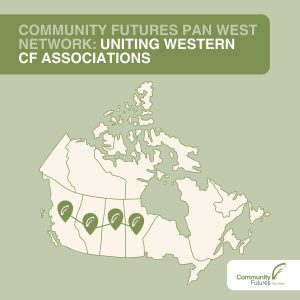
Beyond immigration, rural Canada also demonstrates the power of scaled partnerships. The Community Futures Pan West Network brings together four provincial associations and 90 local offices across Western Canada. By combining regional coordination with local delivery, the network provides financing, business support, and collaborative tools to help rural communities thrive.
This model highlights how institutional partnerships can scale up resources while still keeping solutions community-driven—ensuring that rural businesses and towns have the support they need to adapt and grow.
Lesson: Immigration is not a one-off fix. When paired with institutional support and regional collaboration, it becomes a long-term strategy for rural sustainability.

Policy Innovation & Place-Based Strategies
One of Canada’s strengths in rural development is its recognition that “one-size-fits-all” policies rarely work. Instead, local leaders as well as levels of government increasingly emphasize place-based strategies—approaches that adapt programs to the specific assets, challenges, and cultures of each community.
At the federal level, the creation of the Centre for Rural Economic Development has helped coordinate resources, gather input from rural communities, and ensure policies reflect the realities of small towns. Provincial governments have also played a major role in advancing models that balance economic development with environmental stewardship and cultural preservation.
Why place-based policy innovation matters:
- Flexibility – Policies can be adapted to fit local conditions and industries.
- Inclusivity – Community voices shape programs, leading to stronger buy-in.
- Sustainability – Balances short-term growth with long-term environmental and cultural health.
- Replication – Successful models can be scaled or adapted for other regions.
A number of non-governmental organizations, such as Rural on Purpose, have taken the ground-up approach to inspire people and communities to action, while fostering connections to amplify impacts. Mary Doyle, CEO and founder, has taken on a mandate to help rural communities reposition themselves for the future.
“At its core, rural entrepreneurship has always been about foresight—the courage and skill to see possibility in uncertainty,” says Doyle. “My work with Rural on Purpose began by nurturing that instinct. Today, by employing foresight tools, I see entire communities designing their resilience and shaping the outcomes they want, rather than simply surviving the future handed to them.”
Case Example: Quebec’s Community Forestry Model
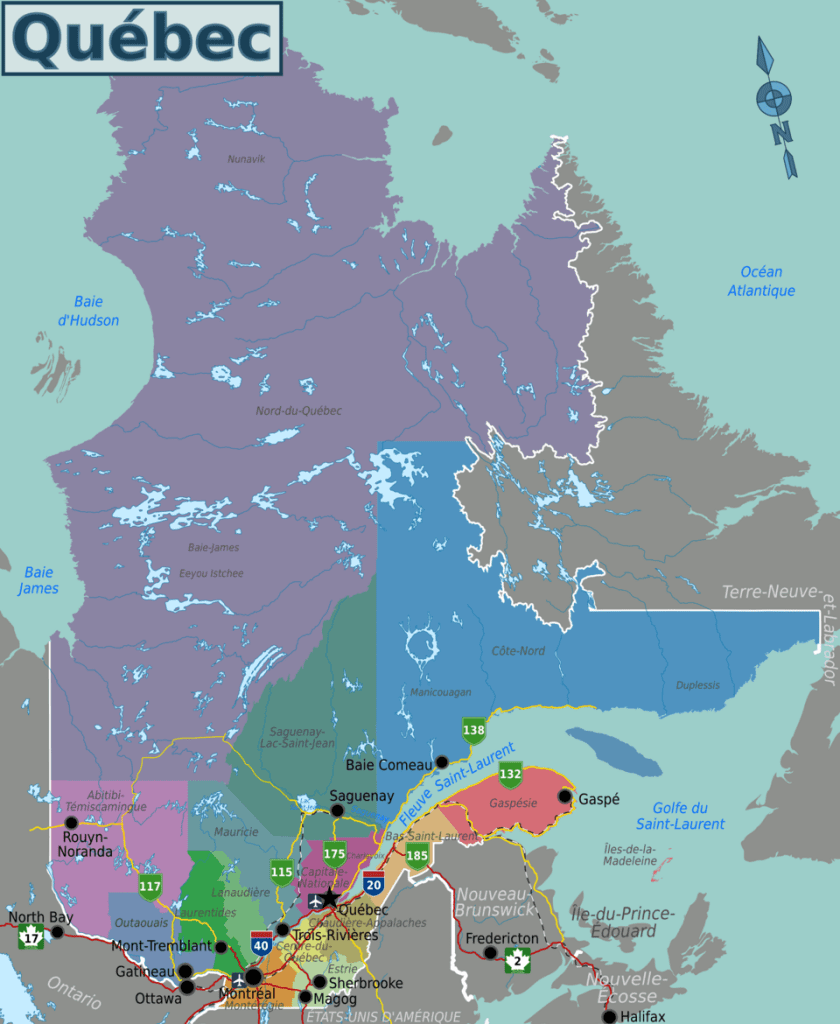
In many parts of Quebec, forests are central to both the economy and cultural identity. Traditional forestry often prioritized extraction for global markets, with limited local benefit. To address this, Quebec pioneered community forestry agreements, giving municipalities and local cooperatives a greater role in managing nearby forests.
- Economic benefits: Local communities retain more revenue from timber sales.
- Environmental stewardship: Forests are managed with sustainability in mind, ensuring long-term ecological health.
- Cultural empowerment: Indigenous and local voices play a stronger role in decision-making.
- Innovation: Beyond timber, forests are used for recreation, eco-tourism, and value-added products like specialty wood goods.
This model has not only stabilized rural economies in forest-dependent regions but also fostered a sense of ownership and pride among residents.
Lesson: Policy innovation succeeds when it puts communities at the center. By tailoring development to local assets and priorities, governments can unlock resilience that grows from the ground up.

For Planners and Policymakers: Lessons from Canada
Canada’s experience shows that rural resilience is strengthened when policy and practice work hand in hand. While grassroots leadership is critical, planners and policymakers create the framework that enables innovation to succeed.
Practical takeaways for planners and policymakers (wherever they work and live):
- Embrace Diversification – Support industries beyond traditional anchors like mining or farming. Encourage value-added production, tourism, and creative economies to spread risk.
- Invest in Technology & Training – Prioritize digital infrastructure, AgTech, and workforce development to prepare communities for rapid economic change.
- Support Immigration as a Strategy – Learn from Canada’s Rural and Northern Immigration Pilot by creating pathways that address workforce gaps while strengthening cultural diversity.
- Advance Place-Based Policy – Recognize that local conditions vary. Tailor grant programs, zoning, and incentives to the assets of each community.
- Champion Collaborative Models – Strengthen partnerships between federal, provincial/state, and municipal governments, alongside local institutions and residents.
Lesson: Rural policy is most effective when it empowers communities to act on their unique strengths. Canada demonstrates that resilience requires both bottom-up leadership and top-down support—a balance that allows small towns to adapt without losing their character.

Looking Ahead
Over the past month, we’ve followed a journey through the building blocks of rural resilience. We began with the diverse economic base that anchors small towns, explored how business retention and expansion keeps that base strong, saw how entrepreneurship sparks new growth, and looked at how community-driven innovation reimagines rural futures. Now, with Canada’s perspective, we see how policy, diversification, and immigration add yet another layer of strength. I suspect we could add more than one post with perspectives from rural areas in The U.K., Ireland, and Australia just sticking to English speaking areas (OK, yes, I know they also speak French in Canada but Google Translate only gets me so far).
The thread running through all of these stories is clear: resilience is not built in isolation. It grows where local assets, leadership, and creativity are supported by policies, partnerships, and investment. Whether in the U.S. or Canada, rural communities thrive when they adapt to change without losing their identity. Rural communities thrive when they dare to fail faster and try more new things.
As we look ahead, one thing is certain: small towns will continue to innovate, diversify, and collaborate. They are not relics of the past, but laboratories for the future—testing ideas in community, economy, and sustainability that the whole world can learn from.
For planners, policymakers, and community leaders, the challenge is not whether rural has a future—it’s how we choose to build it.
That future will not be without tensions. Balancing economic growth with environmental stewardship, welcoming newcomers while preserving community identity, and embracing innovation without leaving anyone behind—these are the real tests of resilience. Success lies not in avoiding conflict, but in navigating it with creativity, collaboration, and care.

Read More: The Canadian Perspective on Rural Resilience
Looking to explore more about how Canada is shaping the future of rural development? These books, reports, and organizations provide valuable context, tools, and inspiration.
Recommended Reads
- Planning Canadian Communities – Gerald Hodge, David Gordon & Pamela Shaw (2020)
A leading text on Canadian planning, with in-depth analysis of rural and small-town contexts. - Sustainability Planning and Collaboration in Rural Canada: Taking the Next Steps – Hallström, et al. (2016)
Examples of innovation and creativity as rural communities seek new ways to survive and flourish. - Planning for Rural Resilience: Coping with Climate Change and Energy Futures – Caldwell, et al. (2015)
Communities have opportunities to make informed and constructive decisions in the face of uncertainty. - Place Peripheral: Place-Based Development in Rural, Island, and Remote Regions (PDF) – Vodden, Gison, Baldacchino, ed. (2015)
Examines place-based economic development strategies in rural and remote regions. - “Revitalizing Small City Downtowns: The Case of Brandon, Canada” – Ramsey, Eberts, & Everitt (2007) in B. Ofori-Amoah (ed.) Beyond the Metropolis: Urban Geography as if Small Cities Mattered.
Describes efforts to reinvigorate the downtown core of Brandon, both as a place of business and as a residential neighborhood.”
Reports & Policy Resources
- Canada’s Rural Economic Development Strategy – Holistic, collaborative approach to addressing the unique challenges and opportunities in rural Canada. ised-isde.canada.ca
- Centre for Rural Economic Development (Canada) – Federal hub for rural policy coordination. ic.gc.ca
- Federation of Canadian Municipalities (FCM) – Resources and programs for rural and small-town municipalities. fcm.ca
- Canadian Rural Revitalization Foundation (CRRF) – Research, case studies, and annual conferences on rural development. crrf.ca
- OECD Rural Policy Reviews: Canada – International perspective on Canadian rural strategies. www.oecd.org/en/publications
Online Tools & Networks
- Canadian Institute of Planners – A member-based organization for planning professionals across Canada.
www.cip-icu.ca - Government of Canada, Rural Economic Development – Helping rural communities across Canada thrive and achieve long-term, sustainable growth. ised-isde.canada.ca/site/rural/en
- Rural Policy Learning Commons (RPLC) – A knowledge-sharing platform on rural policy and practice in Canada.
rplc-capr.ca - Canadian Centre for Policy Alternatives (CCPA) – Research on rural economies, inequality, and sustainability. policyalternatives.ca
- Canadian Federation of Agriculture (CFA) – Policy advocacy for rural and agricultural communities. cfa-fca.ca
- Rural Ontario Institute – Programs and leadership development for rural and small-town Ontario. ruralontarioinstitute.ca
- Shorefast – One of Canada’s largest social enterprises that brings together world-class community businesses and initiatives. shorefast.org
- Ag-West Bio – A not-for-profit, membership-based company moving research to market and grow bio-business in the province of Saskatchewan. www.agwest.sk.ca
- Community Futures Pan West Network – A partnership of four provincial associations and 90 local offices across Western Canada, delivering financing and business support to rural communities. communityfuturespanwest.ca
- Rural on Purpose – Fueling entrepreneurial ambition in rural communities. www.ruralonpurpose.com
Keep learning. Keep linking.
Rural resilience doesn’t stop at borders. From Canada to the U.S., small towns are proving that innovation, diversity, and collaboration are universal tools for building strong communities.
Looking for more insights? These resources offer a starting point for anyone working to strengthen policy that works for rural communities—whether you’re a planner, council member, or community leader.
The Best Books for Rural Development and Planning in 2025
(As an Amazon Associate, we may earn commissions from qualifying purchases. Check your local library or bookshop, too.)