
Secrets of the Land: How Rural Traditions Shape Stronger Communities
Welcome to Part 2 of our four-part series on Rural Cultural Heritage and Community Resilience.
In Part 1, we explored why preserving rural identity is more than nostalgia—it’s a strategy for sustainable development. Now, we turn to the heart of tradition: the everyday practices, customs, and community rituals that have held rural America together for generations.
Across rural landscapes, cultural heritage is carried not just in structures or scenery, but in hands stained with dye, in voices passing stories by firelight, and in fields patterned by generations of wisdom. These are the secrets of the land — traditional practices, local knowledge, and enduring values that hold communities together.
As we noted last week, rural cultural preservation means more than restoring old buildings or collecting artifacts. It’s about protecting the stories, skills, landscapes, and lifeways that give a community its unique identity.
In this article, we explore how a wide range of rural traditions — from crafts and music-making to storytelling and farming — are being preserved and reimagined across the globe. Together, they form the cultural bedrock for stronger, more resilient rural communities.
Crafting Identity: Skills Rooted in Place
Across North America, rural traditions in craftsmanship are more than creative outlets — they are expressions of rural heritage, passed through generations as living links to history, family, and land. These traditional crafts and skills are rooted in specific places, shaped by local materials and sustained through hands-on learning, community pride, and cultural transmission. They play a vital role in rural cultural preservation and contribute to building stronger communities.
A. Handmade Heritage: Rural Traditions from Artisans Across North America
The preservation of traditional crafts is essential for maintaining cultural heritage, supporting local economic development, and building on what is special and unique in each community.
Appalachian Quilting and Stitching Circles
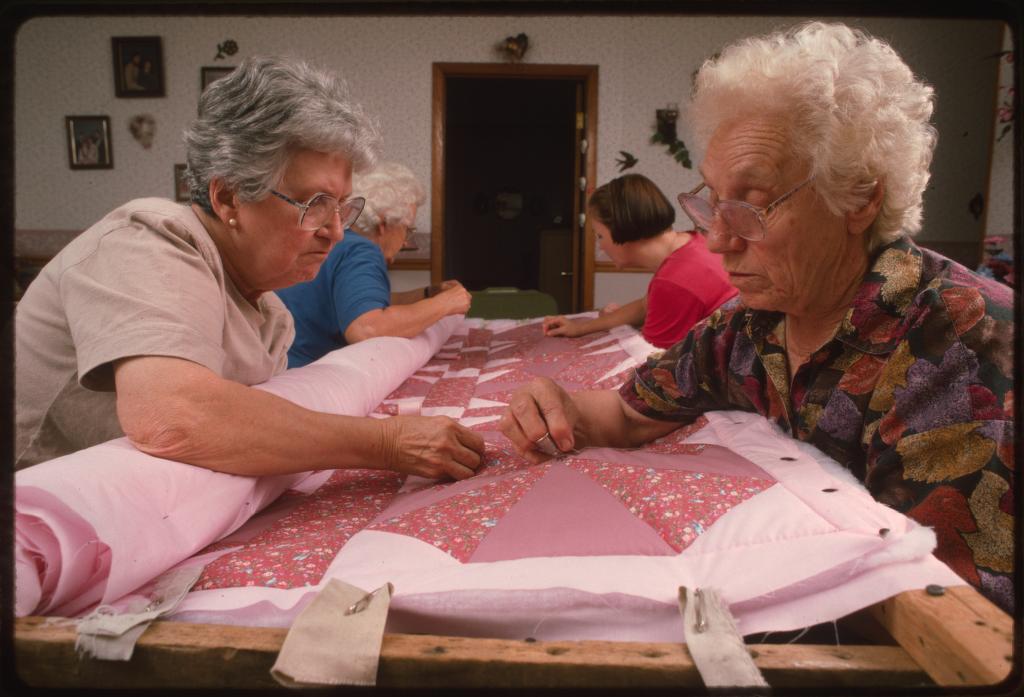
In the hills of Appalachia, quilting has long been both a practical necessity and a cultural art form. Quilting bees bring together neighbors — often women — to sew, share family stories, and pass along traditional patterns like the Log Cabin or Flying Geese. The fabrics may come from old clothes or feed sacks, but the real material is memory and connection. Today, initiatives like the Appalachian Quilt Trail in Tennessee highlight this form of rural heritage, supporting cultural tourism and community identity.
Latino Woodcarving in New Mexico and Southern Colorado
The Old Spanish lived in the American Southwest before there was a United States. In rural Latino communities, especially among Hispanos of Northern New Mexico and Southern Colorado, the carving of santos (religious figurines of saints) remains a vibrant expression of faith, tradition, and place-based identity. Workshops often run within families, preserving not only technique but also oral histories. This tradition strengthens local economies while reinforcing shared values within stronger communities.
- Saints & Santos: Picturing the Holy in New Spain, an exhibition at the New Mexico Museum of Art in Santa Fe, speaks to the importance of saints in New Spain, a viceroyalty that was part of the Spanish Empire from 1521-1821 and included modern-day Mexico, Central America, and the US Southwest.
Métis Beadwork and Embroidery in the Canadian Prairies
“Métis” (pronounced “meh-TEE” or “may-TEE”) are a distinct Indigenous people with mixed ancestry, often of First Nations and European heritage. Among Métis communities in Manitoba, Saskatchewan, and Alberta, beading serves both aesthetic and cultural purposes. As a fusion of Indigenous and European styles, these traditional skills reflect the resilience of Métis identity and contribute to the wider effort of rural cultural preservation through education, mentorship, and public celebration.
Acadian Hooked Rugs in Eastern Canada
In the rural Maritimes, rug hooking endures as a form of both art and storytelling. Women in Nova Scotia and New Brunswick have kept this tradition alive through workshops, guilds, and festivals. These handcrafted rugs capture scenes of daily life and landscape, anchoring communities in their shared past and sustaining vibrant rural traditions.
African American Basketry in the Carolinas
In the Lowcountry of South Carolina and Georgia, sweetgrass basketry — preserved by Gullah-Geechee artisans — remains a powerful symbol of rural heritage. This practice, rooted in West African knowledge, has been passed down through families for generations. It continues to connect people to land, labor, and legacy, and offers a tangible link between past and present in rural Black communities.

B. Rural Luthiers and Instrument-Making
In many rural communities, the sound of rural traditions is handmade — carefully carved, strung, and tuned by craftspeople who see instruments not only as tools for music, but as vessels of memory and identity. These traditional crafts and skills carry stories of place, culture, and survival, enriching the landscape of rural heritage across generations.
Fiddle-Making in Appalachia
The Appalachian region is home to a long tradition of fiddle-making, where local luthiers use regional hardwoods like maple, walnut, and spruce to build instruments tailored to old-time and bluegrass music. These handmade fiddles often reflect personal style, regional tuning preferences, and deep-rooted family legacies. At festivals like the Appalachian String Band Music Festival in West Virginia, makers and musicians gather to celebrate and sustain this part of rural cultural preservation.
Banjo and Dulcimer Crafting
The banjo — with its African roots and Appalachian evolution — is another iconic rural instrument, often crafted by hand in small workshops. Similarly, the mountain dulcimer, native to the southern Appalachian Mountains, is shaped from local woods and features folk-inspired designs. These instruments represent more than just music; they embody the traditional skills that help forge stronger communities through shared creativity and cultural continuity.
Indigenous Instrument Makers
Among Indigenous nations across the U.S. and Canada, instrument-making carries ceremonial and cultural significance. Plains tribes craft traditional drums from stretched hide and wood, used in community gatherings, dances, and spiritual ceremonies. In the Pacific Northwest, carvers create cedar flutes and rattles that are essential to storytelling and healing traditions. These practices are essential to Indigenous expressions of rural heritage, preserving not just sound but also language, rhythm, and worldview.
Regional Revival and Innovation
Contemporary rural luthiers across North America continue these legacies while blending tradition with innovation. In places like rural Vermont, Montana, and the Ozarks, independent guitar and mandolin makers source sustainably harvested local woods and often sell their work both locally and globally. For example, a community of folk craftsman has grown around the Gibson Guitar factory in rural Bozeman, Montana, since the facility opened in 1989. Some incorporate digital tools, like CNC routers, while staying true to the spirit of hand-finishing — a practice deeply tied to enduring rural traditions.
Whether built for church choirs, porch picking, powwows, or protest songs, these instruments carry the soul of rural places. In every carved scroll and hand-tuned string lies the enduring sound of community resilience — and the shared work of preserving rural culture in a changing world.

The Living Word: Folklore and Storytelling Traditions
In rural communities across North America, storytelling is more than entertainment — it is one of the most powerful rural traditions for preserving culture, transmitting values, and connecting generations. Whether told by firelight, shared in song, or recorded for future listeners, these stories form a living record of rural heritage.
A. Oral Traditions Among Indigenous Communities
For many Native American and First Nations peoples, storytelling is a sacred act. For many people in Indian Country, storytelling is a sacred tradition that sustains identity. These stories — often shared during winter gatherings or around a fire — encode laws, cosmology, and community memory.
On the Great Plains, Lakota storytelling is a vital cultural practice that preserves history, traditions, and values through the spoken word. Often passed down from elders to younger generations, oral traditions serve as a means of connecting with the past, present, and future, and fostering a sense of community. They also teach life lessons and reflect the Lakota people’s connection to the natural world.
Among the Cherokee in rural Oklahoma and North Carolina, tales like The Origin of Strawberries or the adventures of the trickster Rabbit are still told in schools and homes. These narratives, woven into everyday life, help preserve Indigenous language and reinforce values like cooperation and harmony with nature.
In the Blackfoot Confederacy, which spans Montana and Alberta, elders pass down origin stories like Napi and the Sun. These oral accounts connect people to land, sky, and spirit — embodying traditional knowledge as a foundation for cultural strength. Many of these stories are now being safeguarded in digital archives, ensuring their role in rural cultural preservation for future generations.
The enduring Diné (Navajo) culture of the desert Southwest is deeply rooted in storytelling, a tradition that has connected generations through narratives of creation – of the world, sky, land, animals, and people. These stories are enriched by each storyteller’s personal journey and their meaning can shift across time and place.
B. Pioneer and Regional Folklore
In rural regions, local lore often blends history with legend. These stories reflect the values, fears, and hopes of the people who work the land. These rich storytelling traditions reflect the experience of settlers, farmers, and working families.
In the American Midwest, tall tales of figures like Paul Bunyan — the mythical lumberjack who shaped the Great Lakes — originated in logging camps and spread through storytelling among laborers. These humorous, exaggerated legends became part of the cultural heritage of rural America.
In rural Louisiana, Cajun and Creole communities pass down folktales in French dialects, including stories of the loup-garou, a werewolf-like figure used to warn mischievous children. These stories, rich with wit and wisdom, remain vibrant parts of local identity.
In the Canadian prairies, Ukrainian and Doukhobor immigrants preserved songs, legends, and sayings brought from Eastern Europe. Passed down through families and community events, these traditions helped immigrant communities maintain cultural continuity in the face of great change — an essential part of building stronger communities rooted in shared stories of miners and ranchers and others who shaped the land in diverse ways.
C. Storytelling as a Community Practice
Storytelling in rural places isn’t confined to the past — it is an ongoing, collective act of expression and belonging. Today, many communities keep their traditions alive through public events like heritage festivals, powwows, and story circles held in schools, libraries, and senior centers. The National Storytelling Festival, for example, takes place in Jonesborough, Tennessee in October.
These gatherings do more than entertain. They reinforce identity, encourage intergenerational exchange, and support local cohesion — key aspects of rural cultural preservation.
Digital tools are also expanding the reach of these narratives. Platforms like The Moth, community podcasts, and YouTube oral history projects allow rural voices to travel far beyond their geographic boundaries, while staying grounded in place-based storytelling.

Knowledge in the Field: Agriculture as Inheritance
In rural North America, the land is more than a resource — it’s a living archive of culture, memory, and ecological wisdom. Across generations, rural traditions in agriculture have preserved not only food systems but also community knowledge and cultural identity. These traditional crafts and skills, shaped by Indigenous science and settler adaptation, are central to rural cultural preservation. In many communities, this rural heritage is not just about survival, but about continuity and resilience — building the foundation for stronger communities.
A. Heirloom Seeds and Traditional Farming
Long before industrial fertilizers and commercial seed catalogs, rural families relied on time-tested traditions grounded in observation, seasonal rhythms, and ecological stewardship. These practices were often passed down through hands-on learning and oral history — core elements of rural heritage.
The Three Sisters: Indigenous Agricultural Knowledge
For centuries, Haudenosaunee (Iroquois) farmers in what is now upstate New York and southern Canada cultivated corn, beans, and squash — the Three Sisters — in an interdependent system that enriched the soil and provided a balanced diet. May other tribes fostered a similar tradition rooted in practical knowledge and culture. This method, passed down orally, reflects a deep understanding of biodiversity and food sovereignty, and is being revived by tribal food sovereignty initiatives across the U.S. and Canada.
Gullah-Geechee Heirloom Farming
In the coastal Lowcountry of the Carolinas and Georgia, Gullah-Geechee communities have preserved African-influenced agricultural techniques, including tidal rice cultivation and the saving of seeds for okra, collards, and field peas. Many of these crops are deeply connected to ancestral memory and spiritual practice. Today, community-led organizations like the Gullah/Geechee Sea Island Coalition work to protect this heritage against climate threats and development pressures.
Seed Saving and Rural Self-Sufficiency
Across the Midwest and Great Plains, homesteading traditions emphasized resilience through seed saving, crop rotation, and soil care. In Amish and Mennonite communities, these practices continue largely unchanged, maintaining heirloom vegetable and grain varieties that are adapted to local conditions — and passed down from generation to generation. Grassroots seed exchanges and regional seed libraries have helped revive interest in this legacy among younger farmers and gardeners.
B. Foodways and Culinary Traditions
Food is one of the most powerful carriers of culture — a way to taste the past, celebrate the present, and connect across generations.
Métis and Prairie Food Traditions
In the Canadian Prairies, Métis communities blend Indigenous and European traditions in dishes like bannock, wild game stew, and berry pemmican. These meals reflect adaptation to a harsh climate and resourceful use of local ingredients. Recipes are often shared orally or in family recipe books, and increasingly featured at cultural festivals and community events.
Southern Soul Food and Community Memory
In the American South, rural Black communities have kept alive rich culinary traditions rooted in resistance and remembrance. Foods like catfish, collards, cornbread, and sweet potatoes are staples not just of the table, but of spiritual gatherings, family reunions, and church picnics. Cookbooks and oral histories — like those collected by the Southern Foodways Alliance — document these foodways as a form of living history.
Local Ingredients and Regional Identity
From apple butter in rural Appalachia to wild rice in Minnesota’s Anishinaabe territory, local ingredients often shape regional identity. In Quebec’s countryside, sugar shacks (cabanes à sucre) continue the springtime ritual of boiling maple sap into syrup — a practice that blends Indigenous knowledge with French-Canadian heritage and sustains rural economies to this day.
In the hands of farmers, cooks, and gardeners, agriculture becomes more than survival — it becomes a form of cultural storytelling. With each saved seed, passed-down recipe, and tilled row, rural communities not only feed themselves, they cultivate identity, resilience, and rootedness.

Community-Driven Preservation Efforts
Cultural preservation in rural areas cannot succeed without the people who live there. While traditions may be carried in stories, songs, or seeds, they are sustained by communities — through participation, leadership, and shared pride. Across North America, grassroots efforts are bringing heritage to life in ways that are inclusive, intergenerational, and future-focused.
A. Local Festivals and Heritage Event
Community festivals serve as vibrant touchpoints where tradition becomes celebration. They offer space for storytelling, music, food, and crafts — all in one place, and often with multiple generations participating.
- In Asheville, North Carolina, the East End/Valley Street Heritage Festival celebrates African American history with performances, local vendors, and heritage walking tours, reinforcing pride and visibility in a historically marginalized neighborhood. The festival went on hiatus last year but will hopefully return in 2025, as the community recovers from the hurricane.
- The Festival du Voyageur in Winnipeg, Manitoba brings French-Canadian and Métis heritage to life each winter with music, snow sculptures, and traditional food, strengthening cultural continuity in prairie communities.
- In rural Iowa and Nebraska, barn quilt trails and county fairs feature folk art exhibitions, agricultural showcases, and craft contests that keep local knowledge publicly visible and celebrated.
These events often serve dual purposes: cultural transmission and local economic development.
B. Apprenticeships and Intergenerational Learning
Passing on tradition requires more than observation — it requires mentorship. In many rural communities, hands-on learning is key to keeping crafts and practices alive.
- Folk schools like the John C. Campbell Folk School in North Carolina or North House Folk School in Minnesota offer immersive classes in traditional crafts, music, and foodways — helping young and old engage directly with rural heritage.
- In Indigenous communities, youth-elder programs foster cultural continuity by pairing young people with knowledge keepers in areas like language, beading, land stewardship, and oral history.
- In some Amish and Mennonite settlements, apprenticeships begin in early adolescence, integrating skills like woodworking, quilting, and farm management into daily life.
These models create opportunities for mutual respect and resilience, bridging generations in meaningful, practical ways.
C. Community Archives and Cultural Mapping
Preserving heritage also means documenting it — not just for memory’s sake, but to shape future decisions.
- Local historical societies, libraries, and museums often collect oral histories, photos, and artifacts. Rural archives like the Texas African American Photography Archive or Northern Ontario’s Franco-Ontarian collections ensure marginalized histories are recognized and preserved.
- Cultural asset mapping projects, sometimes led by universities or planning departments, involve residents in identifying places, practices, and stories of local importance. This participatory approach helps embed culture in land use, tourism, and conservation planning.
- Digital tools — from StoryMap apps to YouTube mini-documentaries — enable even the smallest communities to share their stories globally while retaining local control.
Together, these practices empower rural residents to be not only guardians of heritage, but also narrators of their community’s future.

The Role of Rural Planners: Connecting Culture and Community Development
While cultural preservation is often rooted in community initiative, rural planners and community leaders play a critical role in ensuring these traditions are recognized, resourced, and respected in long-term development.
- Integrating heritage into planning frameworks: Whether through comprehensive plans, zoning ordinances, or cultural overlays, planners can protect historic landscapes, community gathering spaces, and artisan districts from incompatible development.
- Supporting community-led initiatives: Planners can help secure grants, guide participatory mapping, and design policies that give weight to cultural assets — not just physical infrastructure.
- Facilitating cross-sector partnerships: By connecting heritage groups with tourism boards, economic development agencies, and local schools, planners help transform preservation into a strategy for resilience.
- Ensuring equity and representation: Cultural preservation must include all voices — especially those historically marginalized. Planners can support this through inclusive engagement processes and decolonizing policy approaches.
At the least, we need to make sure we’re not inadvertently zoning out local cultural practices. At our best, we are cultural connectors, weaving together people, place, and policy to support thriving, rooted communities.
Conclusion: The Secrets We Carry Forward
In the rhythm of rural life — in stitched quilts, heirloom seeds, carved instruments, and stories passed from hand to hand — lie the quiet secrets of the land. These are not secrets to keep, but to carry, share, and strengthen. Successful and dynamic rural communities are rooted in local culture and tradition. They have skills rooted in place, celebrate folklore and storytelling, draw on local knowledge of agricultural practices, and engage in community-driven preservation of local culture and traditions.
Cultural preservation in rural communities is more than memory. It is a path to resilience, identity, and belonging — shaped by many hands: elders, artisans, youth, and yes, rural planners. Their work in shaping place-based policy, guiding inclusive processes, and investing in local heritage ensures these cultural foundations are not just honored, but actively integrated into a community’s future.
When rural heritage is seen not as a relic, but as a living asset, communities grow stronger — not in spite of their past, but because of it. These traditions, deeply rooted and proudly carried forward, offer not just insight into who we were, but inspiration for who we can become.
Let’s continue to listen, protect, and plan — together — for a rural future that remembers where it came from.
This concludes Part 2 of our series on Rural Cultural Heritage and Community Resilience.
We’ve seen how traditional practices—from hands-on skills to seasonal gatherings—continue to weave social ties and reinforce rural identity.
In Part 3, we’ll shift our focus to the physical spaces that carry these traditions forward: the historic buildings, landmarks, and gathering places that embody rural memory and shape collective belonging. Join us as we explore how saving these structures helps preserve not just architecture, but the soul of rural community life.

A Survey of Books on Rural Traditions, Craft, and Cultural Identity
Rural Traditions & Community Heritage
- Keeping Time: The History and Theory of Preservation in America – William J. Murtagh
A well written, comprehensive look at the movement to preserve America’s historic buildings and neighborhoods. - Place, Race, and Story: Essays on the Past and Future of Historic Preservation – Ned Kaufman
Explores how historic places matter to diverse communities and how preservation must evolve to be inclusive, community-centered, and justice-focused. - Crafting in the World: Materiality in the Making – Edited by Clare Burke & Graeme Were
A global view on traditional craft practices and how they help communities maintain identity and place-based resilience. - Weaving a World: Textiles and the Navajo Way of Seeing – Roseann S. Willink & Paul G. Zolbrod
A detailed exploration of Navajo weaving traditions, revealing how stories, cosmology, and identity are woven into the fabric itself.
Traditional Foodways & Agricultural Knowledge
- Wisdom of the Elders: Sacred Native Stories of Nature – David Suzuki and Peter Knudtson
Explores sacred stories and traditions on the interrelationships between humans and the environment as well as perspectives from modern science, which more often than not validate the sacred, ancient Wisdom of the Elders. - From the Ground Up: A Food Grower’s Education in Life, Love, and the Movement That’s Changing the Nation – Jeanne Nolan
A personal and practical look at the local food movement, including rural and community-based farming.
Resources for Further Reading
Rural Cultural Preservation & Community Storytelling
- American Folklife Center – Library of Congress
The AFC documents and shares the many expressions of human experience to inspire, revitalize, and perpetuate living cultural traditions.
About the LOC AFC Research Center - “Tending the Wild: Cultural Practices That Sustain California’s Native Landscapes” – Kat Anderson
A groundbreaking resource on how Indigenous Californians shaped the land through storytelling, ceremony, and stewardship. - Voices from Small Places – Texas Cultural Landscape Symposium
A multidisciplinary initiative focused on identifying and preserving rural cultural landscapes through community engagement.
Link to presentation - Cultural Survival
Since 1972, this organization supports Indigenous communities in preserving their cultural practices and self-determination.
culturalsurvival.org
Rural Heritage Mapping & Policy Tools
- Washington Rural Heritage
A community memory project offering digitized archives and oral histories from rural Washington State.
www.washingtonruralheritage.org - ICCROM: Community-Based Heritage Indicators for Peace
A toolkit for engaging communities in developing and measuring heritage-based social change.
iccrom.org
Want More? Explore Our Recommended Lists:
- Books Every Rural Planner Should Read in 2025
- Top Tools for Community-Based Heritage and Cultural Mapping
- Rural Foodways: Stories from Seed to Table
(As an Amazon Associate, I may earn commissions from qualifying purchases.)