
How Education as Infrastructure Is Powering Rural Economic Growth
APRIL SERIES: COMMUNITY FACILITIES – Article 3
In conversations about infrastructure, education is rarely the first thing that comes to mind. Roads, utilities, broadband — these are the systems we typically associate with economic development. They are visible, measurable, and relatively straightforward to fund and maintain. Schools, by contrast, are often treated as a separate category: a public service rather than a form of infrastructure. But in rural communities, that distinction does not hold.
Education systems are not just service providers or community facilities waiting to be filled. They are foundational to how local economies function, how workforce pipelines develop, and whether communities can sustain themselves over time. If civic buildings are the physical infrastructure of governance, and historic structures are the infrastructure of identity, then schools are the infrastructure of opportunity. And like all infrastructure, when they fall out of alignment with local needs, the consequences extend far beyond the classroom.

The Rural Workforce Challenge
Across rural communities, a familiar pattern continues to play out. Young people graduate from high school and leave — for college, for work, or simply for more options. Many do not return. At the same time, local employers struggle to find workers with the skills they need. Open positions remain unfilled even as population declines. The issue is not always a lack of jobs or a lack of people. It is a mismatch between the two.
This disconnect is not accidental. It is often the result of systems that were never fully aligned to begin with. Educational pathways are frequently designed with a broad, generalized goal: prepare students for success anywhere. For individual mobility, this makes sense. For community sustainability, it creates tension.
For our recently adopted Jefferson County, Nebraska, Comprehensive Plan, another planner and I sat down with the Superintendent at the school based in the county seat. Fairbury Public Schools serve about 900 students from several municipalities as well as rural areas across Jefferson and Thayer counties. The district currently has a combined Junior/Senior high school on the highway, an Intermediate school in town, and an elementary school on a different highway, plus administrative offices and gym space in the historic school building across the highway from the elementary school. Over half of students are in the free/reduced lunch program, just over the statewide average. This superintendent has been working to rebuild vocational-technical (shop) programs and establish partnerships with local contractors for internships and training in the trades, which have a desperate need for workers. Our plan also brings in info about three other school districts serving the county, as well as the community college system, and day care resources.
While the schools in this county in south-central Nebraska are reestablishing connections in their communities, in many places, school curricula designed for national standards bear little relationship to local industries. Vocational programs have been systematically defunded in favor of college-preparatory tracks, even in communities where the local economy depends heavily on skilled trades, agriculture, healthcare, or advanced manufacturing. Graduates who might have stayed — who might have taken over a family business, joined a regional healthcare system, or gone to work at a local factory — instead leave for cities where their credentials are recognized and their options feel broader.
This is not a failure of ambition. It is a failure of alignment. Rural communities are left asking a difficult question: how do you support opportunity without exporting your future workforce?
If civic buildings are the physical infrastructure of governance, and historic structures are the infrastructure of identity, then schools are the infrastructure of opportunity.

Reframing Education as Economic Infrastructure
Reframing education as infrastructure changes the conversation. Infrastructure is not defined by what it looks like, but by what it enables. Roads enable movement. Utilities enable daily life. Education enables participation — specifically, participation in the local economy.
When viewed this way, schools become part of a broader system of community facilities which includes employers, training providers, and regional institutions. The goal is not simply to educate students, but to create pathways between learning and local opportunity. In practice, this means aligning curriculum, training programs, and career exposure with the economic realities of a place. Not limiting students — but making local opportunity visible, viable, and competitive.
It also means acknowledging that schools do not operate in isolation. A rural school system shares its students’ futures with the local hospital, the regional community college, the county extension office, and the businesses on Main Street. When those institutions are aligned — when the school knows what the hospital needs, when the community college designs programs in response to regional employer demand, when vocational training reflects real local industries — the results are measurably different.
The Building as Part of the System
The physical school building is itself a community asset that most rural places cannot afford to waste. In many communities, the school is the largest publicly owned building, the most central location, and the facility most residents have a personal connection to. When it functions well, it anchors the community. When it sits empty or underused, it sends a message about decline that is difficult to overcome.
This matters especially in communities where school consolidation pressures are mounting. The closure of a rural elementary school is not just an educational decision — it is a land use decision, an economic development decision, and a signal about the community’s long-term viability. Planning for what happens to that building before it closes, not after, is one of the most practical things a rural community can do to protect its future.
Community Colleges as Anchors
In many rural regions, community colleges are already positioned to play a central role in aligning education with local economies. They operate at a scale that matches rural communities. They offer flexible programming. And they are often more responsive to local industry needs than larger institutions.
Where alignment is strong, community colleges function as genuine workforce anchors. They partner with employers to design training programs, offer certifications tied to specific industries, and provide continuing education for existing workers. This is particularly important in sectors that dominate rural economies — manufacturing, healthcare, agriculture, and skilled trades — where workforce shortages are often acute and highly localized.
The challenge is not whether community colleges can play this role. It is whether they are consistently integrated into local and regional economic strategies. The communities that use this most effectively treat their regional community college not as a separate institution but as a partner in community planning. Economic development agencies work with college administrators to identify skill gaps. Employers co-design programs. High school counsellors build pathways that flow naturally from local schools into local college programs and into local jobs. The result is a connected system rather than a set of parallel institutions that happen to share a geography.
K–12 as the First Link in the Chain
If community colleges are anchors, K–12 systems are the entry point. For many students, exposure to local career pathways happens late, if at all. By the time options become visible, decisions about leaving — or staying — have already been made.
Some rural communities are beginning to address this through earlier and more intentional connections between schools and local employers. Career pathways, dual enrolment programs, internships, and technical education tracks all serve the same purpose: making the local economy legible to students before they disengage from it.
Equally important is the role schools play as community institutions beyond their educational function. In many rural areas, school buildings double as civic spaces — hosting events, meetings, and services that extend well beyond the school day. This reinforces their role not just as educational infrastructure, but as social infrastructure as well.

The School Closure Question
Across rural America, school closures are accelerating. Declining birth rates, outmigration, and state funding formulas that reward scale are pushing administrators and school boards toward consolidation. The financial logic is often clear. The community consequences are harder to quantify — and they are substantial.
Research consistently shows that school closure accelerates population decline in rural communities. Young families with children are the demographic most likely to relocate when a local school closes — and least likely to move to a community that does not have one. The loss of a school is therefore not just a symptom of demographic decline. It is a driver of it.
The financial analysis that drives consolidation decisions typically captures what the district saves. It rarely captures what the community loses — in property values, in household formation, in local economic activity, and in the long-term trajectory of the tax base. Vermont offers a vivid example of this tension at scale. The state’s Act 46 mergers, which began consolidating school districts in 2017, did yield some savings — but a comprehensive 2024 analysis found those savings were largely absorbed by new spending on higher salaries and increased busing costs. Meanwhile, in communities where elementary schools were threatened with closure, residents consistently raised the same concern: without a local school, why would young families choose to settle here?
The Governance Gap
One of the most consistent challenges in rural school planning is the mismatch between the boundaries of school governance and the realities of community life. School districts operate within fixed geographic boundaries. Students, families, employers, and community institutions do not. A school closure in one small town may reflect decisions made at the district level, the state level, or both — and local communities often have less influence over those decisions than they assume.
This governance gap is not unique to education. It shows up across rural community facilities planning: the jail governed by the county, the library governed by its own board, the school governed by an elected district board — each operating independently of the others even as their futures are deeply intertwined. The planner’s role is to create frameworks for coordination that none of these institutions have a mandate to build on their own.
The closure of a rural elementary school is not just an educational decision. It is a land use decision, an economic development decision, and a signal about the community’s long-term viability.
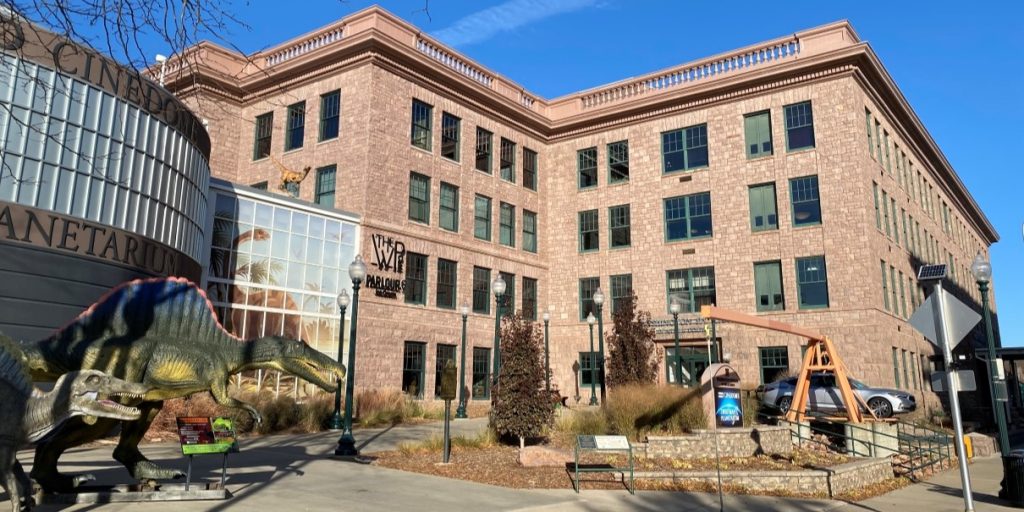
When the School Building Outlasts the School
We don’t build community facilities like we used to. Our big old schools built of stone and brick were built to last. In growing places, we tend to outgrow those schools big as they are. There and in communities where school consolidation has already happened — or is inevitable — the question of what to do with the building is as important as the question of what to do with the students.
A vacant school in the center of a small town is a planning problem. But it is also an opportunity, and communities that approach it that way tend to fare significantly better than those that do not.
Because schools were built for public use — accessible, centrally located, designed for large groups of people — they lend themselves to a range of community functions that private buildings often do not. Common reuse models that have succeeded in rural settings include:
- Mixed-use community hubs. Day care and elder care, small business incubator space, and shared meeting rooms — often the most practical fit for a centrally located building with good bones.
- Workforce training centers. Where employer demand exists for a local training facility, the former school can host a community college satellite program or a regional trades training center. Existing labs, shops, and gymnasiums often translate directly to vocational use.
- Affordable and senior housing. Historic school buildings that qualify for federal historic tax credits can be converted to residential use in ways that are financially viable even in low-cost rural markets.
- Coworking and maker spaces. As remote work reshapes rural economies, former schools — with their large rooms and community visibility — are natural candidates for professional workspace serving both local residents and remote workers.
Last year, I wrote about the Washington Pavilion, the big old downtown school building that Sioux Falls, South Dakota, turned into a modern multi-use community hub. Jacqueline Danos from Yachats, Oregon, shared last week’s newsletter article on LinkedIn, highlighting an example of a community hub in an historic building in her hometown:
“Where I live, a very small Oregon Coastal community, years ago the city did what so many believed was foolish, they bought the old empty school building and then years later bought the empty bank building next door. Many community members at the time thought these were wasteful expenditures but today we have a strong Commons Building and a City Hall along with a vibrant section of our town situated in the center of the town surrounded by park space. This “Civic Campus” is still being developed over 20 years later but how lucky are we that those early purchases were made.”
What does not work, almost universally, is leaving the building vacant while stakeholders debate its future. Vacant buildings deteriorate, signal decline, and become progressively more expensive to rehabilitate. The time to plan for a school’s next chapter is while it still has students — not after the last one has left.
Across the US, there is a broad shift in how communities are thinking about school buildings themselves. In Maine, for example, legislators have introduced a bill, “An Act to Assist Communities with Converting Vacant School Buildings into Housing”, aimed specifically at helping communities convert vacant school buildings into housing. The initiative serves as a recognition that the closure of a school does not have to mark the end of its role in the community, but can instead become the beginning of a new one. That shift—from closure as loss to closure as transition—is still uneven, and often comes too late. Thanks to Matt Pouliot from Maine for the tip.
In many rural communities, the window between a school’s closure and its physical decline is narrow. I have seen this firsthand. One of the schools I attended in North Dakota was sold to a private developer, only to deteriorate to the point where it was ultimately demolished. The opportunity for reuse was there, but it was not acted on in time.
More recently, examples of successful school reuse—particularly for housing—are becoming easier to find. (We present a case study of one project below.) These projects often rely on complex financing stacks, where tools like Low-Income Housing Tax Credits (LIHTC) play a central role. The lesson is not that reuse is simple, but that it is possible—and increasingly, that it requires intentional policy support at the state level.

Three Case Studies: Education Infrastructure in Practice
The following examples illustrate three of the core themes in this article: the community stakes of a school closure decision, the power of proactive reuse planning, and what happens when a community college becomes a genuine workforce anchor.
Are you familiar with any of these communities in Vermont, Minnesota, or Alabama? Did we get it right?
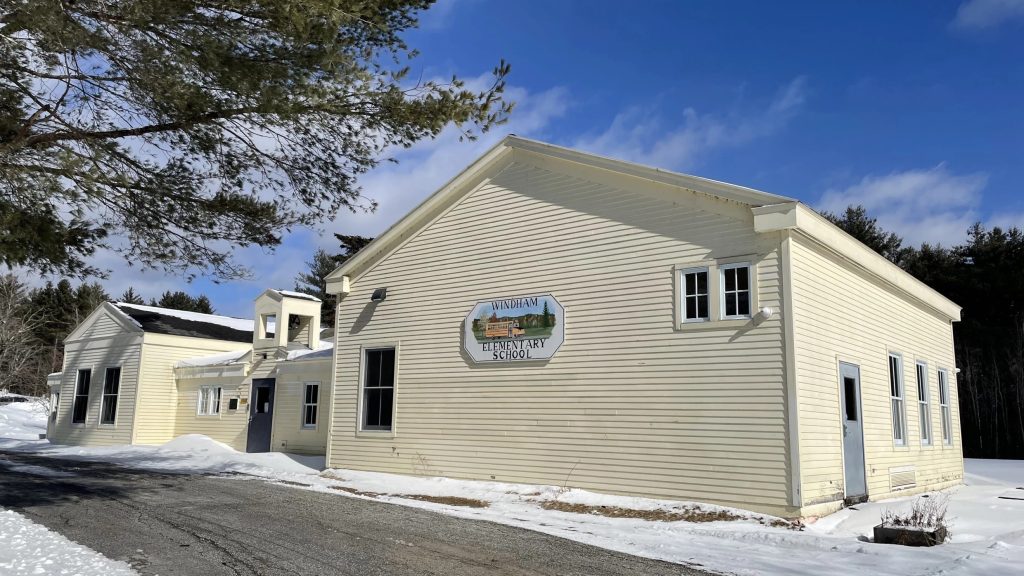
Case Study 1 – Vermont’s School Closure Crisis: The Governance Gap in Real Time
Vermont is—by some measures—the most rural state in America, and right now it is also the most instructive. Nowhere else in the country is the tension between fiscal pressure and community consequence playing out so visibly, so continuously, and at such a granular level. What is happening in Vermont is not a Vermont problem. It is a continuation of a 100-year trend and a fight we re-fight every generation to keep our local schools open.
| Location | Vermont (statewide, with specific examples from Roxbury, Calais, Westford, Peacham, and southern Vermont) |
| Core challenge | Accelerating school closures driven by declining enrollment, rising costs, and state-level consolidation pressure |
| Key legislation | Act 46 (2015 mergers) and Act 73 (2024 redistricting overhaul) |
| Scale | Vermont has lost ~20% of its K–12 public school enrollment in the past two decades |
| Key data point | 2024 analysis: Act 46 merger savings were largely absorbed by higher salaries and increased transportation costs |
| Governance issue | State-level consolidation mandates vs. local community resistance; school boards governing communities, not the other way around |
| Learn more | Hechinger Report / Chalkbeat (Jan 2026); VTDigger; Vermont Public media; vtruralschools.org; Daily Yonder |
The Numbers That Started the Fight
Vermont’s school funding crisis has a specific arithmetic. The state has the lowest student-teacher ratio in the nation — 11 to 1 — and spends nearly $27,000 per pupil, a figure second only to New York. Over the past two decades, Vermont has lost roughly 20 percent of its K–12 public school enrollment. The problem is structural: when enrollment falls, most district costs — administration, facilities, special education, transportation — do not fall with it. Per-pupil spending rises automatically, and property taxes follow.
In 2024, that dynamic came to a head. Vermonters facing double-digit property tax increases rejected nearly a third of school budgets at the ballot box — an unusual and politically significant act of resistance. The revolts created a mandate for action, and Governor Phil Scott and his education secretary Zoie Saunders responded in January 2025 with a sweeping proposal: reorganise Vermont’s 119 school districts and 52 supervisory unions into five regional mega-districts, each serving at least 10,000 students. The consolidation would be the most dramatic restructuring of Vermont education in generations.
The proposal was met with immediate and sustained opposition from rural communities across the state. It was ultimately superseded by Act 73, a more measured bill that created a redistricting task force to develop consolidation maps — with a target of 10 to 25 future districts — for the legislature to consider. But the damage to community confidence was already done. Across Vermont, school boards and communities began making their own calculations: if consolidation was coming anyway, should they act first?
Every five or 10 years, we have to fight to keep this place, because people from away think, oh, that’s just a few kids we have to disperse. — Jessica Philippe, Peacham parent and former school board member
What Act 46 Actually Did — and Didn’t Do
To understand the current crisis, it helps to understand what happened the last time Vermont tried this. Act 46, passed in 2015, triggered a multi-year consolidation of Vermont’s school governance structures — first through voluntary mergers, then through required ones. Dozens of districts were eliminated. Many small schools closed as newly unified boards looked for efficiencies.
The law was designed to save money and improve educational outcomes. The evidence on whether it delivered either is sobering. The most comprehensive analysis was conducted by Grace Miller, a Vermont native, for her 2024 undergraduate thesis at Yale University. Examining 109 Vermont districts between 2017 and 2020, Miller found that Act 46 mergers did yield some savings — but those savings were largely absorbed by higher salaries in newly combined districts and increased transportation costs as students travelled farther to school. Net savings were minimal. Outcomes data was mixed.
A 2024 Vermont Agency of Education report, based on superintendent surveys from seven early-merger districts, found more positive evidence: merged districts had been able to add or restore programs such as literacy intervention, world languages, and after-school activities that smaller districts could not sustain alone. But education researchers cautioned against reading too much into this. Mara Tieken, a Bates College professor and one of the country’s leading scholars on rural school consolidation, put it plainly: students experiencing consolidation “are often going through an enormous transition, and there are a whole bunch of factors that can affect” their outcomes.
Crucially, neither the savings analysis nor the outcomes analysis captured what happened to the communities that lost their schools. That accounting — the effect on property values, household formation, community identity, and the long-term attractiveness of a town to young families — was simply not part of the ledger.
Four Communities, Four Versions of the Same Story
Roxbury: The Promise That Wasn’t Kept
When the Montpelier and Roxbury school districts merged under Act 46, Roxbury residents received explicit assurances that their rural school would receive equal treatment in the new unified district. The assurances did not hold. In 2024, the Montpelier-dominant board voted to close Roxbury’s K–4 elementary school — a decision made by a board whose membership was weighted toward the larger urban partner in the merger.
The practical consequences were immediate and specific. Young children in Roxbury — a 42-square-mile town with a network of dirt roads — now face long bus rides to school in Montpelier. But Montpelier’s school buses do not travel on dirt roads. The logistical reality is that for families living on unpaved roads, the closure means longer walks to paved roads to catch buses, or private transportation arrangements. Meanwhile, the town is still searching for a sustainable use for the school building that was once its community anchor.
Roxbury illustrates a specific governance risk in consolidation: when a smaller rural community merges its school governance with a larger neighbour, it takes on the political arithmetic of the larger jurisdiction. Promises made during merger negotiations are not binding on future boards. The community that gave up its independent governance in exchange for assurances has limited recourse when those assurances are not honoured.
Washington Central: A Year of Deliberation, a Vote Against Even Voting
In central Vermont, the Washington Central Unified Union school board spent a year deliberating over whether to close two of its five elementary schools — Calais Elementary and Worcester’s Doty Memorial School — and move all district sixth-graders into the union middle school at U-32 in East Montpelier. The superintendent projected savings of over $2 million.
On a Tuesday evening in October 2024, residents packed a meeting at Calais Elementary wearing red in protest. Parent after parent testified that their children thrived in the district’s small schools. Community members argued the elementary schools were integral to their towns. Some suggested that if consolidation was necessary, the district should look elsewhere — perhaps merging with Montpelier rather than closing rural schools that were serving their communities well.
The board voted 8–5 against even putting the measure on the November ballot. Even some board members who supported consolidation in principle said the administration had failed to make a convincing case. Daniel Keeney, a Calais board member who voted with the pro-merger minority, told the crowd he was “continue to be disappointed with the lack of articulation of benefits.” The process had consumed a year of community energy and produced no resolution — only deferred decisions and deepened distrust.
Westford: The Spiral That Everyone Can See Coming
In Westford, a small rural community in northwestern Vermont, the local school board announced plans to move sixth through eighth grade out of the Westford School and into Essex Middle School beginning in fall 2025. The stated rationale was consolidating resources. The community’s fear was something larger: that this was the first step toward closing the school entirely.
Rob Carpenter, chair of the Essex-Westford school board, said the quiet part out loud in an interview with VTDigger: “We know that the attractiveness of Westford for young families is our school, and if we no longer have a school, then Westford won’t be as attractive, and we’re worried that we will lose further population and lose some of our tax base. This just looks like a future spiral downward for our small town.”
Westford is not in crisis. It is a functional community with a functional school. But it is navigating a set of governance structures — a district board weighted toward the larger neighbouring community, a state-level reform process generating uncertainty about the future, and declining enrollment driven by demographic forces outside anyone’s control — that are pushing it toward decisions it did not choose and cannot easily resist.
The attractiveness of Westford for young families is our school. If we no longer have a school, Westford won’t be as attractive. This just looks like a future spiral downward for our small town. — Rob Carpenter, Essex-Westford school board chair
Peacham: What a School Means to a Town
Peacham Elementary School sits in a small Vermont village of the same name — a community of several hundred people in the Northeast Kingdom. The school has about 60 students in prekindergarten through sixth grade. It is the kind of school where all the children know each other, where parents show up for workdays to rake the wood chips around the playground, where the principal knows every family by name.
Peacham has been through this before. When Act 46 passed in 2015, Peacham residents feared the district would be swallowed up in a larger merger. Jessica Philippe, a parent who was on the school board at the time, recalled the fight. “It seems like this is a cycle we have to go through,” she told the Hechinger Report in late 2025. “Every five or 10 years, we have to fight to keep this place, because people from away think, oh, that’s just a few kids we have to disperse.”
Peacham survived Act 46. Whether it survives Act 73 remains to be seen. But what Peacham illustrates is something quantitative analysis consistently misses: the non-financial value of a local school to a rural community. The school is where the community gathers. It is the reason young families choose to live in Peacham rather than somewhere else. It is the signal that this is a place where children belong, where a future is possible, where the community intends to continue.
The Costs That Never Appear in the Budget
Vermont’s school closure debate has been conducted almost entirely in the language of fiscal analysis: per-pupil costs, district overhead, transportation savings, salary differentials. These are real and important numbers. But they are not the only numbers.
Research on rural school closure consistently documents effects that do not appear in district budgets. Property values in communities that lose their elementary school decline. Young families with children are among the most mobile demographic groups in rural America — and the most likely to leave when local schools close, and least likely to move to communities that lack them. The population loss that follows school closure reduces the local tax base, which further reduces the community’s ability to fund services, which makes it less attractive to the next family considering a move.
None of this is captured when a school board calculates whether closing a school saves $2 million. The savings belong to the district. The costs are borne by the community — and they extend over years and decades, not a single budget cycle.
This is precisely where planners belong in the conversation. The comprehensive planning process — which is about long-term community development, land use, economic viability, and population trajectory — is the appropriate forum for asking what school closure actually costs. Not just to the district, but to the community. Not just this year, but over the next twenty.
What Vermont Teaches Planners
Vermont’s experience offers a set of lessons that apply far beyond its borders. I am not a fan of school consolidation. Yet at least ten other states have considered similar consolidation measures in the past three years, and we all have to be prepared for that long-term push. The pressures driving Vermont’s crisis — declining enrollment, rising costs, aging infrastructure, healthcare premiums that are growing faster than any district can control — are not unique to Vermont. Our education system is stacked against rural America.
The first lesson is about governance design. When rural communities merge their school governance with larger neighbours, they trade local control for fiscal partnership. That trade may be necessary. But it should be made with clear eyes about what is being given up, and with explicit protections for the smaller community’s voice in future decisions. Promises made at merger are not binding on future boards.
The second lesson is about what gets counted. The fiscal analysis that drives consolidation decisions is real but incomplete. A full accounting of the costs and benefits of school closure requires inputs that school boards are not equipped to generate on their own — demographic projections, property value analysis, migration patterns, long-term tax base modelling. These are planning tools, and they belong in the planning conversation.
The third lesson is about timing. The communities that are best positioned to shape what happens to their schools are the ones that have planned for contingencies before they become crises. Once a closure decision is being driven by state-level redistricting, the window for community input narrows significantly. The Vermont communities that have fared best are the ones that arrived at the table with a clear vision for their schools’ future — not just a protest against closure, but a plan for what the school is for and why it matters.
The fourth lesson is the most uncomfortable: some schools will close, and planning for that is not a betrayal of the community. It is in service. A vacant school building in the centre of a small Vermont town is a planning problem. A community that has thought in advance about what that building could become — a daycare centre, a coworking space, a mixed-use hub for services the community still needs — is in a fundamentally better position than one that has not. Planning for reuse before closure is not conceding defeat. It is exercising agency.
—
Sources & Further Reading on the Vermont Case Study
This case study draws on the following sources, all of which are publicly available:
• Schools Are Closing Across Rural America — Hechinger Report / Chalkbeat (January 2026)
• Inside Vermont’s Messy Fight Over School District Mergers — Vermont Public (January 2026)
• Proposal to Close 2 Elementary Schools in Central Vermont Falls Apart — Vermont Public (October 2024)
• Closing Schools Doesn’t Fix Vermont’s Education Affordability Problems — Mountain Times (October 2024)
• As Education Reform Takes Shape, Westford Worries for Its School’s Future — VTDigger (April 2025)
• A Southern Vermont School District Will Weigh Whether to Close Two Elementary Schools — VTDigger (October 2025)
• To stay open, Windham Elementary fought for independence. It closed anyway — Vermont Public (August2024)
• Vermont Rural School Community Alliance — vtruralschools.org
• Why Rural Schools Matter — Mara Casey Tieken (UNC Press, 2014)
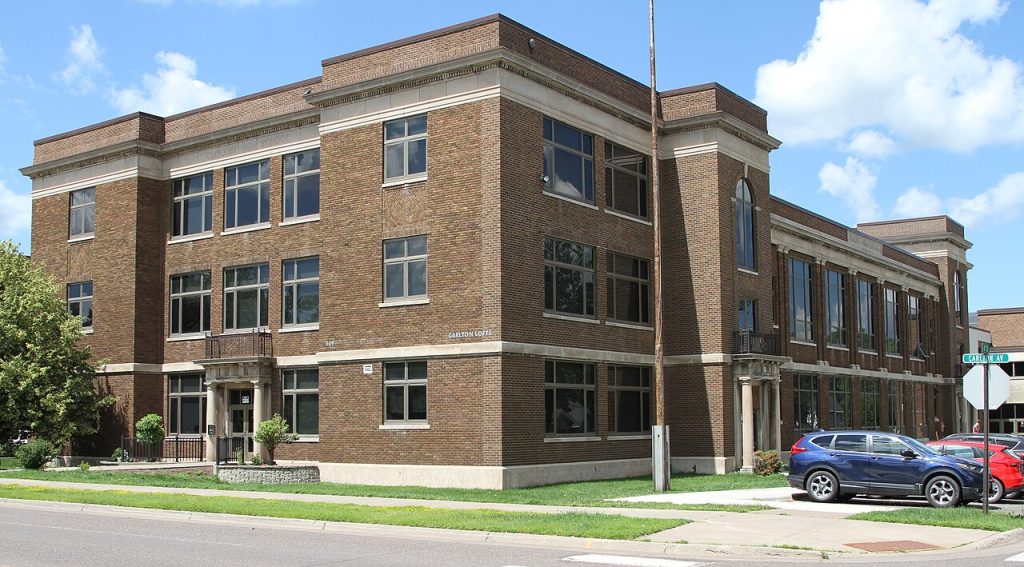
Case Study 2 – When the School Closes, the Building Stays: Carlton Lofts, Cloquet, Minnesota
A hundred years after one of the worst natural disasters in American history forced an entire city to rebuild itself, the school those residents constructed is being rebuilt again — this time into homes for the workers who keep Cloquet going today.
| Location | Cloquet, Minnesota (pop. ~12,000), approximately 20 miles south of Duluth |
| Building | Former Cloquet High School / Middle School, originally built 1921 (National Register of Historic Places) |
| Decommissioned | 2017, when the middle school moved to a new facility |
| Developer | Roers Companies (acquisition and development); construction by Anderson Companies |
| Architect | Kaas Wilson Architects |
| Historic preservation | New History (National Register eligibility research and preservation compliance) |
| Manager | CommonBond Communities, St. Paul |
| Result | Carlton Lofts: 57 apartments (45 affordable, 12 market-rate) + school district office space |
| Key funding | Minnesota Housing Finance Agency tax credits; state and federal historic tax credits; Greater Minnesota Housing Fund (FHLB line of credit + CIA program); Roers Companies equity |
| Completed | 2019–2020 |
| Award | Best Apartment Community, Best of the Best Contest, Duluth News Tribune (2023) |
| Learn more | gmhf.com — Cloquet Middle School Apartments; pineknotnews.com; carltonloftsmn.com |
A City That Knows How to Rebuild
To understand what Carlton Lofts means to Cloquet, it helps to know where Cloquet comes from. On 12 October 1918, a forest fire driven by 76-mph winds swept through Carlton County in northern Minnesota. By 4 a.m. the following morning, the city was, in the words of one commissioner, “practically all burned.” Of the six schools that had existed the day before, only Garfield Elementary was still standing. The 1918 fire remains the worst natural disaster in Minnesota history by single-day casualties — 453 dead, 52,000 injured or displaced, 38 communities destroyed.
Cloquet rebuilt. Within five years, the city had industrialised and reconstructed. The new high school — the building that would eventually become Carlton Lofts — was completed in 1921, rising from the same ground where the old one had burned. It was the city’s statement of intent: we are still here, we are still building, and we are building to last.
That building stood for nearly a century. It served as the high school until enrollment growth pushed the district into a newer facility in 1968, then as the middle school for another five decades. In 2017, the middle school moved to a new building across town, and the 1921 structure was left vacant. The school district had no further use for it. The question was what the community did.
The Housing Problem Nobody Was Solving
Cloquet sits about 20 miles south of Duluth in a region that has long struggled with what economists call “urban pull”: the gravitational force that draws workers, young families, and economic activity toward larger centres. For a community of 12,000 in northern Minnesota, that pull is constant. Keeping workers — for the paper mill, for healthcare, for the trades — requires having somewhere decent for them to live.
Before the Carlton Lofts project, the City of Cloquet had already identified workforce housing as a priority need. The rental market offered limited options: aging stock, small units, and rents that consumed a disproportionate share of working-family incomes. Linda Koehler, one of the first prospective tenants to tour the building during construction, told the Pine Knot News that she and her husband were paying more than half their income on rent in a smaller, darker apartment elsewhere in town. The new units were projected to cost at least $100 less per month. “Every little bit helps,” she said.
The Greater Minnesota Housing Fund, which provided critical construction financing for the project, described the situation plainly: Cloquet was “challenged with urban pull and strives to maintain workers.” The vacant middle school, sitting in a residential neighborhood next to a grocery store and within walking distance of churches and community services, was an obvious candidate for the housing the city needed. What was not obvious was how to pay for it.
The Challenge: Historic Preservation Meets Housing Finance
When Roers Companies — a Minnesota-based real estate development firm — purchased the former middle school from the school district in December 2017, they had a clear vision: 57 mixed-income apartments, workforce housing rents, and a building that would reflect its history rather than erase it. What they did not yet have was the building’s designation on the National Register of Historic Places, which was a prerequisite for accessing the federal and state historic tax credits that made the project’s finances work.
This is where the project’s first critical partnership came in. New History, a historic preservation consulting firm, was brought on to document the building’s significance and prepare its National Register nomination. The research they produced told the story of a building that was more than a school: it was a monument to a city’s recovery from catastrophe, constructed the year after the fire that had erased almost everything else. The eligibility case was strong. The nomination succeeded.
With National Register status secured, the project could access both the federal 20 percent historic tax credit and Minnesota’s state historic tax credit — together representing a significant portion of the project’s financing. Roers was also selected as one of ten recipients in the state, out of 50 applications, for $9 million in Minnesota Housing Finance Agency tax credits. The financing stack was completed when the Greater Minnesota Housing Fund stepped in with a Federal Home Loan Bank line of credit and a Community Investment Advisor program loan to bridge the construction phase — a critical role, since historic rehabilitation projects routinely require more flexible construction financing than standard affordable housing developments.
Without this partnership, the rehabilitation and renovation of the historic Cloquet Middle School may not have occurred. — Greater Minnesota Housing Fund
The Design: Preserving What Made the Building Worth Saving
The building that Kaas Wilson Architects and Anderson Companies began work on in late 2018 was a complex structure accumulated over decades. The original 1921 H-plan building contained three levels of classrooms, an auditorium, and a library. A gymnasium with a bowstring truss roof was added in 1936. A three-story classroom wing followed in 1954. An enclosed swimming pool came in 1957. Each addition was a layer of the school’s history — and each layer presented its own preservation challenge.
The design decisions were guided by two constraints: the Secretary of the Interior’s Standards for Historic Preservation, which govern how historic tax credit projects must treat original fabric, and the practical requirements of residential reuse. The result was a series of creative solutions. The locker-lined hallways were preserved. Original wood and terrazzo flooring was retained. Chalkboards and doors were kept in place. The former library — with its original plaster crown moulding, stage arch, and massive wood and glass skylights — was divided into five loft units with mezzanines, creating among the most distinctive apartments in the building.
The gymnasium and auditorium were kept intact, with the theatre made available to community groups. The swimming pool building, which could not be practically converted to residential use, was demolished to create structured parking — a necessary trade-off that the city’s 2:1 parking requirement made unavoidable. The former cafeteria became 10,000 square feet of office space, which the Cloquet School District subsequently leased for its administrative offices. The district, which had sold the building, retained a civic presence inside it.
When construction finished in 2019 and 2020, the 57 apartments ranged from studios to three-bedrooms, with rents projected at $700 to $1,075 — targeted primarily to households earning between $37,980 and $56,430 annually, the income range of Cloquet’s working families. Seven units were reserved for formerly homeless individuals or families. Twelve units were offered at market rate. The building went from vacant to leasing within months.
What Made It Work: Partnerships All the Way Down
The Carlton Lofts project is sometimes described as a developer success story, and it is. But it is more accurately a partnership story. At every stage of the project, something that could have stalled it was resolved through a relationship between institutions that had a shared interest in the outcome.
The school district sold the building to a developer rather than sitting on a vacant liability. The city supported the project through the permitting process and did not create obstacles to the parking and density variances the project required. Roers Companies took on the complexity of a historic rehabilitation project — lead and asbestos testing, National Register documentation, preservation compliance — that a less committed developer might have walked away from. New History made the historic tax credit financing possible by doing the historical research that established the building’s eligibility. The Greater Minnesota Housing Fund provided the construction bridge financing that allowed the project to navigate the gap between breaking ground and accessing permanent tax credit equity. And CommonBond Communities, which manages the building, brought deep experience in affordable housing operations.
The University of Minnesota Extension’s study of adaptive reuse of historic buildings in rural Minnesota, which documented the Cloquet project alongside similar efforts across the state, attributed the project’s success specifically to “the school district’s dedicated committee of champions, and the partnership of the school district and city.” That framing captures something important: the technical and financial complexity of this project was real, but the underlying driver was institutional will. Multiple organisations decided that a successful outcome for this building mattered, and they each played a role in making it happen.
The success of this project was attributed to the school district’s dedicated committee of champions, and the partnership of the school district and city. — University of Minnesota Extension
The Ripple Effect: What Cloquet Started
The Carlton Lofts project did not end in Cloquet. The Greater Minnesota Housing Fund described it as their third conversion of a historic school to affordable housing — and noted that by the time the project was complete, they were already working with two additional communities based on what they had learned. The project has since been cited repeatedly in discussions of rural school reuse as a demonstration of what is possible when the financing stack, the preservation requirements, and the community partnerships align.
In 2023, Carlton Lofts won the Best Apartment Community award in the Duluth News Tribune’s Best of the Best contest — a recognition from the community it serves, not from the preservation or housing finance world. Former students showed up at the open house tours during construction and wandered the hallways trying to remember which classroom had been whose. The property manager, Toni Johnson, had graduated from Cloquet High School in 1995, when graduation was still held in the building’s gymnasium. The building had not become something alien to the people who grew up in Cloquet. It had become something they could live in.
What Cloquet Teaches Planners
The Carlton Lofts project offers several lessons that travel well beyond Cloquet.
Start before the building is vacant
The Cloquet school district sold the building to Roers Companies in December 2017, the same year the middle school moved out. The project broke ground in 2018 and was leasing by 2019. This timeline was possible because the district had begun thinking about the building’s future before the doors closed. Communities that wait until a school has been vacant for years face dramatically higher remediation costs, a more difficult preservation case, and a market signal of decline that makes private investment harder to attract.
Historic status is an asset, not an obstacle
The Carlton Lofts project required the building to be listed on the National Register of Historic Places before it could access the tax credits that made the financing work. That process took time and expertise. But the historic designation was not an obstacle to the project — it was what made the project financially viable. Without the federal and state historic tax credits, the renovation math does not work. Communities with historic school buildings should treat the preservation pathway as a financing tool, not a regulatory burden.
The financing stack is complex but learnable
Carlton Lofts was funded through at least five distinct sources: Minnesota Housing Finance Agency tax credits, federal historic tax credits, state historic tax credits, a Federal Home Loan Bank line of credit through GMHF, and developer equity. Each source had its own requirements, timelines, and documentation. This complexity is real. But it is not unique to Cloquet — it is the standard architecture of affordable housing finance in America, and there are organisations in most states whose specific purpose is to help communities navigate it. The Greater Minnesota Housing Fund is one such organisation. Communities that lack internal capacity to manage this complexity can and should seek out institutional partners who have done it before.
The district’s continued presence matters
One detail of the Carlton Lofts project that is easy to overlook is that the Cloquet School District leased back the 10,000 square feet of office space in the former cafeteria. The district did not simply sell the building and walk away — it remained a tenant, a community anchor, and a visible presence in a building that now houses working families. That continuity is not just symbolic. It signals to the community that the building’s institutional history has not been erased, only extended. It also provides stable tenancy that strengthens the building’s operating finances.
I can’t help but give a shout out here to Holly Butcher Hansen, AICP, who I knew when I worked in Minnesota. She is the Community Development Director for the City of Cloquet. She and the city were instrumental in seeing this project through.
—
Sources & Further Reading on the Cloquet Case Study
This case study draws on the following sources, all publicly available:
• Adaptive Reuse: School Buildings — Rural Resurrection blog
• Cloquet Middle School Apartments — Greater Minnesota Housing Fund success story
• Former Middle School Is Transformed — Pine Knot News (October 2019)
• Old Cloquet Middle School Discussed — Pine Journal (June 2018)
• Carlton Lofts project page — Kaas Wilson Architects
• Carlton Lofts project page — Roers Companies
• Carlton Lofts project page — Rethos (formerly Preservation Alliance of Minnesota)
• Carlton Lofts — New History (historic preservation consultants)
• Adaptive Reuse of Historic Buildings in Rural Minnesota — University of Minnesota Extension (via Rural Resurrection)
• Economic Contribution of Historic Tax Credit FY22 — Minnesota SHPO (Carlton Lofts documented on pp. 15–16)
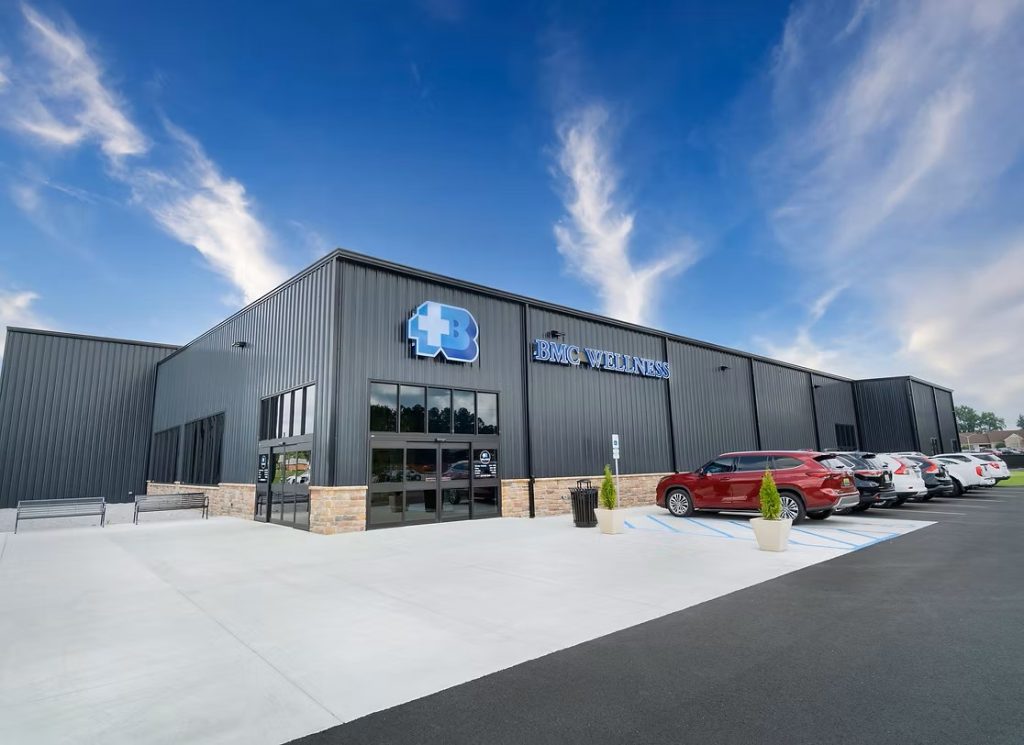
Case Study 3 – When the Hospital Becomes the Classroom: Bibb Medical Center and Shelton State Community College, Alabama
In a rural county where more than one in five residents lives below the poverty line, a small hospital decided that waiting for the nursing workforce problem to solve itself was no longer an option. What it built instead is now a model that other states are watching.
| Location | Centreville, Alabama — county seat of Bibb County (pop. ~22,000; poverty rate ~20.5%) |
| Partners | Bibb Medical Center (BMC) + Shelton State Community College (SSCC) |
| Partnership launched | May 2022 (two years in the making); first cohort enrolled August 2022 |
| Model | BMC provides classrooms, labs, staff, scholarships, and job offers; SSCC provides accreditation and curriculum. BMC Wellness Center is an accredited campus of SSCC. |
| Program | Three-semester Practical Nursing (LPN) certificate program |
| Added layer | Alabama Student Nurse Apprenticeship: apprentices are employed by BMC, work paid clinical shifts alongside licensed nurses, and apply those hours toward their program requirements |
| First cohort outcome | 14 graduates (August 2024); 6 received BMC scholarships with 2-year employment commitment; all 14 received job offers from healthcare facilities in West Alabama |
| State context | Alabama is the first state in the nation to design a business-driven model for pre-licensure nursing apprenticeships; program grew from 2 colleges and 2 employers in May 2022 to 16 colleges, 5 universities, and 61 employers by 2024 |
| Learn more | bibbvoice.com; sheltonstate.edu; www.bmcwellness.com birminghammedicalnews.com; accs.edu |
The Community: Where the Need Starts
Bibb County sits in central Alabama, about 35 miles south of Birmingham. Its county seat, Centreville, has a population of roughly 2,700. The county as a whole has about 22,000 residents. More than 20 percent of them live below the poverty line — a figure that is higher than both the Alabama state average and the national average. More than one in five children in Bibb County lives in poverty.
Bibb Medical Center is the county’s only hospital: a rural facility that serves as the primary point of care for a population that, by any measure of health determinants, faces significant challenges. Like most rural hospitals in Alabama — there are 54 rural county hospitals in the state, serving 42 of Alabama’s 58 rural counties — Bibb Medical Center has operated for years against the backdrop of a statewide nursing shortage that shows no sign of easing. The Alabama Board of Nursing estimates that RN and LPN vacancies in the state could reach 13,000 to 14,000 within a few years. Nurses are listed among the top 25 highest-demand occupations in Alabama, with more than 4,500 annual openings statewide.
For a small rural hospital in a high-poverty county, that shortage is not an abstraction. It is a daily operational reality. Every unfilled nursing position is a shift covered by overtime, a service constrained, or a patient referred elsewhere. And the conventional solution — recruit nurses from outside — has limited traction in Bibb County. The county’s median household income is $51,215. The distances to major population centres are real. The hospital could not simply outbid urban competitors for a workforce that was not being trained locally in the first place.
Two Years in the Making: How the Partnership Came Together
The partnership between Bibb Medical Center and Shelton State Community College was not a quick idea. It was, as The Bibb Voice — the county’s local news outlet — described at the announcement, “two years in the making.” Bibb Medical Center’s CEO Joseph Marchant approached Shelton State with a specific proposition: not a request for more clinical placement slots, but a structural offer. The hospital would provide the physical space — classrooms and labs at BMC’s Wellness Center — as well as hospital staff to support instruction. Shelton State would provide the accreditation, the curriculum, and the academic credential. BMC would become, in effect, an accredited campus of the college.
The proposal also included a financial commitment that went beyond what most hospital-college partnerships attempt. Bibb Medical Center agreed to cover the cost of books, tuition, school fees, and access to practice testing for enrolled students. Marchant’s framing of what the hospital was doing was deliberately simple. As he told the Birmingham Medical News: “We asked what they needed and gave it to them.”
Shelton State’s interim president at the time, Dr. Chris Cox, described the institutional logic on the college side equally plainly: “At the end of the day, a community college should focus on providing resources for its community.” The program that resulted — a three-semester, 12-month practical nursing curriculum leading to LPN certification — was built for students who were working adults, many employed full or part time while pursuing the credential. Classes were offered in the evening. Clinical hours were structured around BMC’s operational needs. The program was designed not for a hypothetical nursing student but for the actual people in Bibb County who needed a pathway into healthcare.
“The need for nurses has never been higher. At the end of the day, a community college should focus on providing resources for its community.” — Joseph Marchant, CEO, Bibb Medical Center, and Dr. Chris Cox, Interim President, Shelton State Community College
The Economic Stakes: What LPN Certification Actually Means
To understand why this program matters, it helps to understand what it offers to its students at the individual level. An LPN starting salary in West Alabama runs to roughly $38,000 a year, according to figures cited at the program’s launch. That figure is not remarkable in a national context. In Bibb County, where the median household income is just over $51,000 and more than 20 percent of the population lives below the poverty line, it represents a meaningful and stable income — a career, not a job.
Joseph Marchant described the population the program is designed to reach: people for whom the LPN credential “had seemed out of reach” — people working at the local gym or at a big-box retailer, with the aptitude and the motivation for nursing but without a viable pathway to the credential. The barriers were practical: cost, time, distance, and the difficulty of completing clinical hours without pay while also maintaining income. The BMC-SSCC partnership was designed specifically to remove each of those barriers.
Camille Gibson, Bibb Medical Center’s Chief Operating Officer and herself a Shelton State nursing program graduate, spoke at the launch about what rural healthcare work actually means for someone building a career: “I have done a little bit of everything and that is the great thing about Bibb Medical Center and rural health. There are so many opportunities. We have endless opportunities here if you want to grow and learn.” Her presence at the launch — as a BMC executive who had come through the local community college’s nursing program — was itself a statement about what the pipeline can produce.
The Apprenticeship Layer: Alabama Breaks New Ground
The BMC-SSCC program launched in August 2022 as a practical nursing certificate program. What happened next expanded its significance considerably beyond Bibb County.
In March 2022 — the same month Shelton State announced the BMC partnership — the Alabama Board of Nursing enacted new rules permitting healthcare employers to enter into formal nursing apprenticeship agreements with community college nursing programs. Alabama was the first state in the nation to design what the Alabama Hospital Association describes as a “business-driven model” for pre-licensure nursing apprenticeships — open to both LPN and RN students, not just CNAs as in other states. The distinction matters: this is not a pathway for people who are already nurses. It is a pathway into nursing for people who are still in training.
Under the apprenticeship model, a student who is accepted as a nurse apprentice becomes an employee of the healthcare facility. They work alongside an experienced nurse on paid shifts during their clinical hours. The clinical hours count toward both their employment and their program requirements. The community college serves as the sponsoring entity — managing the application process, record-keeping, and administrative requirements. The Alabama Office of Apprenticeship coordinates the formal agreement structure.
The first cohort of apprentices statewide launched at Coastal Alabama Community College and Gadsden State Community College in summer 2022. By 2024, the program had grown to 16 colleges, 5 universities, and 61 healthcare employers, with nearly 600 nursing apprentices active across the state. Josh Laney, director of the Alabama Office of Apprenticeship, described the attention the model was receiving: “Not only is it the first of its kind in our state, but it’s a relatively new concept nationally. A lot of eyes are on this program.”
Bibb Medical Center added the apprenticeship option to the second cohort of its program in fall 2022. Nursing student Krista Yeager, who participated in one of the later signing ceremonies, described the appeal directly: “I feel like you kind of have an advantage when you’re in a clinical setting when you’re actually working. Whereas you know textbooks, you know school. I thought this would give me a little advantage in the field early.”
“Alabama went from 2 schools and 2 employers in May 2022 to currently having 16 colleges, 5 universities, 61 employers, and nearly 600 nursing apprentices.” — Alabama Board of Nursing, State Landscape Analysis and Playbook, 2024
The First Graduating Class: What Success Looks Like
In August 2024, Shelton State’s Bibb Campus held two ceremonies in succession. On August 6, a Nurse Pinning Ceremony honored 14 graduates of the practical nursing program — students who had enrolled in August 2023 and completed a year of intensive study. The following day, those same 14 students participated in the official graduation ceremony at Shelton State Community College.
Six of the 14 graduates received scholarships from Bibb Medical Center with a two-year employment commitment — a direct pipeline from the program into the hospital’s workforce. All 14 received full-time job offers from healthcare facilities throughout West Alabama. Their next step was the NCLEX-PN exam, the national licensing examination that certifies practical nurses for independent practice.
Joseph Marchant described the hospital’s intent for the people who come through the program: “Life can get in the way. Our goal is to help them. And for them to want to be here for the long haul.” The Bibb Voice’s coverage of the graduation noted that the partnership had “reinforced its commitment to supporting the next generation of healthcare professionals and strengthening the quality of care available in West Alabama” — language that reflects how the hospital frames its own institutional identity. This is not simply a recruitment strategy. It is a community investment.
What Made It Work: The Logic of the Partnership
The BMC-SSCC model works because it solves a set of specific problems that neither institution could solve alone.
The hospital’s problem
Bibb Medical Center needed nurses who would stay in Bibb County. Nurses recruited from outside rarely do. The hospital could not afford to keep competing for an external workforce that had no particular reason to choose a rural Alabama county over better-compensated alternatives. The only durable solution was to grow nurses from within the community — people who were already here, whose lives were here, whose families were here. For those people, a stable nursing career at the local hospital is not a fallback. It is a destination.
The college’s problem
Shelton State Community College’s main campus is in Tuscaloosa, about 35 miles from Centreville. Distance is a real barrier for working adults in Bibb County. The college had the accreditation, the curriculum, and the nursing program infrastructure. What it could not easily offer was physical proximity. By accepting BMC’s offer of space and becoming an accredited satellite campus at the Wellness Center, Shelton State extended its reach into a county it had been unable to serve effectively. The arrangement cost the college very little and produced a functional new campus.
The student’s problem
For a working adult in Bibb County who wanted to become a nurse, the barriers before 2022 were substantial: tuition costs, distance to the college, clinical hours that required unpaid time, and no clear path from completion to local employment. The BMC-SSCC partnership removed each of these in sequence. Classes were local. Tuition was covered. Clinical hours were paid under the apprenticeship model. And a job offer was waiting at the end. For many students, this was the first time all the pieces were in the same place at the same time.
“A community college should focus on providing resources for its community.” — Dr. Chris Cox, Interim President, Shelton State Community College
What the Bibb Model Teaches Planners
The institution that acts first changes the dynamic
The defining feature of the Bibb model is that the hospital moved first. It did not wait for the college to design a program for its county or for the state to create a pipeline. It approached the college with an offer that made a new program viable: space, staff, scholarships, and jobs. Communities and planners often frame workforce development as something that needs to be built from the outside — a new program, a new institution, a new investment. The Bibb example demonstrates that a committed local institution can initiate that change by offering what it already has.
Proximity is a program design element
The fact that nursing classes meet at BMC’s Wellness Center in Centreville — and not at Shelton State’s campus in Tuscaloosa — is not incidental. It is central to who can participate. Evening classes at a facility in your own county, for students who are working during the day and have families to return to at night, are a fundamentally different proposition than a commute to a campus 35 miles away. Workforce programs that are designed without attention to the daily realities of their target participants tend to underperform. Proximity is access.
The apprenticeship layer changes the economics
The Alabama nursing apprenticeship model — in which student apprentices are employed by the hospital and paid during their clinical hours — transforms the calculus for students who cannot afford to give up income during training. It also creates a different relationship between the student and the employer: the apprentice is not just a student completing a clinical rotation. They are an employee developing institutional knowledge and a professional identity within the organisation that is most likely to hire them. The retention implications of that relationship are significant.
Community colleges are already there
One of the most transferable aspects of the Bibb model is that it did not require building anything new. Shelton State Community College already existed. Its nursing program already existed. Its accreditation already existed. What did not exist was a physical presence in Bibb County and a structure that made the program accessible to Bibb County residents. BMC provided the space; the college provided the institution. Communities that are looking for workforce development solutions often have the institutional infrastructure they need already in place at the regional community college. The question is whether a local partner is willing to do what BMC did: make the offer that brings that infrastructure closer to home.
—
Sources & Further Reading
This case study draws on the following sources, all publicly available:
• Bibb Medical Center Partners with Shelton State to Offer PN Program — The Bibb Voice (May 2022)
• Shelton State Community College Announces Partnership with Bibb Medical Center — SSCC press release (May 2022)
• Healthcare Training Expands in Bibb County — WBRC (May 2022)
• Rebuilding the Nursing Workforce in Alabama — Birmingham Medical News (November 2023)
• Strengthening Local Healthcare: Bibb Medical Center and Shelton State Celebrate Nursing Program Graduates — The Bibb Voice (August 2024)
• Shelton State Recognizing Bibb Medical Center Apprentices — WVUA23 (January 2025)
• Shelton State Nursing Students Begin Apprenticeship at West Alabama Rural Hospital — WBRC (January 2026)
• Alabama Community Colleges Launch Nurse Apprenticeship Program — ACCS (March 2022)
• Nurse Apprenticeships: Alabama — Alabama Hospital Association
• What Does the Success of Alabama’s Nursing Apprenticeship Program Mean Nationwide? — Nursing CE Central (November 2024)
• Practical Nursing Apprenticeship — Shelton State Community College
We’re going to talk a bit more about public health and livability in a few weeks. What innovative ideas are you seeing that benefit quality of life in small towns & rural areas?

The Role of Place
Education does not happen in isolation from place — and neither does economic development. Rural communities that successfully align education with local economies tend to share a common characteristic: they understand their own context. They identify the industries that matter, the skills that are needed, and the institutions that can connect the two.
This does not mean limiting ambition. It means grounding opportunity. A student who understands both the global economy and the local one is better positioned to make meaningful choices — whether that leads them to stay, leave, or eventually return. The goal is not to keep everyone in place. It is to ensure that staying is a viable and attractive option.
Planners are uniquely positioned to build these connections — not because they have authority over schools or employers, but because their job is explicitly about systems. The comprehensive planning process, when it takes education seriously, creates a forum where school boards, community colleges, employers, and local government can look at their shared situation together. What does the workforce need to look like in ten years? What does the school system need to produce to meet that need? What facilities does the community need to support both? These are planning questions. They belong in the planning conversation.

Takeaway: Education Is the Infrastructure of Opportunity
If rural communities are to become more resilient, education must be treated as infrastructure in the same way roads, buildings, and utilities are. It requires investment. It requires maintenance. And most importantly, it requires alignment.
The school, the clinic, the library, the employer, the civic building — they are all part of the same infrastructure. They are all community facilities. When they are aligned, they reinforce one another. When they are not, even the strongest individual institution cannot compensate for the gaps. The communities navigating rural education challenges most effectively are the ones that refuse to treat schools as institutions apart from community life — that plan for them, invest in them, and connect them deliberately to the economic realities around them.
Because in the end, resilience is not just about what communities build. It is about who is able to live, work, and build a future there.
—
This is the third article in our April series on Community Facilities. Next Sunday: From Rust Belt to Resilience — lessons from Detroit, Michigan, and NPC26.

Read More: Education as Infrastructure
The following books, reports, and websites provide deeper context for the themes covered in this article: rural school closure and community impact, workforce alignment, adaptive reuse of school buildings, and the role of community colleges in rural economic development.
Books
On rural schools and community
Why Rural Schools Matter — Mara Casey Tieken (University of North Carolina Press, 2014) — The essential starting point. Based on ethnographic research in two southern towns, Tieken shows how rural schools are not just educational institutions but social and economic anchors — and what happens to communities when closure policies treat them as anything less. Tieken is also one of the researchers quoted in the Vermont school consolidation coverage referenced in this article.
Educated Out: How Rural Students Navigate Elite Colleges — And What It Costs Them — Mara Casey Tieken (University of Chicago Press, 2025) — Tieken’s follow-up, focused on the college experiences of rural first-generation students. A sobering look at what “success” can cost in terms of community disconnection — and why the brain drain problem is more complex than it appears.
Rural Education in America: What Works for Our Students, Teachers, and Communities — Geoff and Sky Marietta (Harvard Education Press, 2020) — A practical and personal framework for place-based rural education, written by educators who grew up in Appalachian Kentucky and returned there. Strong on case studies and implementation, with a particular emphasis on the P–16 pipeline.
Rural Education for the Twenty-First Century: Identity, Place, and Community in a Globalizing World — Kai A. Schafft and Alecia Youngblood Jackson (eds.) (Penn State University Press, 2010) — An edited volume that situates rural schooling within broader economic and demographic change. Particularly useful for planners interested in the tension between local identity and national education policy.
On workforce development and community colleges
College and Career Possibilities Rooted in Place (PDF) — National Skills Coalition (2024, nationalskillscoalition.org) — Not a book in the traditional sense, but a detailed report on how rural community colleges build industry partnerships that create genuine local pathways. The source behind the Shelton State / Bibb Medical Center example in this article.
Reports & Data
Why Rural Matters (biennial report series) — Published by the Rural School and Community Trust, this is the most comprehensive state-by-state analysis of rural education conditions in the United States. Updated biennially. Essential reference for anyone working on rural education policy.
Education as a Rural Development Strategy — A foundational USDA Economic Research Service piece on the relationship between educational attainment and rural economic outcomes. Older (2005) but still widely cited — and its core findings on the limits of education-only strategies remain relevant.
Adaptive Reuse of Rural Schools & the Effects on Community & Quality of Life — A Kansas State University study that documents the community outcomes of rural school reuse projects. Useful background for planners working on building transition planning.
Rural Advanced Manufacturing Partnerships Toolkit — Produced by the NC State Belk Center, this practical toolkit documents how North Carolina’s community college system builds employer partnerships in rural manufacturing regions. Includes ApprenticeshipNC and NCEdge program details.
Revitalizing Rural Education: State Policy Solutions — A 2025 ExcelinEd policy brief covering teacher pipelines, dual-credit expansion, and career pathways in rural schools. Includes the Texas Rural Schools Innovation Zone case study, where dual-credit participation rose from 15% to 61% in four years.
Websites & Organisations
Rural education and schools
Rural School and Community Trust (Rural Trust) — The leading national advocacy organisation focused on rural schools. Strong on policy analysis, research, and state-by-state data. Publishes the Why Rural Matters report series.
The Hechinger Report — Rural Education Coverage — The best ongoing journalism on rural school consolidation, closure, and community impact in America. The Vermont Peacham Elementary coverage referenced in the Vermont case study is here.
Vermont Rural School Community Alliance — The advocacy organisation pushing back on Vermont’s consolidation proposals. A useful model for how community coalitions can organise around school closure issues — and their testimony and research are publicly available.
Daily Yonder — Independent journalism focused on rural America broadly, with strong education and workforce coverage. A good source for staying current on rural policy developments.
Workforce development and community colleges
National Skills Coalition — Rural Workforce — Focused on workforce policy that works for rural communities. Their work on community college-industry partnerships is directly relevant to the alignment themes in this article.
Rural Community College Alliance — The national association specifically for community colleges serving rural areas. Research, best practices, and a network of practitioners working on exactly the problems described in this article.
ApprenticeshipNC — The North Carolina statewide apprenticeship program, housed within the community college system. The model that has generated significant national interest — and a useful benchmark for what state-level infrastructure can do for rural employer-college alignment.
Adaptive reuse of school buildings
Rural Resurrection — Adaptive Reuse: School Buildings — A curated collection of rural school reuse case studies with practical details on funding, models, and outcomes. The Cloquet, Minnesota case study in this article is documented here.
Smart Cities Dive — Adaptive Reuse of Abandoned Schools — A well-sourced overview of the adaptive reuse landscape for school buildings, with examples from rural and urban contexts. Good on the emotional and governance challenges as well as the technical ones.
National Trust for Historic Preservation — Adaptive Reuse School Sites — Seven case studies of former school buildings that continue to serve their communities in new forms. Includes funding models, community engagement approaches, and design considerations.
This Read More list is a supplement to Article 3 of the April Community Facilities Series: “Education as Infrastructure: Aligning Rural Schools with Local Economies.” This is a list of resources, not an endorsement. Let us know what you think.
Next Sunday: From Rust Belt to Resilience — lessons from Detroit, Michigan, and NPC26.
More from JCShepard(dot)com
In April, we are looking at Community Facilities, including historic sties and educational infrastructure, as part of the Comprehensive Plan process. I will also be participating in the American Planning Association’s annual National Planning Conference. This year #NPC26 is in Detroit, Michigan.
Last November, I wrote about the Washington Pavilion, a historic school reuse project I visited in downtown Sioux Falls, South Dakota:
- What Do We Do With An Old School?
https://jcshepard.com/2025/11/what-do-we-do-with-an-old-school/
Our March series on Economic Development:
- What is Economic Development in Modern America? A Field Guide for Small Towns and Rural Places https://jcshepard.com/2026/03/what-is-economic-development-in-modern-america/
- Understanding Your Rural Economy—Jobs and Income and Why Headlines Never Tell the Whole Story https://jcshepard.com/2026/03/understanding-your-rural-economy/
- From Retention to Renewal: How BRE and Entrepreneurship Power Real Economic Development https://jcshepard.com/2026/03/from-retention-to-renewal-bre-entrepreneurship-economic-development/
- Front Porches and Paychecks: Housing, Quality of Life, and Economic Development https://jcshepard.com/2026/03/housing-quality-of-life-and-economic-development/
- How Global Trade Can Make or Break Rural Economies https://jcshepard.com/2026/03/global-trade-make-break-rural-economies/
Our August 2025 series on Rural Development:
- Rethinking the Rural Economy: New Paths, New Possibilities for Growth
- Business Retention in Small Towns: The Quiet Powerhouse of Rural Job Growth
- From Main Street to the World: Rural Entrepreneurship in Action
- The Rural Comeback: How Small Town Innovation Sparks Growth
- The Canadian Perspective on Rural Resilience
2026: Bring Your Plans to Life – Monthly Themes Preview
RuralStrong Podcast (Season 1 Episode 36)
Now playing on Youtube (audio), Spotify, and Apple Podcasts (February 2026). Transcription on the blog here.
Rural-Ready Engagement: Practical Tools for Small Town Planners
 Watch the full replay: youtube.com/@Engaging-Communities (February 2026)
Community engagement can look very different in small towns and rural communities. This webcast was co-sponsored by the APA Community Engagement Interest Group and the Small Town & Rural Planning Division.
Popular posts on JCShepard.com
- The Planning Process—From Vision to Action in Small Towns and Rural America (January 2026)
- Reviving Rural America: Why Heritage Tourism Is a Game-Changer Now (September 2025)
- What is Economic Development in Modern America? A Field Guide for Small Towns and Rural Places (March 2026)
- Rural Housing Supply Crisis: Why Small Towns Are Running Out of Homes (February 2026)
- How Small Towns Succeed: A Proven Playbook for Rural Action (November 2025)
- The Rural Comeback: How Small Town Innovation Sparks Growth (August 2025)
- How Small Towns Can Build a Strong Outdoor Economy Without Selling Out (June 2025)
Check out The 12 Planning & Sustainability Books You Need in 2026 and browse through the Small Town & Rural Community guides on our Resources page.
(As an Amazon Associate, we may earn commissions from qualifying purchases. Check your local library or bookshop, too.)