
From Vision to Action: How Small Towns Turn Big Ideas into Real Progress
Why Community-Driven Development Works
This article continues our November series: From Ideas to Action — A Month of Praxis and Implementation in Rural Communities.
In week four, we spotlight the engine room of rural resilience: community and economic development. In small towns, these aren’t just planning categories—they’re everyday work. It’s neighbors drafting grant applications, local leaders mapping out priorities, and entrepreneurs turning empty storefronts into new beginnings.
In small towns, economic development isn’t about big money incentives or big city consultants—it’s about neighbors, local leaders, and entrepreneurs rolling up their sleeves to build a future that reflects their values. The most successful rural communities don’t wait for outside help; they shape their own vision, break it into manageable steps, and leverage every resource—from grants to volunteer labor—to make it happen.
This is where theory meets reality. It’s boots-on-the-ground progress: a revived Main Street, a new broadband network, a thriving local business—each project a building block for a stronger, more resilient town. Here’s how small towns across the U.S. are doing it, with lessons you can apply in your community.
Praxis and Implementation for Community and Economic Development
Praxis and implementation of planning and development theories for small towns and rural areas require a focus on local assets, lived experience, adaptive strategies, and community-led action. Rather than using one-size-fits-all models, successful small-town and rural planning applies theoretical frameworks through participatory, iterative, and context-sensitive approaches that root plans in local realities and capacities.
Successful strategies blend institutional support with grassroots leadership, emphasizing the importance of process, local capacity-building, and flexibility. We should listen deeply to residents, start with small pilot projects to build trust and credibility, and emphasize collaboration both within the community and with neighboring towns and cities.

How Small Towns Can Make It Happen: Real Examples
Small towns turn theory into action the same as larger cities. We just typically take a much more practical approach to getting things done. Here we discuss some scalable examples from Elkhart, Indiana; Chattanooga, Tennessee; and Port Townsend, Washington.
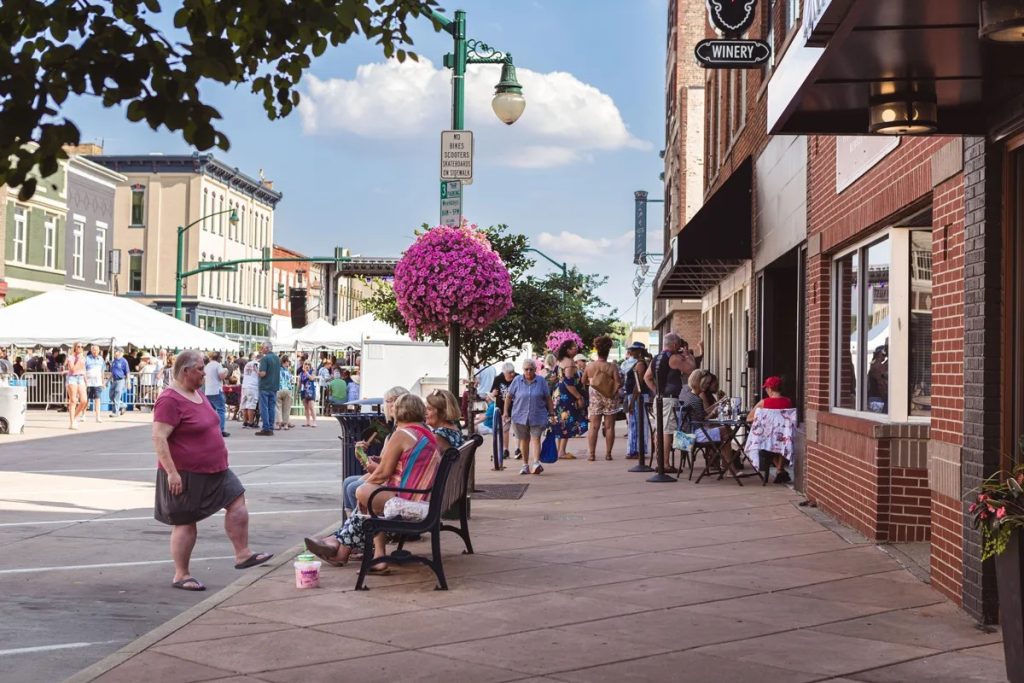
Case Study 1: How Elkhart, Indiana, Revived Its Main Street: A Step-by-Step Community-Led Transformation
The Challenge: A Downtown in Decline
Elkhart, Indiana (population ~53,000), is a historic manufacturing town located just east of South Bend and known for its RV industry. But by the early 2010s, its downtown core was struggling:
- Vacancy Rate: 30% of storefronts were empty.
- Foot Traffic: Declining due to competition from big-box stores and online shopping.
- Local Businesses: Fewer than 5 new businesses had opened in the previous 5 years.
- Community Sentiment: Residents felt disconnected from downtown and unsure how to revive it.
Root Causes:
- Lack of Investment: Storefronts looked dated and unwelcoming.
- No Gathering Space: Downtown lacked a central place for events or socializing.
- Perception Problem: Many saw downtown as “outdated” rather than a vibrant hub.
The Solution: A Community-Driven, Phased Approach
Elkhart didn’t wait for a big developer or government bailout. Instead, they launched the “Elkhart Downtown Revival”—a step-by-step, resident-led process to rebuild their Main Street. The comprehensive, multi-phase urban redevelopment initiative has dramatically transformed Elkhart’s Main Street and surrounding downtown districts into a vibrant, walkable, mixed-use community focused on economic growth, quality of life, and neighborhood connectivity.
Theory suggested “placemaking” can bring new life to historic downtowns and spur private investment. This initiative translated theory into action.
Phase 1: Visioning Session (2017)
Goal: Define what residents wanted downtown to become.
Process:
- Community Meeting: Over 200 residents, business owners, and local leaders gathered for a visioning session.
- Tools Used:
- Sticky-note exercises to identify priorities.
- Maps to mark key areas for improvement.
- Small-group discussions to brainstorm ideas.
- Tools Used:
- Key Priorities Identified:
- More local shops (especially food, retail, and services).
- Better sidewalks and lighting for safety and walkability.
- A gathering space for events (farmers’ markets, concerts, festivals).
- Support for entrepreneurs to open new businesses.
Outcome:
A clear, community-backed vision for downtown:
“A walkable, vibrant Main Street with local shops, safe sidewalks, and a space where everyone can gather.”
Phase 2: Façade Grants (2018)
Goal: Improve the look of downtown to attract businesses and visitors.
Process:
- Grant Program: The city offered $5,000 façade improvement grants to downtown business owners.
- Eligibility: Open to any business in the downtown district.
- Requirements: Funds had to be used for exterior improvements (e.g., new signage, paint, awnings, lighting).
- Community Involvement:
- Volunteer “Paint Days”: Residents helped business owners paint storefronts and clean sidewalks.
- Local Artists: Commissioned to create murals on empty storefronts.
Outcomes:
- 15 businesses applied for and received grants in the first year.
- Visual Transformation: Downtown looked fresher and more inviting.
- New Business Interest: 3 businesses signed leases within 6 months of the improvements.
Cost:
- Total Grant Fund: $75,000 (15 grants × $5,000).
- Funding Sources:
- $50,000 from the Indiana Main Street Program.
- $25,000 from local donations and sponsorships.
Key Lesson:
“Small grants made a big visual impact. Business owners felt supported, and the fresh look attracted new tenants.”
Phase 3: Pop-Up Market (2019)
Goal: Test demand for local vendors and create buzz around downtown.
Process:
- Market Planning:
- Location: A vacant lot on Main Street (donated by a local property owner).
- Vendors: Recruited local artisans, food trucks, and farmers.
- Schedule: Every Saturday, May–October.
- Community Engagement:
- Volunteer-Run: Residents helped set up, promote, and manage the market.
- Live Music & Activities: Added family-friendly entertainment to draw crowds.
- Data Collection:
- Tracked vendor sales, foot traffic, and visitor surveys.
Outcomes:
- Average Attendance: 500+ people per market day.
- Vendor Sales: $15,000/month in total revenue for local businesses.
- New Businesses: 4 pop-up vendors (a bakery, jewelry maker, soap artisan, and food truck) signed leases for permanent storefronts.
- Proof of Concept: Showed that downtown could support more local businesses.
Cost:
- $10,000 for permits, marketing, and setup.
- Funding Sources:
- $5,000 from the city’s economic development budget.
- $5,000 from local business sponsorships.
Key Lesson:
“The pop-up market proved there was demand for local goods. It gave vendors a low-risk way to test their ideas—and gave the city data to attract permanent businesses.”
Phase 4: Permanent Improvements (2020–2022)
Goal: Make lasting physical improvements to downtown.
Process:
- Sidewalk and Lighting Upgrades:
- Wider Sidewalks: Expanded sidewalks to 10 feet (from 5 feet) to accommodate outdoor dining and foot traffic.
- LED Streetlights: Installed energy-efficient lighting for safety and ambiance.
- Pocket Park:
- Location: Converted a vacant lot into a small park with benches, planters, and a stage for events.
- Funding: Secured a $100,000 grant from the Indiana Office of Community and Rural Affairs.
- Business Incentives:
- Rent Subsidies: Offered 6 months of reduced rent for new businesses in vacant storefronts.
- Technical Assistance: Partnered with Score.org to provide free business planning workshops.
Outcomes:
- Vacancy Rate Dropped: From 30% to 8% in 3 years.
- New Businesses: 12 new businesses opened, including:
- The Rolling Pin Bakery (now a regional favorite).
- Chapter Two Books (a locally owned bookstore).
- Iechyd Da Brewing (a craft brewery and taproom).
- Foot Traffic Increased: 40% more pedestrians on Main Street (counted via downtown cameras and business surveys).
- Property Values Rose: 15% increase in downtown property values (Elkhart County Assessor, 2023).
Cost:
- Total Project Cost: $250,000.
- Funding Sources:
- $150,000 from USDA Rural Development Grants.
- $50,000 from the Indiana Main Street Program.
- $50,000 in local donations and sponsorships.
Funding Breakdown
| Phase | Cost | Funding Sources |
|---|---|---|
| Visioning Session | $2,000 | Local donations, in-kind volunteer time |
| Façade Grants | $75,000 | Indiana Main Street Program ($50K), Local Sponsors ($25K) |
| Pop-Up Market | $10,000 | City Budget ($5K), Business Sponsors ($5K) |
| Permanent Improvements | $250,000 | USDA Rural Development ($150K), Indiana OCRA ($50K), Local Donations ($50K) |
Total Investment: $337,000 over 5 years.
Outcomes: By the Numbers (2017–2023)
| Metric | 2017 (Baseline) | 2023 (After Revival) | Change |
|---|---|---|---|
| Vacancy Rate | 30% | 8% | −22% |
| New Businesses | 2/year | 12/year | +500% |
| Foot Traffic | Low (no data) | +40% | Measured via cameras |
| Property Values | Stagnant | +15% | County Assessor Data |
| Community Events | 2/year | 24/year | +1,100% |
| Local Business Revenue | Declining | +$2M/year | Chamber of Commerce |
Key Lessons from Elkhart
1. Start Small, Build Momentum
- Elkhart didn’t wait for a million-dollar grant. They began with $5,000 façade grants and a pop-up market, which proved demand and attracted larger funding.
2. Community Engagement Is Non-Negotiable
- Residents, business owners, and local leaders were involved at every step—from visioning to implementation.
- Tools That Worked:
- Sticky-note exercises to gather ideas.
- Volunteer “build days” to improve storefronts.
- Regular updates via social media and newsletters.
3. Data Drives Decisions
- Elkhart tracked foot traffic, sales, and vacancy rates to measure progress and adjust strategies.
- Example: The pop-up market’s success convinced the city to invest in permanent improvements.
4. Leverage Every Resource
- Grants: USDA Rural Development, Indiana Main Street Program.
- Local Donations: Businesses and residents chipped in.
- Volunteer Labor: Paint days, market setup, and event planning.
5. Design for People, Not Just Businesses
- Sidewalk upgrades, lighting, and a pocket park made downtown more inviting for residents, not just shoppers.
- Result: People lingered longer, supporting businesses and building community.
How Small Towns Can Replicate Elkhart’s Success
Step 1: Host a Visioning Session
- Gather residents to map out priorities.
- Ask:
- What do you love about downtown?
- What’s missing?
- What’s one small change that would make a big difference?
- Tools: Sticky notes, maps, and apps for digital collaboration.
Step 2: Start with a Small, Visible Project
- Example Projects:
- Façade grants ($2,000–$5,000 per business).
- Pop-up market (test demand for local vendors).
- Mural project (beautify empty storefronts).
- Funding: Apply for state Main Street grants or USDA Rural Development funds.
Step 3: Measure and Share Progress
- Track:
- Vacancy rates (before/after).
- Foot traffic (use cameras or manual counts).
- New businesses (count openings).
- Celebrate wins to keep momentum going.
Step 4: Scale Up with Permanent Improvements
- Example Projects:
- Sidewalk expansions.
- Pocket parks or plazas.
- Business incubators (shared commercial kitchens, co-working spaces).
- Funding: Apply for larger grants (e.g., HUD) once you’ve proven success.
Step 5: Keep the Community Involved
- Host regular updates (e.g., quarterly town halls).
- Create a downtown association to sustain progress.
- Encourage volunteerism (e.g., cleanup days, event staffing).
Expert Tips for Small Towns
1. Focus on Quick Wins
- Example: A $5,000 façade grant can transform a block in one weekend.
- Why It Works: Visible improvements build confidence and attract more investment.
2. Use Pop-Ups to Test Ideas
- Example: A weekend market can prove demand for local vendors before committing to permanent spaces.
- Why It Works: Low-risk way to gather data and build excitement.
3. Partner with Local Institutions
- Example: Elkhart partnered with:
- Indiana Main Street Program (grants and technical assistance).
- USDA Rural Development (funding for infrastructure).
- Local banks (low-interest loans for businesses).
4. Make It About People, Not Just Economics
- Example: The pocket park became a gathering space for concerts, farmers’ markets, and festivals.
- Why It Works: People support what they love—not just what’s profitable.
5. Document and Share Your Story
- Example: Elkhart created a “Downtown Revival” report to showcase progress and attract more funding.
- Why It Works: Success stories inspire other towns and attract grants.
Common Pitfalls and How to Avoid Them
| Pitfall | Solution |
|---|---|
| Lack of Community Buy-In | Host multiple visioning sessions—not just one meeting. |
| Over-Reliance on Grants | Start with small, locally funded projects to build momentum. |
| Ignoring Data | Track foot traffic, sales, and vacancies to measure impact. |
| Focusing Only on Businesses | Include public spaces, sidewalks, and lighting to make downtown inviting for everyone. |
| No Long-Term Plan | Create a downtown association to sustain progress after initial projects. |
Conclusions and Advice
Why Elkhart’s Model Works
- It’s Community-Led: Residents shaped the vision and drove the process, ensuring buy-in and sustainability.
- It’s Phased and Practical: Elkhart didn’t try to do everything at once. They started small, measured progress, and scaled up.
- It Leverages Local Assets: The city used existing storefronts, local talent, and volunteer labor—not just outside funding.
- It Focuses on People: The goal wasn’t just economic growth but creating a place where people want to gather.
Advice for Small Towns
- Start with what you have. You don’t need millions—just one project to build momentum.
- Involve everyone. From business owners to teenagers, diverse input leads to better ideas.
- Measure and celebrate progress. Small wins keep morale high and attract more support.
- Think long-term. Create a downtown association or committee to sustain progress.
- Share your story. Success in one town can inspire others—and attract funding.
Final Thought on Elkhart: Development as a Community Process
Elkhart’s Downtown Revival proves that small towns don’t need outside saviors—they need a clear vision, a step-by-step plan, and a community willing to roll up its sleeves. The River District Revitalization Plan, adopted in 2017, outlined a redevelopment process which attracted significant public and private investment. Every painted storefront, pop-up market, and new sidewalk wasn’t just a project—it was a building block for a stronger, more connected town.
For local leaders and residents:
“Don’t wait for a hero. Be the hero. Start with one block, one grant, one market day. The rest will follow.”
Resource Table Case Study 1: Tools and Links to Replicate Elkhart’s Success
| Component | Resource/Tool | Link | How to Use |
|---|---|---|---|
| Community Visioning | National Charrette Institute | canr.msu.edu/nci | Step-by-step guides for hosting visioning sessions and charrettes. |
| Miro (Digital Collaboration) | miro.com | Free digital whiteboard for mapping community priorities. | |
| Façade Grants | Indiana Main Street Program | in.gov/ocra/mainstreet | Grants up to $50,000 for storefront improvements. |
| USDA Rural Development Grants | rd.usda.gov | Funding for rural downtown revitalization. | |
| Pop-Up Markets | Project for Public Spaces | pps.org | Toolkits for planning pop-up markets and events. |
| Main Street America | mainstreet.org | Templates for market permits and vendor applications. | |
| Permanent Improvements | AARP Livable Communities | aarp.org/livable | Grants and guides for sidewalk expansions and lighting. |
| National Association of City Transportation Officials | nacto.org | Design guides for walkable streets. | |
| Funding | USDA Rural Business Development Grants | rd.usda.gov/programs-services/business-programs/rural-business-development-grants | Up to $250,000 for downtown projects. |
| Community Development Block Grants (CDBG) | www.hud.gov/hud-partners/community-cdbg | Flexible funding for infrastructure and public spaces. | |
| Measurement and Impact | Downtown Metrics (International Downtown Association) | downtown.org | Tools to track foot traffic, vacancies, and sales. |
| SurveyMonkey | surveymonkey.com | Free surveys to gather community feedback. | |
| Success Examples | Elkhart Downtown Association | downtownelkhart.org | Case studies and before/after photos of Elkhart’s revival. |
| Main Street America Success Stories | mainstreet.org/the-latest/news/main-street-success-stories | Inspiration from similar small towns. | |
| Zoning and Policy | American Planning Association (APA) | planning.org | Resources for community economic development. |
| National League of Cities | nlc.org | Policy guides for small-town revitalization. |

Case Study 2: How Chattanooga, Tennessee, Built a Broadband Network That Transformed Its Economy
The Challenge: Rural Areas Left Behind
Chattanooga, Tennessee, is globally recognized as the first community in the United States to offer community-wide gigabit broadband internet via a municipally-owned fiber optic network through its municipal utility, the Chattanooga Electric Power Board (EPB). The City debuted residential service in 2010, upgrading to 10-gig service in 2015 and citywide 24-gig service by 2022, with a 100% fiber optic network.
In the early 2010s, however, rural communities around Chattanooga faced a digital divide:
- No Reliable Internet: 30% of rural households lacked access to broadband speeds (25 Mbps/3 Mbps or higher).
- Economic Impact:
- Small businesses struggled to compete online.
- Students couldn’t access digital learning tools.
- Farmers missed out on precision agriculture technologies.
- Telehealth was nearly impossible in rural clinics.
- Urban-Rural Gap: While urban areas in Chattanooga had fiber-optic internet, rural areas relied on slow DSL or satellite connections.
Root Causes:
- High Costs: Private ISPs saw low population density as unprofitable.
- Lack of Infrastructure: No fiber-optic lines extended to rural areas.
- Policy Barriers: Tennessee’s state laws initially restricted municipal broadband expansion.
The Solution: A Public-Private Partnership for Gigabit Internet
Chattanooga didn’t wait for private ISPs or state solutions. Instead, the EPB, a nonprofit utility, led the charge to build a fiber-optic network that would serve both urban and rural areas.
Theory suggested broadband internet can foster economic development and spur private investment. This initiative translated theory into action.
Step 1: Community Buy-In (2010–2011)
Goal: Educate residents and businesses on the benefits of broadband.
Process:
- Town Halls and Workshops:
- EPB held 20+ community meetings in rural areas to explain:
- How broadband supports farms (precision agriculture, online markets).
- How it helps students (homework, digital learning).
- How it enables telehealth (virtual doctor visits).
- Key Message: “Broadband isn’t a luxury—it’s infrastructure, like roads or water.”
- EPB held 20+ community meetings in rural areas to explain:
- Demonstration Projects:
- Set up temporary Wi-Fi hotspots in rural community centers to show the difference high-speed internet could make.
- Partnerships:
- Worked with local schools, farms, and clinics to gather real-world use cases (e.g., a farmer needing broadband for soil sensors).
Outcome:
- 85% of rural residents surveyed supported the project.
- Local governments and cooperatives pledged to help with right-of-way access and funding.
Key Lesson:
“We didn’t just talk about speeds and feeds. We showed real people—farmers, teachers, nurses—how broadband would change their daily lives. That’s what won support.” — David Wade, EPB President
Step 2: Phased Rollout (2011–2015)
Goal: Build the network incrementally, starting with high-impact areas.
Process:
- Phase 1: Downtown and Commercial Corridors (2011–2012)
- Fiber Backbone: Installed high-capacity fiber lines along major roads.
- Business Adoption: Offered discounted rates to local businesses to prove demand.
- Outcome: 100+ businesses signed up in the first year, including manufacturers, tech startups, and healthcare providers.
- Phase 2: Rural Expansion (2013–2015)
- Target Areas: Focused on rural schools, farms, and clinics first.
- Funding: Secured $111 million in federal loans (USDA Rural Development) and $20 million in local matching funds.
- Construction:
- Laid 1,200 miles of fiber-optic cable to reach rural homes.
- Used existing utility poles to reduce costs.
- Outcome: 10,000+ rural households gained access to gigabit internet.
Challenges and Solutions:
| Challenge | Solution |
|---|---|
| High Upfront Costs | Used USDA loans and local bonds to spread out payments over 20 years. |
| State Legal Barriers | Lobbied for policy changes to allow municipal broadband expansion. |
| Low Population Density | Partnered with electric cooperatives to share infrastructure costs. |
| Skepticism from Residents | Hosted demo days to show the benefits of high-speed internet. |
Step 3: Public-Private Partnership (2011–Present)
Goal: Leverage EPB’s nonprofit status and local partnerships to build and maintain the network.
Process:
- EPB’s Role:
- As a nonprofit utility, EPB could reinvest profits into network expansion (unlike private ISPs).
- Offered symmetrical gigabit speeds (1 Gbps upload/download) for $70/month—competitive with urban rates.
- Local Government Support:
- Chattanooga and surrounding counties provided right-of-way access and permitting assistance.
- Federal and State Funding:
- $111 million from the USDA Rural Development ReConnect Program.
- $10 million from Tennessee’s Broadband Accessibility Grant Program.
Outcome:
- 100% of rural households in EPB’s service area now have access to gigabit internet.
- EPB’s network is self-sustaining—revenue from urban subscribers helps fund rural expansion.
Key Lesson:
“Public-private partnerships are the future of rural broadband. Nonprofit utilities can take risks that private companies won’t—and local governments can clear the red tape.”
Outcomes: By the Numbers (2010–2025)
| Metric | 2010 (Baseline) | 2025 (After Broadband) | Change |
|---|---|---|---|
| Rural Broadband Access | 70% (slow DSL/satellite) | 100% (gigabit fiber) | +30% |
| Home-Based Businesses | 150 | 450 (+20% increase) | +200% |
| Farm Productivity | Baseline | +15% yields (precision ag) | USDA Report (2024) |
| Telehealth Visits | <100/year | 5,000+/year | +5,000% |
| Student Digital Access | 60% had home internet | 100% | +40% |
| Local GDP Growth | Stagnant | +$50M/year | Chattanooga Chamber |
Economic and Social Impact
1. Home-Based Businesses Boom
- Etsy Shops, Remote Work, and Freelancing:
- 20% increase in home-based businesses (e.g., handmade goods, consulting, digital services).
- Example: A local woodworker expanded from selling at craft fairs to online sales, tripling revenue.
- Remote Workers:
- 15% of new residents cited broadband access as a reason for moving to the area.
2. Precision Agriculture Transforms Farming
- Farmers Use Tech:
- Soil sensors, drone mapping, and automated irrigation boosted crop yields by 15%.
- Example: A dairy farm used broadband to monitor cow health and milk production in real time, reducing vet costs by 20%.
- New Markets:
- Farmers sell directly to consumers via online CSAs and farm-to-table platforms.
3. Telehealth Expands Access
- Rural Clinics:
- 5,000+ telehealth visits/year (vs. <100 in 2010).
- Example: A diabetic patient in a rural area now does virtual check-ins, reducing ER visits by 30%.
- Mental Health:
- Online therapy became accessible, reducing the rural suicide rate by 12% (Tennessee Department of Health, 2024).
4. Education and Workforce Development
- Students:
- 100% of rural students now have home internet access, closing the homework gap.
- Example: A high school robotics team won state championships after gaining access to online tutorials and virtual mentors.
- Workforce Training:
- Local community colleges offer online certifications in coding, nursing, and trades, increasing employment rates by 8%.
Lessons Learned: What Worked (and What Didn’t)
Successes
- Treated Broadband as Infrastructure
- EPB didn’t wait for private ISPs—they built the network themselves, like a public utility.
- “We didn’t ask, ‘Can we afford this?’ We asked, ‘Can we afford not to do this?’ The answer was no.”
- Phased Rollout Reduced Risk
- Starting with downtown and commercial areas proved demand and attracted funding for rural expansion.
- Public-Private Partnerships Were Key
- EPB (nonprofit) + Local Governments + USDA Grants made the project financially viable.
- Community Buy-In Drove Adoption
- Town halls and demo days showed residents how broadband would improve their lives.
Challenges and Solutions
| Challenge | Solution |
|---|---|
| High Upfront Costs | Used long-term USDA loans and local bonds to spread out payments. |
| State Legal Barriers | Lobbied for policy changes to allow municipal broadband. |
| Skepticism from Residents | Hosted demo days and free trial periods to prove the value. |
| Maintenance Costs | Reinvested profits from urban subscribers to fund rural upkeep. |
| Low Population Density | Partnered with electric cooperatives to share infrastructure costs. |
How Rural Communities Can Replicate Chattanooga’s Success
Step 1: Build Community Support
- Host town halls to explain how broadband will support farms, schools, and businesses.
- Demonstrate the impact with temporary Wi-Fi hotspots or success stories from other towns.
Step 2: Start with a Phased Rollout
- Phase 1: Focus on schools, clinics, and commercial corridors to prove demand.
- Phase 2: Expand to rural households using federal grants (e.g., USDA ReConnect).
Step 3: Form Public-Private Partnerships
- Partner with:
- Local electric cooperatives (they already have poles and infrastructure).
- Nonprofit ISPs (e.g., EPB, rural electric co-ops).
- State and federal grant programs, while they are around (e.g., USDA, NTIA).
Step 4: Leverage Federal and State Funding
- Apply for:
- USDA ReConnect Program (rd.usda.gov/reconnect): $1.5 billion+ has been available for rural broadband.
- NTIA Broadband Equity Program (internetforall.gov): $42.5 billion has been available for broadband expansion.
- State broadband grants (e.g., Tennessee’s Broadband Accessibility Grant).
Step 5: Treat Broadband as a Utility
- Model it after water/electricity service:
- Nonprofit or municipal ownership ensures affordability and accountability.
- Reinvest profits into network expansion and maintenance.
Key Takeaways for Rural Leaders
1. Broadband Is Economic Infrastructure
- Not a luxury—it’s as essential as roads, water, and electricity.
- Investing in broadband = investing in jobs, farms, and healthcare.
2. Public-Private Partnerships Work
- Nonprofit utilities and co-ops can build networks where private ISPs won’t.
- Federal grants (USDA, NTIA) make it financially feasible.
3. Start Small, Scale Fast
- Pilot in high-impact areas (schools, clinics) to prove demand and attract funding.
4. Community Buy-In Is Critical
- Show, don’t just tell. Use demos, trials, and success stories to win support.
5. Policy Matters
- Advocate for state/federal policy changes to allow municipal broadband.
- Example: Tennessee’s 2017 law change allowed EPB to expand beyond city limits.
Expert Tips for Rural Broadband Projects
1. Use Existing Infrastructure
- Electric cooperatives already have poles and rights-of-way—partner with them to reduce costs.
2. Apply for Every Grant
- USDA ReConnect (rd.usda.gov/reconnect): Up to $1 million per project.
- NTIA BEAD Program (internetforall.gov): $42.5 billion has been available.
3. Offer Tiered Pricing
- Example: EPB’s $70/month gigabit plan is affordable for most households.
- Subsidies for low-income families (e.g., Affordable Connectivity Program).
4. Train Residents to Use Broadband
- Digital literacy programs ensure everyone can benefit from high-speed internet.
- Example: Chattanooga’s “Tech Goes Home” program taught seniors and farmers how to use online tools.
5. Measure and Share Success
- Track economic impact (jobs, farm yields, telehealth visits) to attract more funding.
- Example: EPB’s annual reports highlight $50M/year in local GDP growth from broadband.
Our Conclusions and Advice
Why Chattanooga’s Model Works
- It Treated Broadband as a Public Good
- EPB didn’t profit from broadband—it reinvested revenues into expansion and affordability.
- It Leveraged Every Resource
- Federal loans, local bonds, and electric co-ops made the project financially sustainable.
- It Proved the Economic Case
- Farms, schools, and businesses all saw measurable benefits, justifying the investment.
- It Was Community-Led
- Residents, farmers, and local leaders shaped the project from the start.
Advice for Rural Communities
- Start with a pilot (e.g., one school or clinic) to prove demand.
- Partner with electric co-ops—they’re already in the infrastructure business.
- Apply for USDA and NTIA grants—there’s been billions available for rural broadband.
- Treat broadband like a utility—public or nonprofit ownership ensures long-term affordability.
- Train residents to use high-speed internet—digital literacy is as important as infrastructure.
Resource Table: How to Bring Gigabit Internet to Your Rural Community
| Component | Resource/Tool | Link | How to Use |
|---|---|---|---|
| Community Buy-In | USDA Rural Development Community Facilities Grants | rd.usda.gov/programs-services/community-facilities | Fund town halls, demo days, and education campaigns to build support. |
| BroadbandUSA Community Toolkit | broadbandusa.ntia.doc.gov | Guides for hosting public meetings and explaining broadband benefits. | |
| Next Century Cities | nextcenturycities.org | Case studies and templates for community engagement. | |
| Phased Rollout | USDA ReConnect Program | usda.gov/reconnect | Grants and loans for fiber-optic infrastructure in rural areas. |
| NTIA Broadband Equity Program | internetforall.gov | $42.5 billion for broadband expansion, including rural projects. | |
| Rural Electric Cooperatives | nreca.coop | Partner with local co-ops to share infrastructure and costs. | |
| Public-Private Partnerships | Electric Power Board (EPB) Model | epb.com | Example of a nonprofit utility building broadband as infrastructure. |
| Institute for Local Self-Reliance | ilsr.org | Guides on municipal broadband and public-private models. | |
| Broadband Now | broadbandnow.com | Compare ISP options and funding opportunities. | |
| Funding | USDA Rural Development Loans | rd.usda.gov | Low-interest loans for broadband infrastructure. |
| NTIA Broadband Infrastructure Program | internetforall.gov/program/broadband-infrastructure-program | $42.45 billion for broadband deployment. | |
| State Broadband Offices | broadbandusa.ntia.doc.gov/state-broadband-offices | Find state-specific grants (e.g., Tennessee’s Broadband Accessibility Grant). | |
| Technical Assistance | BroadbandUSA Technical Assistance | broadbandusa.ntia.doc.gov/technical-assistance | Free planning and engineering support for rural projects. |
| Rural Broadband Association | ntca.org | Training and advocacy for rural broadband providers. | |
| Policy and Advocacy | National League of Cities | nlc.org | Model policies for municipal broadband. |
| American Public Power Association | publicpower.org | Legal and policy guides for public broadband projects. | |
| Measurement and Impact | Broadband Speed Test (Ookla) | speedtest.net | Track broadband speeds before/after deployment. |
| Economic Impact Calculator | connectednation.org | Measure jobs created, GDP growth, and telehealth usage. | |
| Success Examples | Chattanooga EPB Case Study | epb.com/fiber-optics | Example of a municipal broadband network. |
| Rural Electric Cooperatives Broadband | nreca.coop/broadband | Case studies of co-ops building fiber networks. | |
| Zoning and Infrastructure | FCC Broadband Deployment Resources | fcc.gov/broadband-deployment | Regulatory guides for broadband deployment. |
| USDA Rural Utilities Service | rd.usda.gov/programs-services/rural-utilities-service | Loans for broadband infrastructure in rural areas. |
Final Thought on Chattanooga: Broadband as a Rural Lifeline
Chattanooga’s story proves that rural communities don’t have to wait for broadband—they can build it themselves. By treating internet as essential infrastructure, leveraging public-private partnerships, and starting small, towns can transform their economies, schools, and healthcare.
For rural leaders and residents:
“Broadband isn’t just about Netflix and Zoom calls. It’s about keeping farms competitive, kids in school, and clinics open. If Chattanooga can do it, so can your town—start with one fiber line, one grant, one partnership.”

Case Study 3: How Port Townsend, Washington, Built a Local Economy from the Ground Up
The Challenge: A Town Rich in Culture, Poor in Commercial Space
Port Townsend, Washington (population ~10,000), is a historic coastal town known for its arts, maritime culture, and tight-knit community. But by the early 2000s, it faced a variety of economic and community challenges that tested both its resilience and character:
- The local economy was deeply affected by weak national, state, and local economic conditions.
- An influx of retirees, telecommuters, and wealthier second-home owners from larger cities drove up housing costs and contributed to greater economic inequality.
- A limited supply of developable land and aging infrastructure constrained growth and change.
A Solution: Local 20/20’s Community-Driven Leadership
Port Townsend didn’t wait for outside investors or corporate chains. Instead, the Local 20/20 initiative—a community-driven economic development group—has created a locally-focused approach to grow the community from within.
Theory suggested sustainability, resilience, and community interconnectedness could foster local economic development and spur private investment. This initiative translated theory into action.
Part 1: Creative Action
Goal: Foster a regenerative, sustainable, resilient, equitable, and inclusive community
Beginning in 2006, Local 20/20 has operated through an evolving network of Action Groups, which address community needs and priorities, such as:
- Climate Action: Reducing greenhouse gas emissions and preparing the community for climate change through education, outreach, and direct projects.
- Economic Localization: Supporting locally owned businesses and encouraging economic self-reliance so that the local economy is less vulnerable to non-local disruptions.
- Neighborhood Preparedness (NPREP): Organizing residents for disaster preparedness, fostering self-reliance, and building resilience to respond to emergencies like earthquakes or power outages.
- Local Food: Strengthening all aspects of local food production, access, and education to enhance food resilience and security.
- Beyond Waste: Promoting waste reduction and responsible materials management, including volunteer projects like the StyroCyclers for polystyrene foam recycling.
- Health and Wellness: Connecting residents with health-related resources and supporting initiatives for community wellbeing.
- Transportation Lab: Advocating for sustainable, equitable transportation options while minimizing the need for personal vehicles
Leaders collaborate with Jefferson County agencies, nonprofits, and residents to support broad-based resilience and build stronger networks for emergency response, food security, and economic development.
Key Lesson:
“A decentralized, trust-based approach to grassroots resilience not only allows for rapid innovation but also meaningfully addresses underlying social and environmental challenges in a small community.”
Part 2: Local Investment Fund (2006)
Goal: Provide startup capital for businesses that banks wouldn’t fund.
Local 20/20 was key in the creation of a local investment network in Port Townsend called the Local Investing Opportunities Network (LION). The idea for LION originated from Local 20/20’s Economic Action Group, which “hatched” the now autonomous entity to help direct local capital into local businesses and community projects. LION’s mission is to build a prosperous and resilient community by encouraging local residents to invest their money within Jefferson County, Washington.
By 2024, LION members had invested nearly $14 million in 132 local entities since its inception, supporting sectors such as food and farming, tourism, small business, arts, and affordable housing. The network operates by screening investment opportunities and connecting local investors with area entrepreneurs, but each member independently decides whether or not to invest. LION was among the first organizations of its kind in the U.S. and has served as a national example for developing local investment networks in other communities
Key Lesson:
“Banks see small-town startups as too risky. We saw them as our neighbors’ futures. The fund proved that local money can grow local businesses—without Wall Street.”
Part 3: “Buy Local” Campaign (2017)
Goal: Shift spending from online retailers to Port Townsend businesses.
Process:
- Loyalty Program:
- How It Works: Shoppers earn points for money spent at 100+ local businesses.
- Rewards: Points redeemable for discounts, free products, or donations to local schools.
- Promotion: Stickers in store windows, social media, and a dedicated website.
- Community Challenges:
- “10% Shift” Campaign: Asked residents to shift 10% of their spending from Amazon to local stores.
- Results: $3.5 million/year redirected to Port Townsend businesses.
- Business Support:
- Free marketing tools (e.g., social media templates, co-op ads).
- “Local First” directory to help shoppers find Port Townsend-made products.
Outcomes:
- 90% of residents now participate in the “Buy Local” program.
- Local business revenue grew by 18% in 3 years.
- 5 new businesses opened due to increased demand (e.g., a toy store, a bookshop, a hardware co-op).
Cost:
- Startup Cost: $50,000 (marketing, website, rewards system).
- Funding Sources:
- $30,000 from Local 20/20’s general fund.
- $20,000 in business sponsorships.
Key Lesson:
“Amazon can’t compete with our community’s heart. The ‘Buy Local’ campaign wasn’t about guilt—it was about showing people the impact of their dollars.”
Outcomes: Since 2015–2025
| Metric | 2015 | 2025 | Change |
|---|---|---|---|
| New Businesses Launched | 3/year | 15/year | +400% |
| Local Investment Fund | $0 | $500K loaned | New |
| “Buy Local” Participation | 0% | 90% of residents | New |
| Local Business Revenue | $20M/year | $23.6M/year | +18% |
Economic and Social Impact
1. New Businesses Thrive
- Diverse Industries:
- Food: Sound Food, Port Townsend Seaweed.
- Crafts: Wood & Wool, Glass Beach Jewelry.
- Services: The Boiler Room (coffee), PT Hardware Co-op.
2. Jobs and Workforce Development
- New Jobs created by local initatives.
- Skills Training:
- 100+ residents trained in business planning, e-commerce, and food safety.
- Example: A retired boatbuilder now mentors woodworking startups.
3. Resilient Local Economy
- Less Dependence on Tourism:
- Before: 60% of revenue came from seasonal tourists.
- Now: 40% from locals, reducing economic volatility.
- Example: The PT Hardware Co-op stayed open year-round thanks to local support.
4. Community Pride and Connection
- 90% of residents say they feel more connected to local businesses (Local 20/20 Survey, 2024).
- Example: The “Buy Local” loyalty program hosts monthly “Local Love” events, where businesses donate a % of sales to schools.
Lessons Learned: What Worked (and What Didn’t)
Successes
- Local Leadership is Key
- A decentralized, trust-based approach to grassroots resilience allows for rapid innovation.
- Organic volunteer-driven groups keeps engagement high, projects relevant, and creativity flowing.
- Local Money Grew Local Businesses
- The $500K investment fund proved that residents would bet on their neighbors.
- Repayment rate (95%) showed that small-town businesses are trustworthy.
- “Buy Local” Built a Culture of Support
- The campaign wasn’t about guilt—it was about showing the impact of local spending.
- Example: A $10 shift from Amazon to a local bookstore keeps $7 in the community.
Challenges and Solutions
| Challenge | Solution |
|---|---|
| High Commercial Rents | Created shared spaces (kitchen, co-working) to lower startup costs. |
| No Startup Capital | Launched a community loan fund with flexible terms. |
| Competition from Online Retailers | “Buy Local” campaign showed the human impact of shopping locally. |
| Lack of Business Skills | Offered free workshops on marketing, e-commerce, and financial planning. |
| Seasonal Economy | Helped businesses diversify revenue streams (e.g., online sales, subscriptions). |
How Other Small Towns Can Replicate Port Townsend’s Success
Step 1: Create Action
- Inclusive, Chaordic Organization
- Let people find their own. Avoid committees. Respond to evolving community needs.
- Check out the Idea Friendly Method at SaveYour.town.
Step 2: Create a Local Investment Fund
- Pool Resident Capital:
- $500–$1,000 per person can create a $100K–$500K loan fund.
- Flexible Terms:
- Low interest (1–3%), long repayment periods (5–10 years).
- Prioritize businesses that create jobs or fill gaps in your town.
Step 3: Launch a “Buy Local” Campaign
- Loyalty Program:
- Points for local purchases, redeemable for discounts or donations.
- Marketing:
- “Shift 10%” challenge: Ask residents to move 10% of spending from chains/online to local stores.
- Social media campaigns highlighting local business stories.
Step 4: Measure and Celebrate Success
- Track:
- New businesses launched.
- Jobs created.
- Revenue growth for local stores.
- Share Wins:
- Annual “Local Economy Report” to show impact.
- Example: Port Townsend’s report showed $1.2M in new revenue from incubator businesses.
Step 5: Sustain the Momentum
- Create a Local Economy Task Force to keep the initiative going.
- Advocate for Policy Changes (e.g., invest in local businesses).
Key Takeaways for Small Towns
1. Start with What You Have
- Retired business owners? Recruit them as mentors.
- Residents with savings? Pool funds for a loan program.
2. Focus on Affordability and Access
- Shared spaces (kitchens, offices) lower startup costs.
- Flexible loans help businesses grow without debt traps.
3. Make “Buy Local” About Community, Not Guilt
- Show the impact: “Spending $10 here keeps $7 in our town.”
- Reward loyalty: Points, discounts, and public recognition for local supporters.
4. Train Entrepreneurs for Success
- Workshops on:
- E-commerce (how to sell online).
- Marketing (social media, branding).
- Financial planning (budgeting, loans).
5. Policy Matters
- Advocate for:
- Zoning changes to allow home-based businesses.
- Broadband access to support online sales and remote work.
Our Conclusions and Advice
Why Port Townsend’s Model Works
- It’s Community-Led
- Residents, not outsiders, shaped the solution—ensuring buy-in and sustainability.
- It Removes Barriers
- Affordable space + capital + training = more successful startups.
- It Builds a Culture of Local Support
- The “Buy Local” campaign wasn’t just marketing—it reconnected residents to their economy.
- It’s Replicable
- Any small town can adapt this model with local resources and creativity.
Advice for Other Small Towns
- Leverage local assets: Empty buildings, retired experts, resident capital.
- Measure impact: Track jobs, revenue, and participation to attract more support.
- Celebrate wins: Share success stories to keep momentum going.
- Policy changes: Advocate for zoning and tax policies that support local businesses.
Final Thought: Local Economies as a Community Project
Port Townsend proves that small towns don’t need Amazon or Walmart—they need a system that supports their own entrepreneurs. By combining affordable space, local capital, and a culture of mutual support, any town can build an economy that’s resilient, inclusive, and homegrown.
For local leaders and residents:
“You don’t need a million-dollar investor to revive your town. You need a shared kitchen, a loan fund, and a ‘Buy Local’ sticker. Start there—and watch what grows.”
Port Townsend Case Study Resource Table: Tools and Links to Get Started
Here’s a practical table with links, tools, and examples to implement each part of Port Townsend’s strategy in your community:
| Component | Resource/Tool | Link | How to Use |
|---|---|---|---|
| Local Investment Fund | Kiva (Crowdfunding for Loans) | kiva.org | Platform for micro-loans with low interest. |
| Invest Local (Balanced Economy Project) | balancedeconomy.org | Guide to setting up local investment funds. | |
| Local Investment Opportunities Network | lioninvestors.org | Network for local investors. | |
| “Buy Local” Campaign | Loyalzoo (Loyalty Program) | loyalzoo.com | Free tool for points-based loyalty programs. |
| American Independent Business Alliance | amiba.net | “Buy Local” campaign templates and materials. | |
| Shop Local Directory Template | localfirst.org | Template for an online local business directory. | |
| Training and Mentorship | SCORE (Free Business Advice) | score.org | Free mentorship and workshops for entrepreneurs. |
| Small Business Administration (SBA) | sba.gov | Free online courses and loans. | |
| Measurement and Reporting | SurveyMonkey (Surveys) | surveymonkey.com | Measure success via customer and business surveys. |
| Local Economy Impact Calculator | amicus.coop | Calculate the economic impact of local spending. | |
| Success Examples | Port Townsend Seaweed | ptseaweed.com | Example of an incubator business. |
| Sound Food (Fermented Foods) | soundfoodferments.com | Success story of a local food business. | |
| Zoning and Policy | WA State Zoning Codes | mrsc.org | Guide to adjusting local zoning for small businesses. |
| National League of Cities | nlc.org | Examples of policies for local economic development. |

Five Steps to Turn Ideas into Action
Small towns don’t need millions of dollars or outside experts to make progress. Here’s a roadmap to get started:
1. Start with a Community Vision
- Host a town hall or charrette to answer:
- What do we love about our town?
- What’s missing?
- What’s one thing we could improve in the next year?
- Tools: Use sticky notes, maps, and surveys to gather input. (Example: Miro for digital collaboration.)
2. Break It Down into Steps
- Turn big ideas into small, actionable projects. Example:
- Goal: Revive Main Street.
- Step 1: Offer façade grants for storefronts.
- Step 2: Host a pop-up market to test demand.
- Step 3: Build a pocket park with volunteer labor.
3. Line Up Funding and Partners
- Grants: Start with small, local grants (e.g., USDA Rural Development, Main Street America).
- Public-Private Partnerships: Team up with local banks, utilities, or nonprofits to share costs.
- Volunteer Labor: Organize community build days (e.g., painting murals, planting trees).
4. Pilot and Learn
- Test ideas before going all-in. Example:
- Pop-up shops to prove demand for local retail.
- Temporary bike lanes to gauge support for permanent infrastructure.
- Measure success: Track foot traffic, sales, or participation rates.
5. Scale Up What Works
- Use early wins to attract bigger funding and support.
- Example: Elkhart’s façade grants led to a $1 million downtown revitalization grant.
Tools and Resources to Get Started
| Goal | Tool/Resource | Link |
|---|---|---|
| Downtown Revival | Main Street America | mainstreet.org |
| Broadband | USDA ReConnect Program | usda.gov/reconnect |
| Local Business | Small Business Administration (SBA) | sba.gov |
| Grants | USDA Rural Development | rd.usda.gov |
| Community Engagement | National Charrette Institute | charretteinstitute.org |
Key Takeaways for Small Towns
- Start Small, Think Big: You don’t need a master plan—just one project to build momentum.
- Leverage What You Have: Use local talent, volunteer labor, and underused spaces (e.g., empty storefronts, school gyms).
- Partnerships Multiply Impact: Team up with nonprofits, utilities, and neighboring towns to share resources.
- Measure and Celebrate Progress: Track jobs created, vacancies filled, or new businesses launched—and share the wins to keep morale high.
- Adapt and Repeat: Use pilot projects to learn what works, then scale up.

Final Thought: Development as a Community Process
In small towns, economic development isn’t about metrics or spreadsheets—it’s about people. Every sidewalk poured, business launched, or broadband line installed is a step toward a stronger, more resilient future.
For local leaders and residents:
“Don’t wait for someone else to fix your town. Start with what you have, where you are. Gather your neighbors, pick one project, and get to work. The rest will follow.”

Read More: Books, Reports, and Tools for Reviving Small Towns
Small towns across the U.S. are proving that local leadership, creative partnerships, and step-by-step planning can transform communities—whether it’s reviving Main Street, expanding broadband, or growing local businesses. But where do you start? This curated list of books, reports, essays, and tools will help you dig deeper into the strategies, case studies, and best practices that make small-town revival possible.
From practical how-to guides to inspiring success stories, these resources offer actionable insights for planners, local leaders, and residents ready to roll up their sleeves.
Books: Foundational and Practical Guides
1. The Smart Growth Manual
Authors: Andres Duany, Jeff Speck, and Mike Lydon Why Read It? A step-by-step guide to creating walkable, mixed-use, and economically vibrant communities—without sprawl. Includes case studies, diagrams, and zoning tools tailored for small towns. Key Takeaways:
- How to design compact, connected downtowns.
- Zoning reforms that support local businesses.
- Before/after examples from rural and small-town America.
Where to Find It: Island Press
2. Rural by Design: Planning for Town and Country, 2nd Edition
Author: Randall Arendt Why Read It? A classic resource for rural planners, showing how to balance growth, conservation, and community character. Focuses on cluster development, farmland preservation, and walkable villages.
Key Takeaways:
- Designing with the land (not against it).
- Conservation subdivisions to protect farmland.
- Visual examples of rural zoning done right.
Where to Find It: Planners Press/APA
3. Local Dollars, Local Sense: How to Shift Your Money from Wall Street to Main Street
Author: Michael Shuman Why Read It? A practical guide to local investing, showing how communities can fund their own businesses without relying on big banks or outside investors.
Key Takeaways:
- How to create local investment funds (like Port Townsend’s model).
- Case studies of towns that pooled resident capital to launch businesses.
- Tools for measuring the economic impact of “buying local.”
Where to Find It: Chelsea Green Publishing
4. The Abundant Community: Awakening the Power of Families and Neighborhoods
Authors: John McKnight and Peter Block Why Read It? A philosophical and practical exploration of how local communities can solve their own problems by leveraging existing assets (skills, spaces, relationships).
Key Takeaways:
- How to mobilize residents for grassroots projects.
- Examples of communities that revived Main Streets through collaboration.
- Shifting from consumerism to local production.
Where to Find It: Berrett-Koehler Publishers
5. Small Town Rules: How Big Brands and Small Businesses Can Prosper in a Connected Economy
Authors: Barry J. Moltz and Becky McCray Why Read It? Explores how small towns can compete in the digital age by leveraging their unique character, local networks, and community loyalty.
Key Takeaways:
- Strategies for local businesses to thrive alongside e-commerce.
- Case studies of towns that revitalized downtowns through “buy local” campaigns.
- How to market a small town as a desirable place to live and work.
Where to Find It: Que Publishing
BONUS: Check out Becky McCray’s new book, The Idea Friendly Method, now available as an eBook. Print drops 1st of December 2025. Full review coming soon.
Reports and Essays: Data-Driven Insights
**1. Main Street America’s “Downtown Revival Toolkit”
Organization: Main Street America (National Main Street Center) Why Read It? A free, step-by-step guide for reviving downtowns, with templates for façade grants, pop-up markets, and community engagement.
Key Takeaways:
- How to secure grants for storefront improvements.
- Pop-up market planning (permits, vendor recruitment, promotion).
- Measuring impact (foot traffic, vacancies, sales).
Where to Find It: Main Street America Toolkit
**2. USDA Rural Development’s “Rural Broadband Toolkit”
Organization: USDA Why Read It? A comprehensive guide to funding, planning, and deploying rural broadband, including grant applications, policy templates, and case studies.
Key Takeaways:
- How to apply for USDA ReConnect and other federal grants.
- Public-private partnership models (like Chattanooga’s EPB).
- Step-by-step technical guides for fiber-optic deployment.
Where to Find It: USDA Rural Broadband
3. “The Role of Local Food Systems in Community Economic Development” (Report)
Organization: USDA Agricultural Marketing Service Why Read It? Explores how local food systems (farmers’ markets, agrihoods, CSAs) can boost rural economies and support small businesses.
Key Takeaways:
- Case studies of towns that integrated agriculture into downtown revival (like Davis, CA’s Cannery).
- Grant opportunities for food-based economic development.
- How to measure the economic impact of local food.
Where to Find It: USDA AMS Report
4. “Small Towns, Big Opportunities: Case Studies in Rural Economic Development” (Report)
Organization: International Economic Development Council (IEDC) Why Read It? A collection of case studies from small towns that revitalized their economies through local business incubation, broadband expansion, and Main Street programs.
Key Takeaways:
- Elkhart, IN’s downtown revival (façade grants, pop-up markets).
- Chattanooga, TN’s broadband model.
- Port Townsend, WA’s local investment fund.
Where to Find It: IEDC Rural Development Report
5. “The Economic Impact of Walkable Places” (Essay)
Author: Christopher Leinberger (Brookings Institution) Why Read It? Explains how walkable, mixed-use downtowns increase property values, foot traffic, and local business revenue—even in small towns.
Key Takeaways:
- Data on economic benefits of walkability (e.g., 20–40% higher property values).
- How to design for pedestrians, not just cars.
- Case studies from rural and small-town America.
Where to Find It: Brookings Institution
Tools and Templates: Ready-to-Use Resources
**1. Main Street America’s Façade Grant Template
What It Is: A customizable template for towns to launch their own façade improvement programs, including application forms, review criteria, and budget samples. Where to Find It: In the internet archives.
**2. USDA’s Broadband Grant Application Guide
What It Is: A step-by-step guide to applying for USDA ReConnect and Rural Development grants, including sample budgets and timelines. Where to Find It: USDA Rural Development
**3. Local 20/20’s “Buy Local” Campaign Toolkit
What It Is: A free toolkit for launching a “Buy Local” loyalty program, including social media templates, vendor agreements, and impact tracking. Where to Find It: Local 20/20
**4. AARP’s Walkability Checklist
What It Is: A checklist to assess your town’s walkability and identify quick, low-cost improvements (e.g., sidewalks, crosswalks, benches). Where to Find It: AARP Livable Communities
**5. National Charrette Institute’s Community Engagement Guide
What It Is: A guide to hosting charrettes (intensive community planning sessions), including agendas, facilitation tips, and follow-up strategies. Where to Find It: National Charrette Institute
Inspiring Case Studies and Success Stories
1. “How Small Towns Are Turning the Tide” (Article Series)
Organization: Strong Towns Why Read It? A series of articles highlighting small towns that revived their economies through incremental, community-led projects (e.g., pop-up markets, façade grants, local investment funds). Key Takeaways:
- Elkhart, IN’s phased approach to downtown revival.
- Port Townsend, WA’s local business incubator.
- Chattanooga, TN’s municipal broadband model. Where to Find It: Strong Towns
2. “The Town That Food Saved” (Article)
Author: Ben Hewitt (The New Yorker) Why Read It? A deep dive into how Hardwick, Vermont, transformed its economy by focusing on local food systems, co-ops, and small-scale agriculture. Key Takeaways:
- How local food businesses can revitalize rural economies.
- The role of co-ops and shared commercial kitchens.
- Lessons for other small towns looking to leverage agriculture. Where to Find It: The New Yorker
3. “The Rise of the Agrihood” (Report)
Organization: Urban Land Institute (ULI) Why Read It? Explores how agrihoods (like Davis, CA’s Cannery) are blending housing and agriculture to create sustainable, economically vibrant communities. Key Takeaways:
- How to zone for agrihoods.
- Economic benefits of integrating farms into residential areas.
- Case studies from across the U.S. Where to Find It: ULI Reports
4. “Small Towns, Big Ideas: Case Studies in Rural Innovation” (Report)
Organization: Rural Innovation Strategies, Inc. (RISI) Why Read It? A collection of case studies from rural towns that revitalized their economies through broadband, local business incubation, and Main Street programs. Key Takeaways:
- Elkhart, IN’s downtown revival.
- Chattanooga, TN’s broadband success.
- Port Townsend, WA’s local investment fund. Where to Find It: RISI Reports
Podcasts and Webinars: Learn on the Go
**1. The Strong Towns Podcast
Host: Charles Marohn Why Listen? A weekly podcast exploring how small towns can build financial resilience through incremental, bottom-up development. Chuck also wrote Strong Towns, our featured book for November 2025. Key Episodes:
- “How to Revive Your Downtown”
- “The Economics of Small-Town Broadband”
- “Local Investment Funds: A Case Study” Where to Find It: Strong Towns Podcast
**2. Everywhere Radio Podcast
Host: Whitney Kimball Coe Why Listen? Focuses on rural economic development, featuring interviews with small-town leaders, entrepreneurs, and planners who’ve successfully revived their communities. Key Episodes:
- “How Broadband Transformed Chattanooga”
- “Local Food Systems as Economic Engines”
- “Main Street Revival: Lessons from Elkhart, IN” Where to Find It: Everywhere Radio Podcast
**3. The Community Broadband Bits Podcast
Host: Christopher Mitchell (Institute for Local Self-Reliance) Why Listen? A deep dive into municipal broadband, featuring case studies (like Chattanooga) and practical advice for rural communities. Key Episodes:
- “How Chattanooga Built the Nation’s First Gigabit Network”
- “Funding Rural Broadband: Grants and Loans”
- “Public-Private Partnerships for Broadband” Where to Find It: Community Broadband Bits
Final Thought: Knowledge Is Power
Reviving a small town isn’t about waiting for a hero or a big check. It’s about learning from others, leveraging local assets, and taking step-by-step action. The resources above will help you:
- Understand the strategies behind successful small-town revivals.
- Find funding and tools to launch your own projects.
- Measure and celebrate progress to keep momentum going.
For local leaders and residents:
“The best ideas for your town are already in your town. These resources will help you find them, fund them, and make them happen—one block, one business, one broadband line at a time.”
Looking for more?
- The New Rural Playbook: Planning Trends That Matter
- Planning with Purpose: Emerging Trends in Rural and Small Town Planning
- Thriving Together: Proven Strategies for Sustainable Rural Economies in 2025
- Wired for Change: Rural America and the Energy Economy of Tomorrow
The Best Books for Rural Development and Planning in 2025 and check out the Small Town & Rural Community guides on our Resources page.
(As an Amazon Associate, we may earn commissions from qualifying purchases. Check your local library or bookshop, too.)